The Engineering of Southern Comfort: A Study in Starch Retrogradation and Emulsion Stability
Introduction: The Physics of the Perfect Picnic Staple
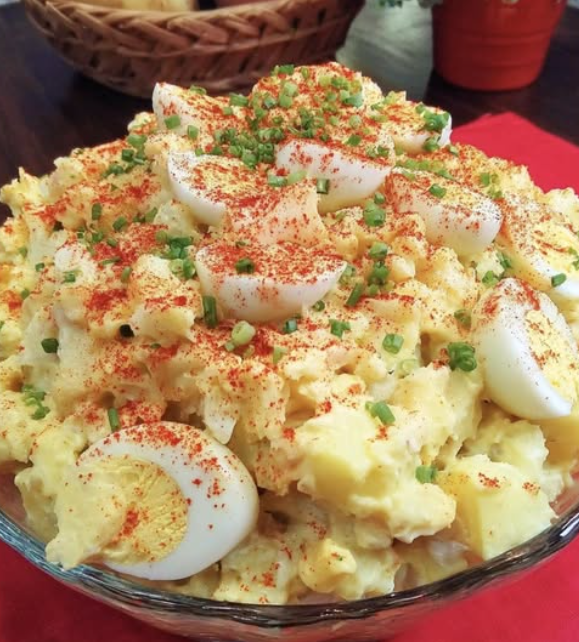
In the expansive hierarchy of Southern side dishes, the Southern Potato Salad stands as a masterclass in Colloidal Suspensions and Structural Integrity. On this Friday, December 26, 2025—the day after Christmas—this dish offers a cold, tangy counterpoint to the heavy, roasted proteins of the holiday. While often dismissed as “picnic food,” the creation of a superior potato salad requires a sophisticated understanding of Starch Gelatinization and Interfacial Tension.
The technical challenge lies in managing the Russet potato, a high-starch (mealy) tuber. Unlike waxy varieties, the Russet’s starch granules are prone to total dissociation when heated. To prevent the salad from descending into a “mashed” state, one must regulate the Thermal Kinetic Energy during boiling and leverage the power of Acidic Denaturation to season the starch from within. This article explores the molecular bond between the lipid-heavy dressing and the porous vegetable matrix.
Ingredients: The Molecular Building Blocks
- 3 lbs Russet Potatoes: The Structural Scaffold. These contain high levels of amylopectin. When processed correctly, the exterior of the cubes sloughs off slightly to create a natural thickener for the dressing.
- 8 Large Eggs: The Protein Inclusion. Eggs provide a sulfurous aromatic profile and a fatty, soft mouthfeel that bridges the gap between the firm potatoes and the creamy dressing.
- 6 oz Sweet Pickles & 2 Celery Ribs: The Mechanical Contrasts. These offer Trigeminal Stimulation (the crunch), providing a textural break in the soft lipid-starch matrix.
- 1 Vidalia Onion: The Flavor Potentiator. Vidalias are high in sugar and low in pungent sulfur, offering a sweet aromatic backnote without overwhelming the palate.
- 1 1/4 cups Mayonnaise: The Continuous Lipid Phase. A stable oil-in-water emulsion that carries the flavors across the tongue.
- 1/4 cup Grey Poupon Dijon Mustard: The Secondary Emulsifier. The mucilage in mustard seeds helps bind the vinegar and oils, preventing “weeping” in the final dish.
- 2 tbsp White Wine Vinegar: The Acidic Diluent. Essential for adjusting the pH of the starch and brightening the overall flavor profile.
- Salt and Fresh Cracked Black Pepper: The Ionic Flavor Enhancers.
Instructions: Engineering the Matrix
Step 1: The Thermal Processing of Starch
Peel and dice the Russets into uniform 3/4-inch cubes. Place in a pot of cold salted water. The “Cold Start” Regulation: Starting with cold water ensures that the internal and external temperatures of the potato rise simultaneously, preventing the outside from turning to mush before the center is cooked.
Step 2: Starch Gelatinization and Draining
Boil until the cubes reach the Point of Fork-Tenderness. At this stage, the starch granules have swollen to their maximum capacity. Drain immediately to stop the Hydrolysis.
Step 3: The “Warm” Acidic Infusion
While the potatoes are steaming (approx. 70°C), drizzle the 2 tablespoons of white wine vinegar over them. The “Capillary Action” Science: As the potatoes cool, they contract, pulling the vinegar into the center of the cube. This ensures the potato itself is seasoned, not just the dressing.
Step 4: Protein Preparation (The Hard-Boiled Egg)
Boil the eggs for 12 minutes, then shock in an ice bath. The “Thermal Shock” Rule: Rapid cooling prevents the Iron-Sulfur Reaction (the green ring around the yolk). Dice the eggs and the aromatics (celery, onion, pickles) into 1/4-inch pieces to ensure a consistent Geometric Distribution.
Step 5: The Emulsion Assembly
Whisk together the mayonnaise, Dijon, salt, and pepper. The “Laminar Flow” Secret: By creating a separate dressing “slurry,” you ensure that the mustard’s emulsifiers are fully integrated before they hit the moisture-heavy potatoes.
Step 6: The Final Amalgamation
Gently fold the cooled potatoes and aromatics into the dressing. Use a folding motion to avoid rupturing the fragile starch walls of the Russets.
Serving and Storage: The Retrogradation Mandate
Serving: This salad is an Endothermic Dish; it must be served cold (approx. 4°C). This temperature tightens the fats in the mayonnaise and firms up the potato starch for a cleaner mouthfeel.
Storage: Store in an airtight container for up to 5 days. The “Flavor Maturation” Science: Overnight storage allows for Molecular Diffusion. The vinegar and onion aromatics move from areas of high concentration (the dressing) to low concentration (the potato centers), resulting in a more unified flavor profile on Day 2.
Tips: Pro-Level Southern Nuances
- The “Salt Gradient”: Always salt the boiling water until it tastes like the sea. This is your only chance to season the Internal Matrix of the starch.
- Grey Poupon Priority: Do not substitute with yellow mustard. The white wine base of Dijon provides a sophisticated acidity that complements the white wine vinegar.
- The “Russet Slurry”: If the salad looks too dry, mash 1/4 cup of the cooked potatoes into the dressing before mixing. This creates a Starch-Cream Emulsion that coats the remaining cubes more effectively.
Variations: Seasonal Infusions
| Variation | The Adjustment | The Vibe |
|---|---|---|
| Smoky Southern | Add 1 tsp Smoked Paprika and 1/2 cup crumbled bacon. | Robust, earthy, and savory. |
| Garden Fresh | Add 1/4 cup chopped fresh dill and 1/4 cup chives. | Bright, floral, and aromatic. |
| Piquant Kick | Add 1 tbsp of chopped pickled jalapeños. | Energetic and spicy. |
Tips: Avoiding the “Syneresis” (Weeping)
Syneresis is the expulsion of liquid from a gel or emulsion. To prevent your potato salad from becoming watery in the fridge, ensure your Celery and Onions are patted dry after dicing. Excess water on the vegetables will break the Interfacial Tension of the mayonnaise, causing the oil and water to separate.
Conclusion: A Post-Christmas Culinary Victory
Southern Potato Salad is a masterpiece of Starch Management. By treating the Russet potato with the respect its high-starch content deserves—utilizing acidic infusions and cold-temperature setting—you transform a simple tuber into a creamy, complex side dish. On this December 26, 2025, as you enjoy the tangy crunch of Vidalia onions against the velvety backdrop of Dijon-infused mayonnaise, you are partaking in a masterclass of Southern engineering. Enjoy the chill!
Frequently Asked Questions
- Can I use Red or Yukon Gold potatoes?
- Yes, but the Mechanical Texture will change. Waxy potatoes hold their shape better but don’t release the starch needed to “cream” the dressing. If using waxy potatoes, reduce the mayonnaise slightly.
- Why did my potatoes turn grey?
- This is After-Cooking Darkening. It is a reaction between iron and chlorogenic acid in the potato. Adding the Vinegar immediately after draining helps lower the pH and prevent this discoloration.
- Is it safe to leave out at a picnic?
- Strictly regulate the Thermal Environment. Because of the eggs and mayo, it should not exceed 2 hours at room temperature. Use an ice-bath serving bowl to maintain the cold-chain safety.
Would you like me to suggest a “Southern Fried Chicken” recipe to pair with this salad, or perhaps show you how to turn these ingredients into a “Potato Salad Deviled Egg”?