
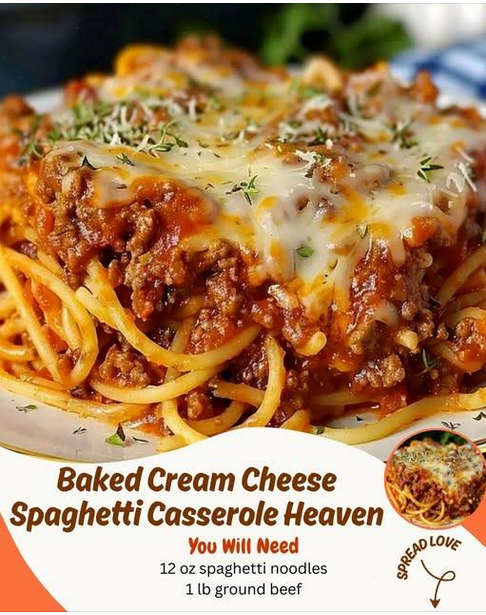
Baked Cream Cheese Spaghetti Casserole: A Masterclass in Structural Hydration
Introduction: The Physics of “Moisture Lock” Baking
In the culinary world of baked pastas, the greatest technical challenge is Noodle Desiccation—the process where the oven’s dry heat evaporates moisture from the spaghetti, leaving it brittle. This casserole solves that through Lipid Barrier Engineering. By coating the noodles in a cream cheese and dairy matrix, we create a protective hydrophobic seal. This allows the pasta to undergo a secondary hydration cycle within the sauce without losing its “al dente” tensile strength.
This guide explores the Maillard Reaction in the ground beef, the Viscosity of the cream cheese filling, and the Thermal Convection required to achieve a golden-brown cheese crust.
Ingredients: The Molecular Building Blocks
- 12 oz Spaghetti Noodles: The Structural Scaffold. Using long-strand pasta increases the surface area for the sauce and cream cheese to cling to via capillary attraction.
- 1 lb Ground Beef: The Protein Substrate. As it browns, it releases savory compounds (glutamates) that provide the savory backbone of the dish.
- 24 oz Marinara Sauce & 2 Garlic Cloves: The Acidic Solvent. The tomato acidity cuts through the heavy fats of the cream cheese, creating a balanced pH Equilibrium.
- 8 oz Cream Cheese (Softened): The Emollient Layer. This provides the “Heavenly” texture by acting as a thick, creamy insulator between the pasta and the meat sauce.
