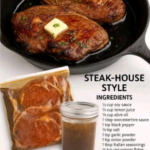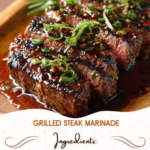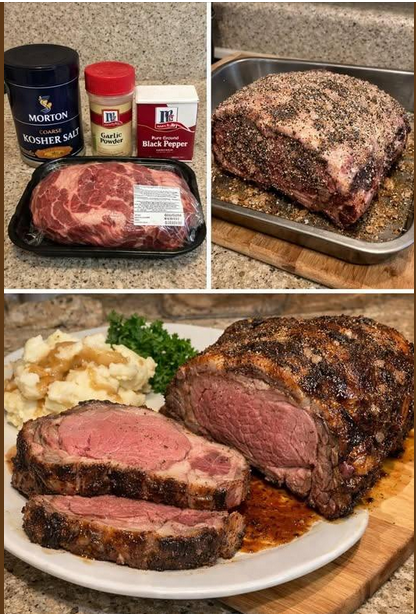
- The Marinade Phase: Whisk the soy sauce, olive oil, lemon juice, and Worcestershire together. Place your ribeyes in a gallon-sized bag and pour the mixture over them. Marinate for at least 2 hours, but no more than 8 hours (too much acid can make the meat “mushy”).
- The Temperature Equalization: Remove the steaks from the fridge 30 minutes before cooking. A cold steak will not cook evenly in the middle.
- The Dry-Down: This is the most important tip. Remove the steaks from the marinade and pat them bone-dry with paper towels. Moisture on the surface creates steam; a dry surface creates a crust.
- The High-Heat Contact: Heat a cast-iron skillet or grill to high heat. You should see a faint wisp of smoke.
- The Sear: Place the steaks down. Do not move them for 3–4 minutes. You are looking for a deep, mahogany crust (the Maillard reaction). Flip once and cook for another 3–4 minutes for medium-rare ($130^{\circ}F$ to $135^{\circ}F$ internal).
- The Mandatory Rest: Place the steaks on a warm plate and tent loosely with foil. Let them rest for 10 minutes.
Serving and Storage
Serving: Slice the ribeye against the grain. Because this marinade is so flavorful, you likely won’t need an additional sauce. Serve with a side of garlic-mashed potatoes or charred asparagus to balance the richness.
Storage: Leftover steak makes for the world’s best breakfast hash or steak salad. Store in an airtight container for up to 3 days. To reheat, do so gently in a pan with a splash of beef broth to prevent the meat from becoming rubbery.
Tips: The Science of the “Rest”
When meat is hit with high heat, the muscle fibers contract and push all the juices to the center. If you cut the steak immediately, those juices will run out onto your plate, leaving you with dry meat. During the 10-minute rest, the fibers relax and re-absorb the juices, ensuring every slice is succulent from edge to edge.
Variations: Regional Flavor Twists
- The Herbaceous Ribeye: Add 2 sprigs of fresh rosemary and thyme to the marinade for an earthy, garden aroma.
- The Spicy Kick: Add 1 tablespoon of Sriracha or crushed red pepper flakes to the marinade for a slow-burn finish.
- The Sweet Char: Add 1 tablespoon of honey to the marinade. The sugars will help create a darker, sweeter crust on the grill.
Tips: Why Fresh Lemon Juice Matters
Bottled lemon juice often contains preservatives that can give the meat a metallic aftertaste. Freshly squeezed lemon juice contains active enzymes that work much more efficiently to tenderize the ribeye’s connective tissue. If you want that “pillow-soft” texture, use the real thing!
Conclusion: A Recipe for a Lifetime
Cooking the “Best Ribeye” is an act of patience and respect for the ingredient. By using this balanced marinade and following the sear-and-rest method, you transform a simple piece of beef into a culinary event. It is simple, nourishing, and provides that absolute satisfaction that only a perfect steak can offer. Now, go fire up that skillet and enjoy the fruits of your labor!
Frequently Asked Questions
- Do I need to add salt to the steak?
- Generally, no. The soy sauce provides a high amount of sodium that seasons the meat deeply during the marinating process. Always taste a small piece before adding more salt.
- Can I use this marinade for other cuts?
- Absolutely! It works wonders on New York Strips, Flank Steaks, and even Skirt Steaks. The leaner the meat, the more the olive oil in the recipe helps.
- What if I don’t have a cast-iron skillet?
- A stainless steel pan or a hot outdoor grill will work perfectly. The goal is high, consistent heat to develop that crust.