
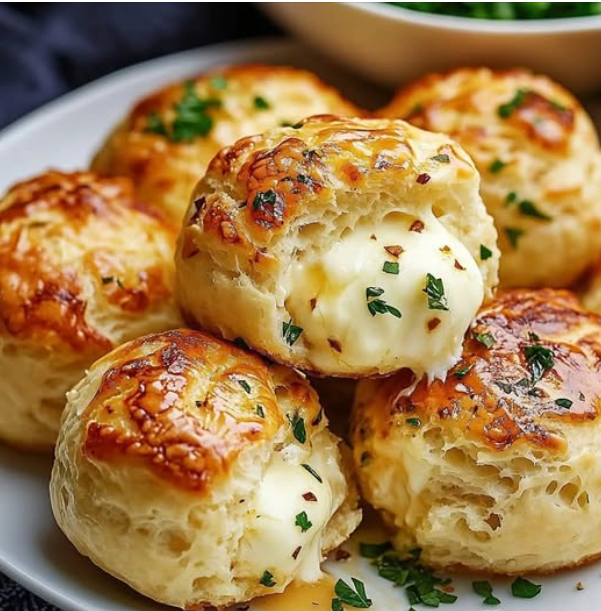
Biscuit Cheese Bombs: The Science of the Perfect Ooze
Introduction: The Architecture of the Stuffed Dough
In the culinary world, a “Cheese Bomb” is a study in Structural Integrity. On this Wednesday, December 24th, 2025—Christmas Eve—these bombs provide a high-fat, high-carb comfort snack that balances the traditional holiday appetizers. The challenge lies in the Seal; if the dough is not properly tensioned, the internal pressure of the melting cheese will cause a “blowout,” leaving you with a hollow biscuit and a puddle of burnt dairy.
This guide will explore the Viscoelasticity of Pillsbury Dough, the Casein Protein Structure of mozzarella, and the Solubility of Garlic Solids in melted lipids. We will delve into why Italian seasoning provides more than just flavor—it provides textural friction for the butter glaze.
Ingredients: The Molecular Components
- Pillsbury Grand Biscuits: These are Chemically Leavened doughs. They use sodium aluminum phosphate and baking soda to create a rapid rise. The dough is “laminated,” meaning it has thin layers of solid fat (shortening) that create steam pockets, leading to a flaky exterior.
- Mozzarella Cheese Sticks: Mozzarella is a Pasta Filata cheese. This means the curds were stretched and pulled during production. This specific protein alignment is what allows the cheese to “string” rather than simply disintegrate into oil when heated.
- Melted Butter: Butter is a Carrier Lipid. It carries the fat-soluble compounds of the garlic and herbs directly into the porous surface of the biscuit.
- Garlic Powder & Italian Seasoning: Garlic powder is hydroscopic, meaning it absorbs moisture from the butter to release its flavor. Italian seasoning (oregano, basil, thyme) contains phenols that provide an aromatic contrast to the heavy fats.
