
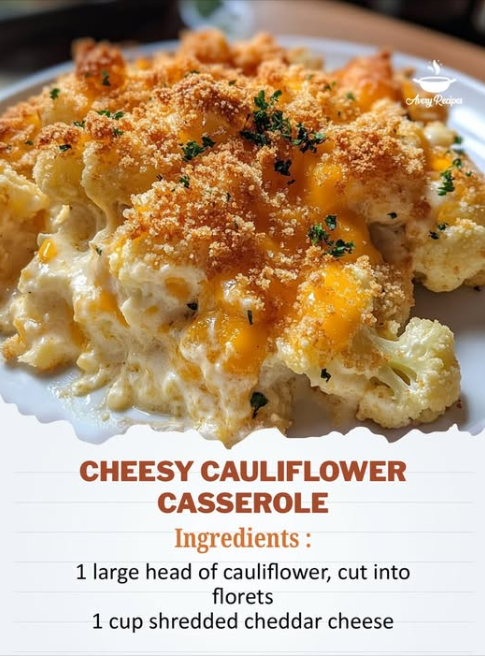
Step 1: The Initial Thermal Softening
Boil cauliflower for 5-7 minutes. The “Turgor Pressure” Science: Boiling weakens the pectin in the cell walls, reducing the vegetable’s “crunch.” It is critical to drain thoroughly; any residual surface water will lower the Viscosity of your cheese sauce.
Step 2: Synthesizing the Cheese Emulsion
Whisk cream cheese, sour cream, milk, and spices until smooth. The “Homogenization” Rule: Using softened cream cheese is essential. If the cheese is too cold, the lipids will clump rather than form a Laminar Flow with the milk and sour cream.
Step 3: The Coating Phase
Gently fold the cauliflower into the mixture. The “Surface Adhesion” Secret: The nooks and crannies of the cauliflower florets increase the Surface Area, allowing the thick sauce to cling via viscous drag.
Step 4: The Final Thermal Set
Bake at 375°F (190°C) for 25-30 minutes. The “Browning” Physics: The oven’s dry heat evaporates moisture from the top layer, allowing the Parmesan and breadcrumbs to undergo Pyrolysis, resulting in a golden-brown crust.
Service and Storage Tips
Service: Let the casserole rest for 5 minutes after baking. The “Viscosity Set” Factor: As the temperature drops slightly, the fats in the cheese sauce solidify just enough to “set,” ensuring the sauce stays on the cauliflower instead of pooling at the bottom of the plate.
Storage: Store in an airtight container for up to 4 days. The “Reheating” Warning: Microwave on 70% power. High heat can cause the sour cream to curdle (protein flocculation), resulting in a grainy texture.
Variants: Flavor Iterations
| Variation | The Adjustment | The Result |
|---|---|---|
| Loaded “Baked Potato” Style | Add bacon bits and chives. | Smoky, salty, and ultra-savory. |
| Spicy Buffalo | Add 2 tbsp hot sauce to the cream mixture. | Energetic, acidic, and bold. |
| Mediterranean | Swap cheddar for Feta and add spinach. | Tangy, briny, and nutrient-dense. |
Tips: Pro-Level Nuances
- The “Dryness” Factor: After draining the cauliflower, pat it dry with a paper towel. This ensures the Chemical Bonding between the sauce and the floret is not interrupted by a layer of steam.
- Fresh Grated Cheese: Avoid pre-shredded cheese if possible. Pre-shredded bags contain Cellulose Powder to prevent clumping, which can make your sauce feel “gritty” rather than velvety.
- The “Nutmeg” Trick: A tiny pinch of nutmeg in the cheese sauce enhances the dairy notes without being identifiable as a spice.
Conclusion: A Triumph of Low-Carb Chemistry
Cheesy Cauliflower Casserole is more than just a side dish; it is a masterpiece of Lipid and Fiber Balance. By transforming the humble, sulfur-rich cauliflower into a creamy, golden delight, you are utilizing the best principles of home-style engineering. On this December 26, 2025, as you break through that golden Parmesan crust, enjoy the perfectly executed textures. Happy cooking!
Frequently Asked Questions
- Can I use frozen cauliflower?
- Yes, but frozen cauliflower has already undergone Cellular Rupture due to ice crystals. It will release more water, so you must steam it and squeeze out excess moisture before mixing.
- Why is my sauce watery?
- This is usually due to Syneresis—the cauliflower releasing water during the bake. To fix this, ensure the florets are very well drained and avoid over-boiling them in the first step.
- Can I make this ahead of time?
- Absolutely. Assemble the entire dish (without the breadcrumbs), cover, and refrigerate. Add the breadcrumbs just before baking to maintain their Crystalline Crunch.
Would you like me to suggest a “Crispy Bacon” topping technique to elevate this, or perhaps show you how to turn this into a “Cauliflower Mac and Cheese” by adding a specific mustard-based binder?
Related posts:
 The Regal Stuffed Cauliflower with Savory Minced Meat
 The Golden Crisp: Mastering Australian-Style Roasted Cauliflower
 Golden Comfort: Mastering the Creamy Cauliflower and Broccoli Cheese Bake
 Golden Comfort: Mastering the Creamy Cauliflower and Broccoli Cheese Bake
 Hearty and Delicious
 Mastering Cheesy Ground Beef Rice Casserole
