
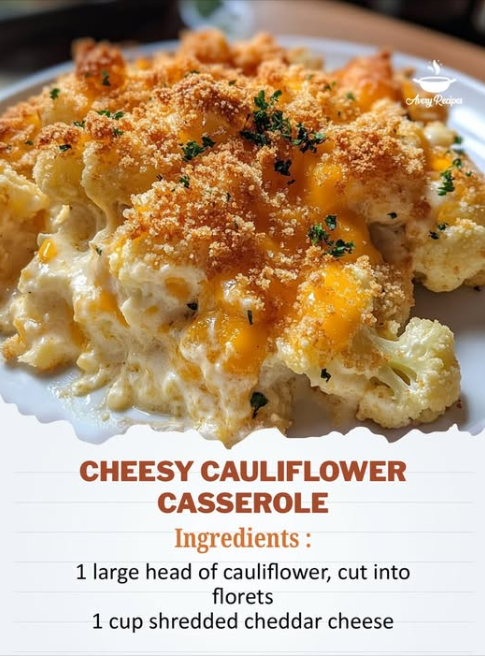
Cheesy Cauliflower Casserole: A Masterclass in Texture and Lipid Emulsification
Introduction: Engineering the “Low-Carb” Comfort Matrix
This Cheesy Cauliflower Casserole is a triumph of Cellular Softening and Multiphase Dairy Integration. On this Friday, December 26, 2025, it serves as an ideal nutrient-dense side dish. The technical challenge of this recipe is managing the Water Activity ($a_w$) of the cauliflower to prevent the cheese sauce from breaking into a watery mess. By par-boiling and then baking, we transition the vegetable from a fibrous state to a tender one while encapsulating it in a stabilized lipid foam made of cream cheese and sour cream.
Ingredients: The Molecular Building Blocks
- 1 Large Head Cauliflower: The Structural Scaffold. Unlike pasta, cauliflower provides cellulose and hemicellulose, offering a firm bite that resists thermal breakdown.
- 1/2 Cup Cream Cheese (Softened) & 1/2 Cup Sour Cream: The Stabilizing Emulsifiers. These high-fat dairy products contain proteins that act as surfactants, preventing the milk and cheddar cheese from separating during the high-heat baking phase.
- 1 Cup Shredded Cheddar: The Flavor Polymer. As it melts, it creates a stretchy, elastic network of casein proteins.
- Garlic & Onion Powder: The Aromatic Volatiles. These provide savory “umami” notes without the excess moisture of fresh aromatics.
- Optional Breadcrumbs & Parmesan: The Texture Modifiers. These facilitate the Maillard Reaction on the surface, providing a crunchy contrast to the soft interior.
