
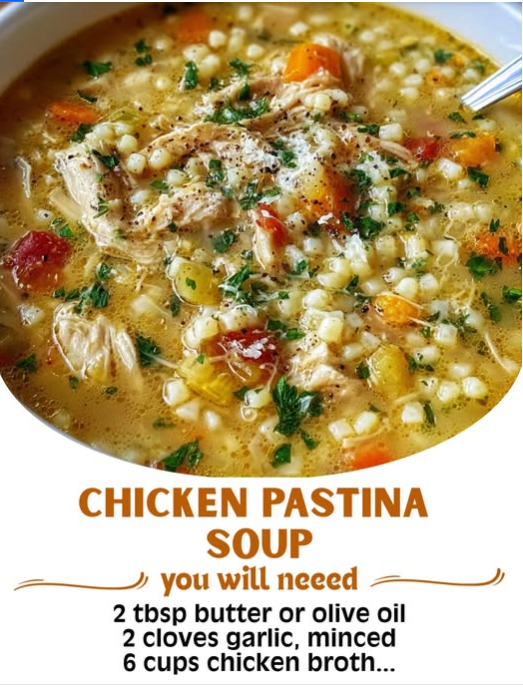
- 6 Cups High-Quality Chicken Broth: Homemade or low-sodium bone broth provides the best collagen-rich body.
- 2 Cups Shredded Chicken: Cooked (rotisserie chicken works perfectly for convenience).
- 1 Cup Pastina Pasta: Stelline (stars), Acini di Pepe, or Orzo.
The Finishing Touches
- 1 tbsp Fresh Parsley: Finely chopped for a burst of chlorophyll and freshness.
- Grated Parmesan Cheese: To be added just before serving for an umami kick.
- Salt & White Pepper: To taste.
Methods: Precision Execution
Step 1: The Aromatic Sauté
- In a large Dutch oven or soup pot, melt the **butter** (or heat the oil) over medium-low heat.
- Add the **onion** (and carrots/celery if using). The Technique: Sauté for 5–7 minutes until the onions are translucent and soft. Do not let them brown.
- Add the **minced garlic** and cook for exactly 60 seconds until fragrant. If the garlic turns brown, it will become bitter—keep the heat gentle.
Step 2: Building the Broth
- Pour in the **chicken broth**. Increase the heat to medium-high and bring the liquid to a gentle rolling boil.
- Once boiling, taste the broth. If using store-bought broth, wait to add salt until after the pasta has cooked, as the liquid will reduce and concentrate.
Step 3: Simmering the Pastina
- Add the **pastina** to the boiling broth.
- Reduce the heat to a simmer and cook according to the package directions (usually 6–8 minutes).
- The Agitation: Stir frequently. Pastina is notorious for sticking to the bottom of the pot because of its high starch-to-size ratio.
Step 4: The Final Assembly
- Stir in the **shredded chicken** and cook for 2 minutes just to heat it through.
- Remove from heat. Stir in the **fresh parsley** and a squeeze of fresh lemon (optional) to brighten the fats.
- Serve immediately in deep bowls with a generous dusting of **grated Parmesan**.
Troubleshooting the Soup
| Problem | Possible Cause | The Fix |
|---|---|---|
| Pasta absorbed all the broth | Soup sat for too long or was boiled too hard. | Pastina continues to drink broth as it sits. Add an extra cup of hot broth or water before serving leftovers. |
| Broth is cloudy | Pasta was cooked at a violent boil. | Keep the soup at a gentle simmer once the pasta is added to keep the liquid clear. |
| Flavor is “flat” | Lack of acidity or salt. | Add a teaspoon of lemon juice or a splash of white wine vinegar to “wake up” the savory notes. |
Expert Tips for the Ultimate Bowl
Tip 1: The Egg Drop Variation
For an even richer, “Angel-style” soup, whisk one egg with 2 tablespoons of Parmesan cheese. While the soup is at a low simmer, slowly drizzle the egg mixture in while whisking the broth. This creates delicate, silken ribbons of protein throughout the soup.
Tip 2: The Toasted Pasta Secret
Before adding the broth, toss the dry pastina in the butter and sautéed onions for 2 minutes. This “toasts” the starch, giving the pasta a nutty flavor and helping it hold its shape longer without becoming mushy.
Tip 3: The Rind Trick
If you have a leftover rind of **Parmigiano-Reggiano**, drop it into the broth while it simmers. It will melt slightly, infusing the entire soup with a deep, salty, professional umami flavor that salt alone cannot replicate.
Conclusion: A Timeless Classic
Chicken Pastina Soup is a testament to the power of simplicity. By focusing on the quality of your aromatics and the gentle cooking of the tiny pasta stars, you’ve created a dish that is both a meal and a remedy. It is the perfect balance of hydration, protein, and comforting starches.
Enjoy your warm, restorative masterpiece!
Related posts:
 Cozy Indulgence: Mastering Winter Comfort Creamy Sausage Pasta Soup
 Sausage and Swirl: Mastering Creamy Ditalini Soup
 Mastering Chicken Pot Pie–Style Creamy Pasta
 Instant Comfort: Mastering Homestyle Chicken Noodle Soup
 Italian Penicillin Soup
 From Bake to Broth: Mastering the Creamy White Lasagna Soup
