
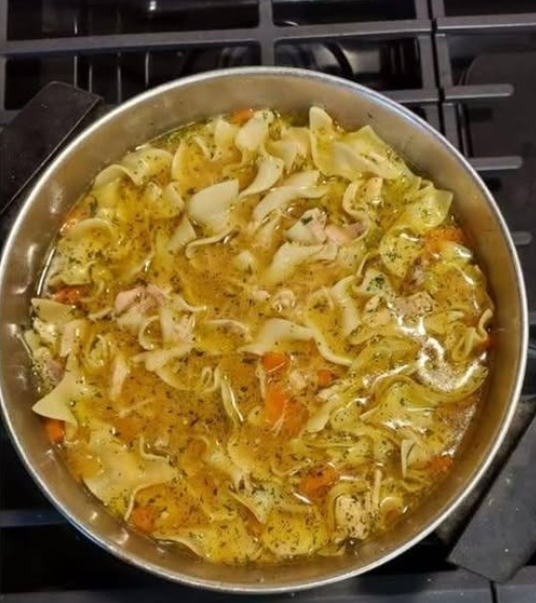
Instant Comfort: Mastering Homestyle Chicken Noodle Soup
Introduction: The Foundation of Broth Depth
Homestyle Chicken Noodle Soup is the culinary embodiment of comfort, yet achieving that elusive, deep, all-day simmered flavor in a standard weeknight time frame requires strategic technique. The process relies on three primary regulations: **flavor layering (blooming the aromatics)**, **moisture control (broth quality)**, and **timing integrity (noodle insertion)**.
The first regulation, **Flavor Layering**, begins with the *mirepoix*—the classic French aromatic base of onion, carrot, and celery (assumed). Dicing the **1 large onion** and **2 carrots** to a uniform, bite-sized piece is crucial for even cooking. The vegetables must be sautéed in butter or olive oil (assumed) until tender and slightly translucent. This step, known as *sweating* or *blooming*, softens the cell walls, releasing the sugars and complex aromas that form the foundational layer of the broth. This initial sauté provides a concentrated depth that mimics hours of slow simmering.
The second regulation involves **Broth Quality and Concentration**. Since time is limited, the soup’s liquid base—typically 6 to 8 cups—must be high-quality chicken broth or stock. To achieve true homestyle richness, it is highly recommended to supplement the liquid with **concentrated chicken base** or bouillon. This concentrated flavor bomb adds the gelatinous mouthfeel and savory intensity usually reserved for broth made from scratch with bones.
The third regulation is **Timing Integrity**, essential for preventing soggy, mushy noodles. The **1 lb boneless, skinless chicken breasts or thighs** must be cut into uniform, bite-sized pieces to ensure they cook quickly and evenly without drying out. The noodles should be added only in the last phase of cooking. Because pasta, particularly egg noodles (traditional for this soup), continues to absorb liquid and cook even after the heat is off (carry-over cooking), they must be added just 10-15 minutes before serving. This strict timing ensures the noodles are soft, tender, and retain their shape, ready to be enjoyed.
Finally, a crucial seasoning step is the use of **dried herbs (e.g., thyme, bay leaf)** during the simmer for deeper flavor infusion, followed by **fresh herbs (parsley, dill)** added right before serving for a final, bright aromatic lift. Adherence to these layered techniques transforms a simple assembly of ingredients into a complex, comforting bowl of soup.
