
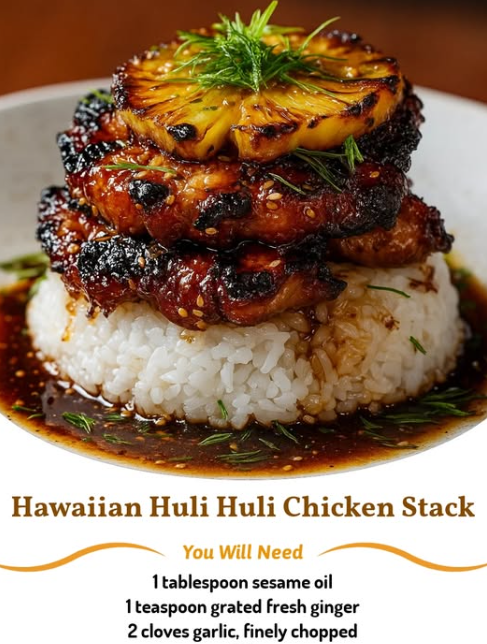
Huli Huli Chicken Stack: A Study in Bromelain Activity and Caramelization
Introduction: The Science of the “Huli” Flip
The term “Huli Huli” (meaning “turn turn”) refers to the traditional Hawaiian method of rotisserie grilling. From a technical standpoint, this recipe relies on Enzymatic Hydrolysis. The pineapple juice in the marinade provides bromelain, an enzyme that cleaves peptide bonds in the meat, while the high sugar content facilitates the Maillard Reaction and Pyrolysis during the searing phase.
Ingredients: The Molecular Building Blocks
The Marinade Matrix (The Reactive Solvent)
- 1/2 cup Pineapple Juice: The Enzymatic Catalyst. Contains bromelain to tenderize the protein substrate.
- 1 cup Teriyaki & 1/4 cup Soy Sauce: The Ionic Flavor Enhancers. Provide high concentrations of glutamates (umami) and salt for osmotic diffusion.
- 2 tbsp Brown Sugar: The Caramelization Agent. Lowers the temperature required for surface browning.
- Ginger, Garlic, & Sesame Oil: The Volatile Aromatic Phase. These compounds provide the depth of the flavor profile.
The Stack Components (The Structural Layers)
- Chicken Thighs/Breasts: The Protein Scaffold.
- Grilled Pineapple Rings: Provide Caramelized Acidity to cut through the heavy teriyaki base.
- Rice & Cabbage: The Structural Foundation. Provide a neutral starch and fiber base to absorb excess marinade.
