
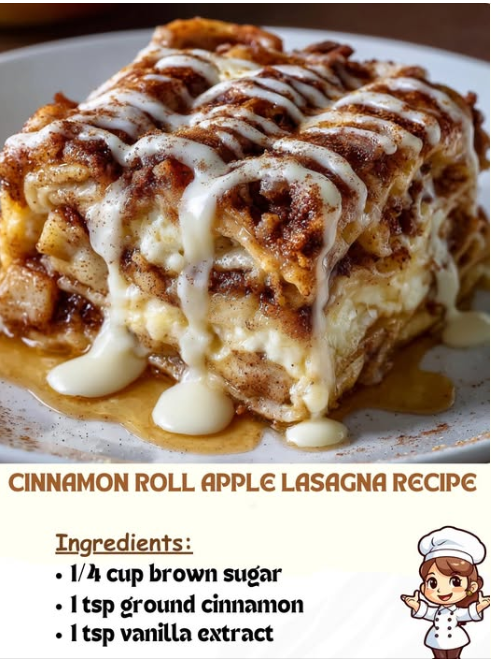
Cinnamon Roll Apple Lasagna: A Masterclass in Multi-Layered Textures
Introduction: The Physics of the “Syrup-Dough” Interface
In the culinary world, Cinnamon Roll Apple Lasagna is a triumph of Hygroscopic Softening. The technical brilliance lies in the Osmotic Migration of apple juices into the pre-baked dough layers. As the apples release moisture through thermal cell-wall degradation, the cinnamon roll dough absorbs the resulting spiced syrup, transforming from a bread-like state into a custard-like texture. This creates a dessert that is functionally dense yet perceptually light.
This guide explores the Maillard Reaction of the sugars, the Pectin Breakdown of the Granny Smith apples, and the Structural Integrity provided by the dough spirals.
Ingredients: The Molecular Building Blocks
- 2 Cans Refrigerated Cinnamon Rolls: The Structural Scaffolding. These provide the Elastic Gluten Matrix that holds the weight of the fruit layers.
- 5-6 Large Granny Smith Apples (Peeled/Sliced): The Acidic Inclusions. Granny Smiths are preferred due to their high Pectin content, which allows them to maintain a “bite” even after extensive thermal processing.
- ¼ Cup Brown Sugar & 1 tsp Cinnamon: The Caramelization Agents. The molasses in the brown sugar provides a deep, complex flavor profile that interacts with the apple acids.
- 1 tsp Vanilla Extract: The Aromatic Volatile. Vanilla serves as a flavor bridge, connecting the sharp fruit notes with the rich, buttery dough.
- The Included Icing: The Top-Layer Sealant. This provides a final Sucrose Glaze that prevents the top dough layer from drying out during the cooling phase.
