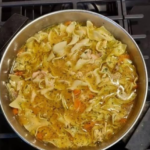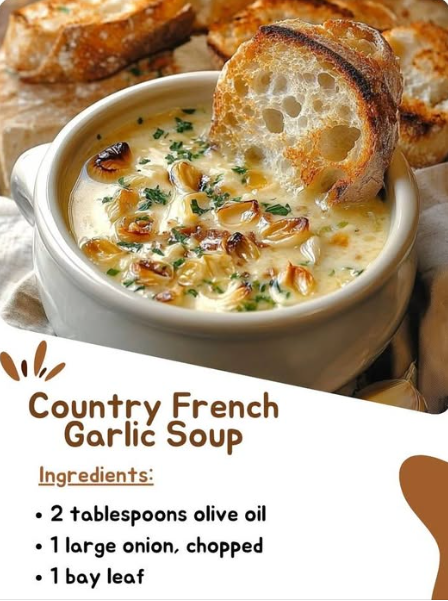
- Sauté the Base: Heat the olive oil in a heavy pot (Dutch oven preferred) over medium heat. Add the chopped onion. Cook gently, stirring occasionally, until soft and translucent, about 8–10 minutes. **Do not allow the onion to brown or caramelize**, as this would change the flavor profile from subtle and sweet to deeply savory.
- Add Aromatics: Stir in the crushed garlic, bay leaf, and thyme. Cook for just 1–2 minutes until the garlic is fragrant. **Watch carefully to prevent the garlic from browning**, which would make the entire soup bitter.
- Simmer and Infuse: Pour in the 6 cups of stock. Season lightly with salt and pepper. Bring the liquid to a gentle boil, then immediately reduce the heat to low. Simmer uncovered for **20–25 minutes**. This slow simmer is crucial for extracting the sweet, mellow essence of the garlic and concentrating the broth’s flavor.
- Prepare the Bread: While the soup simmers, toast the bread slices until they are dry and golden. They should be very crisp. Place the toast in the bottom of your serving bowls (either whole or torn into pieces).
- Optional Thickening (The *Liaison* Technique): This step adds richness without heavy cream. Remove the pot from the heat. Beat the egg in a small bowl. **Tempering is essential:** Slowly whisk one full ladle of the hot soup broth into the beaten egg. This step gently raises the egg’s temperature without scrambling it. Then, gently stir the warmed egg mixture back into the pot of soup. **Do not return the pot to the heat or boil the soup after adding the egg**, or it will curdle.
- Serve: Remove and discard the bay leaf and thyme sprig(s) from the soup. Ladle the hot soup over the toasted bread in the bowls. Sprinkle generously with grated Gruyère or Comté cheese if using. Serve immediately while the cheese is just beginning to melt into the broth.
Serving, Storage, and Culinary Tips
Serving and Presentation
Soupe à l’Ail is traditionally served piping hot. The bread should be added just before serving so it begins to soften without becoming completely soggy. For an elegant touch, grate a bit of fresh nutmeg over the top along with the cheese.
Storage and Reheating
- **Storage:** The finished soup (without the bread, cheese, or egg liaison) can be stored in an airtight container in the refrigerator for up to 4 days.
- **Reheating:** Reheat gently on the stovetop. If you used the egg liaison, avoid bringing the soup to a boil when reheating, as this will cause the egg to curdle.
- **Freezing:** The soup freezes well, but **omit the egg liaison** before freezing. Add the egg after thawing and reheating.
Tips for Deeper Flavor
Variations: Regional Touches and Modern Twists
While the classic recipe is pure, several delicious variations exist across the French-speaking world.
- **Soupe à l’Oignon (Onion Soup):** Add a $1/2$ cup of white wine (dry sherry is also excellent) to the pot after the garlic and herbs have bloomed, letting it reduce slightly before adding the stock. This adds a lovely acidity and depth often found in its cousin, French Onion Soup.
- **Aïgo Boulido (Provençal Simplicity):** For a lighter, traditional variation, simply use water instead of stock and add a few sprigs of sage and a drizzle of fine olive oil. This ultra-simple version highlights the purity of the garlic and oil.
- **Creamy Modern Version:** For those who prefer a velvety texture, blend the finished soup (after removing the bay leaf/thyme, and *omitting* the egg liaison) until smooth. Stir in $1/4$ cup of heavy cream or non-dairy cream substitute off the heat before serving.
- **Adding Protein:** Toss in some shredded leftover chicken or ham during the last 5 minutes of simmering to transform the soup into a heartier meal.
Expert Tips: Technique for Maximum Aroma and Texture
Flavor Management
Texture and Consistency
Conclusion
The Classic Country French Garlic Soup is a testament to the power of simplicity in cooking. It takes humble ingredients—garlic, bread, and stock—and elevates them through gentle technique and long, patient simmering. Whether you choose the rustic simplicity of the original recipe or incorporate the elegant thickening of the egg liaison, the result is a deeply satisfying, restorative bowl of French comfort. This soup is more than just a remedy for the cold; it’s an invitation to appreciate the fundamental flavors that define provincial cuisine.
Frequently Asked Questions
Q: Is the garlic flavor overwhelming?
A: Surprisingly, no. Because the garlic is crushed and simmered slowly for 20-25 minutes, its harshness is cooked out, leaving behind a mellow, sweet, and savory depth rather than a sharp bite. The long simmer caramelizes the complex sugars within the garlic cloves.
Q: What is the purpose of the egg?
R: The egg (specifically the yolk) is used for a *liaison*, or binding. It thickens the broth slightly and adds richness without making it taste eggy or heavy. It creates a velvety texture traditional in many classic French country soups.
Q: Can I use fresh bread?
R: Yes, but you must toast it until it is fully dry and crisp, essentially turning it into large croutons. Fresh, soft bread will dissolve instantly when the hot soup is added, resulting in a mushy texture rather than a sturdy base.
Note: This soup is naturally low-carb (excluding the bread and optional cheese) and packed with the health benefits associated with slowly cooked garlic.