
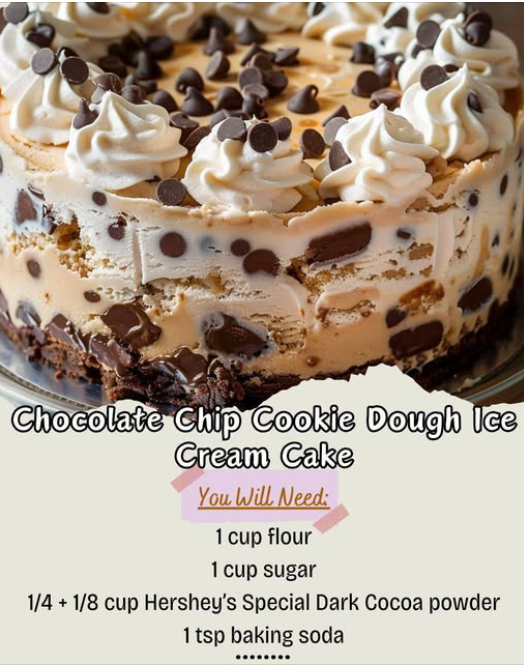
Cookie Dough Ice Cream Cake: A Masterclass in Structural Layering and Thermal Inertia
Introduction: The Physics of the “Frozen Stack”
This cake represents a triumph of Structural Culinary Engineering. The primary challenge is managing the Thermal Conductivity of different materials: a porous, room-temperature chocolate cake and a dense, sub-zero ice cream core. By using the cake as an Insulating Base, we protect the ice cream from rapid Phase Transitions (melting) while the cookie dough inclusions provide a Heterogeneous Texture that resists freezing into solid blocks.
Ingredients: The Molecular Building Blocks
The Structural Foundation (Chocolate Cake)
- 1 cup Flour: The Primary Carbohydrate Scaffold. It provides the gluten network necessary to support the heavy weight of the ice cream layers.
- Cocoa Powder & Sugar: The Aromatic and Hygroscopic Agents. Cocoa provides umami and color through the Maillard Reaction, while sugar ensures the cake remains moist by trapping water molecules.
The Thermal Core (The Ice Cream Matrix)
- Vanilla Ice Cream: The High-Lipid Buffer. The fat content in the ice cream acts as a thermal insulator, slowing down the transfer of heat from the environment to the center of the cake.
- Cookie Dough Inclusions: These act as Mechanical Texturizers. Because the dough contains high amounts of fat and sugar, its Freezing Point is lower than water, allowing it to remain soft even at 0°F.
