Protocol 1: Sautéing and Maillard Optimization
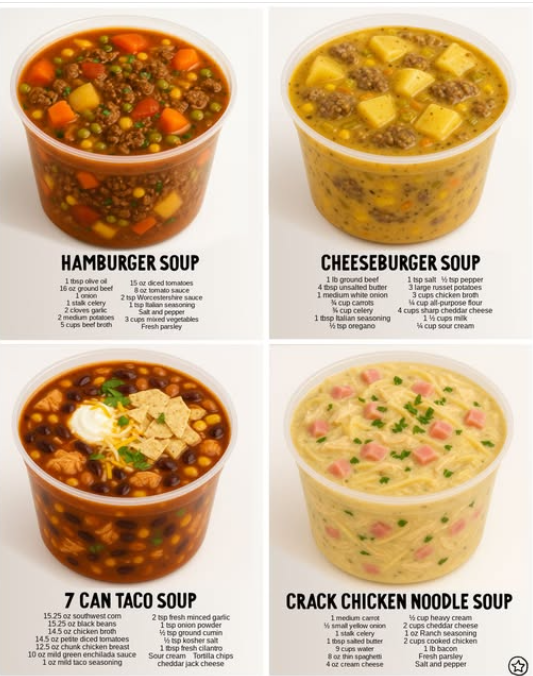
For the Hamburger and Cheeseburger systems, initiate with the Maillard Reaction. Brown the beef with aromatics (onion, celery) to develop complex flavor compounds that survive the cooling process. In the Cheeseburger system, the vegetables are shredded to ensure they integrate into the dairy emulsion without disrupting the spoon-feel.
Protocol 2: The Starch Gelatinization Phase
Potatoes must be simmered until the cellular walls soften, allowing starch to leak into the broth. In the Crack Chicken system, noodles are added to the boiling water but must be cooked to sub-al-dente (approximately 2 minutes less than the package instructions). This accounts for the secondary hydration that occurs inside the storage container.
Protocol 3: Emulsification and Finishing
In the dairy-heavy systems, add the cheese and cream at the very end. Regulation: Avoid boiling after the cheese has been added, as high heat can cause the proteins to tighten and “seize,” resulting in a grainy rather than silky texture.
Serving and Storage: The Cold-Chain Standard
Successful meal prep is predicated on the “Cooling Curve.” Soup must be cooled rapidly before being sealed to prevent the growth of thermophilic bacteria and to stop the “carryover cooking” of the vegetables.
| Soup System | Container Type | Stability (Fridge) | Reheat Profile |
|---|---|---|---|
| Hamburger | BPA-Free Plastic/Glass | 5 Days | High; stable flavor |
| Cheeseburger | Glass (Preferable) | 3 Days | Medium; may thicken |
| 7-Can Taco | Modular Stackers | 6 Days | Extreme stability |
| Crack Chicken | Vacuum Sealed | 3 Days | Low; stir vigorously |
Tips: The Science of Starch Management
The Retrogradation Effect: When potatoes and noodles are cooled, the starch molecules realign into a crystallized structure. This makes the soup seem much thicker the next day. To restore the original texture, add 1-2 tablespoons of water or broth before reheating to “unlock” the starch crystals.
Variations: Adapting for Dietary Compliance
- Low-Carb Modifications: In the Hamburger or Cheeseburger systems, replace potatoes with diced cauliflower or kohlrabi. This reduces the glycemic load while maintaining the “chunky” texture.
- Plant-Forward Taco: Substitute the chunk chicken for a third bean variety (kidney or garbanzo) and use vegetable broth. The Southwest spices ensure the flavor profile remains identical.
- The “Light” Crack Chicken: Swap heavy cream for evaporated milk and use a reduced-fat cream cheese. You retain the Ranch flavor but reduce the total lipid density by 30%.
Tips: Container Integrity and Safety
- The Expansion Gap: If freezing these soups, leave 1 inch of “headspace” at the top of the container. Water expands when frozen, and without this gap, glass jars can shatter and plastic lids can warp.
- The Garnish Regulation: Always pack garnishes like tortilla chips, fresh cilantro, or bacon crumbles in a separate small container. Moisture migration will turn these “crisps” into “mush” if they touch the liquid before consumption.
Conclusion: The Mastered Lunch Hour
Containerized soups represent a triumph of modern batch-cooking. By understanding the specific needs of each soup system—whether it’s the acid-balance of the Taco soup or the emulsion-stability of the Cheeseburger soup—the home cook can ensure a “fresh” experience regardless of the location. These four recipes provide a diverse menu that addresses every comfort requirement, from the savory beef-centric profiles to the creamy, indulgent chicken noodle. In the end, the container is not just a vessel; it is a laboratory for aging and intensifying the flavors of comfort.
Frequently Asked Questions:
Q: My Cheeseburger soup separated in the microwave. Is it ruined?
A: No. Separation occurs when the fat-water emulsion breaks. Add a splash of milk and stir vigorously for 30 seconds; the mechanical energy will help re-emulsify the cheese and butter.
Q: Can I cook the noodles directly in the Crack Chicken soup?
A: While possible, the noodles will absorb a significant portion of the broth, leaving you with a casserole-like consistency. It is better to cook them in the water as directed to control the final liquid ratio.
Q: Is canned chicken breast as healthy as fresh?
A: Canned chicken is high in protein and extremely convenient for 2026 meal prep. However, it often has higher sodium levels. Rinse the chicken before adding to the Taco soup to manage your sodium intake.
Would you like me to create a “Shopping List” for all four of these soups combined, or perhaps a guide on the best airtight containers for 2026 meal prepping?
“`