
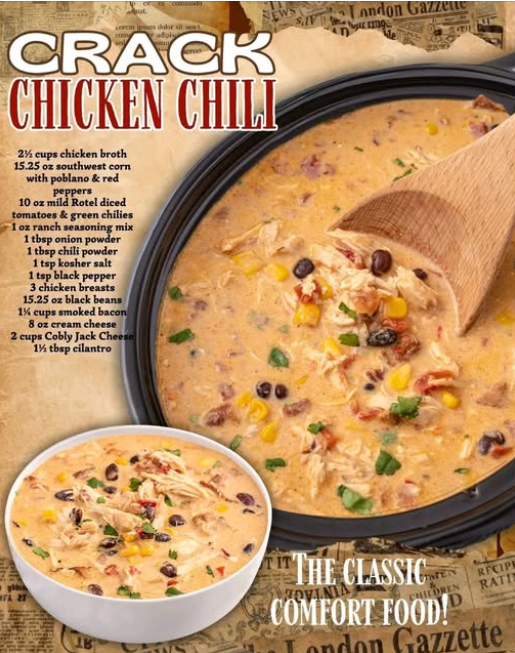
Crack Chicken Chili: A Study in Flavor Concentration and Thermal Braising
Introduction: The Physics of “Crack” Flavor Profiles
The term “Crack” in culinary engineering refers to the Triple-Point of Palatability: the intersection of high sodium, high fat (usually added via cream cheese at the end), and high umami. This recipe utilizes Liquid-Phase Infusion, where the chicken broth acts as a solvent to carry the volatile oils of the poblano peppers and the lactic acid notes of the ranch seasoning deep into the chicken tissues through osmotic pressure.
Ingredients: The Molecular Building Blocks
The Solvent Base
- 2½ cups Chicken Broth: The Hydrophilic Medium. This provides the water activity (aw) necessary for the chicken to braise without dehydrating.
The Piquant Inclusions
- 15.25 oz Southwest Corn with Poblano & Red Peppers: The Textural Aggregate. The corn provides complex carbohydrates, while the poblanos contribute Pyrazines (earthy/bell pepper aromatics).
- 10 oz Mild Rotel (Diced Tomatoes & Green Chilies): The Acidic Brightener. The pH of the tomatoes helps denature chicken proteins, making them “shreddable.”
The Aromatic Catalyst
- 1 oz Ranch Seasoning Mix: The Complex Flavor Profile. This is a dehydrated emulsion of buttermilk solids, garlic, onion, and herbs. The monosodium glutamate (naturally occurring or added) acts as an umami accelerator.
