
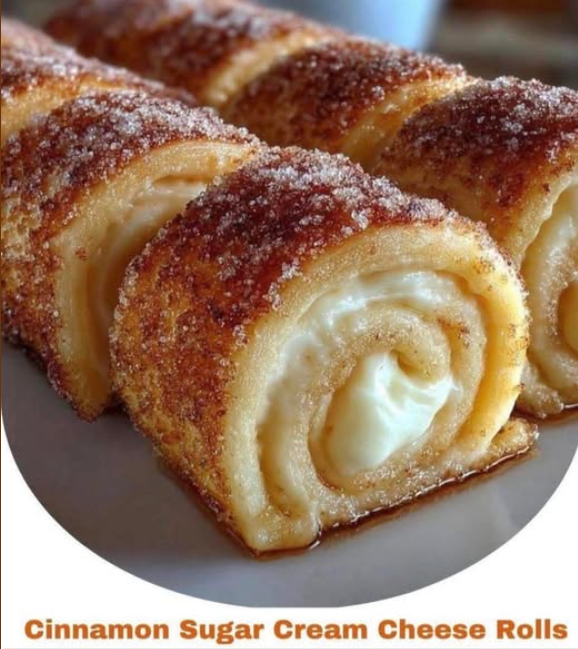
Step 1: Homogenization of the Filling
Stir the softened cream cheese, sugar, and vanilla until smooth. The “Shear Force” Rule: The cream cheese must be at 21°C (room temperature). If it is too cold, the lipids will undergo Clumping, preventing the sugar crystals from distributing evenly.
Step 2: Structural Assembly
Spread the filling onto your dough of choice and roll tightly. The “Surface Tension” Secret: A tight roll ensures that air pockets are minimized. Excessive air leads to Thermal Insulation, which can cause the outside to burn before the cheese in the center is warm.
Step 3: Surface Treatment (Cinnamon Sugar)
Coat the exterior with a cinnamon-sugar mixture. The “Caramelization” Phase: During baking, the sugar on the surface will reach its Glass Transition Temperature and then caramelize, creating a crisp “shell.”
Step 4: Thermal Processing
Bake (usually at 375°F/190°C) until golden. The “Heat Transfer” Physics: Heat moves from the outside in via Conduction.
[Image showing the process of heat transfer in a baking oven]
The dough acts as a barrier, allowing the internal temperature to rise slowly to about 140°F (60°C)—the ideal point for a molten cream cheese texture.
Service and Storage Tips
Service: Serve warm. The “Lipid Solidification” Factor: As the rolls cool, the cream cheese will begin to firm up again (re-crystallize). To maintain the Lava-Like Texture, consume within 15 minutes of baking.
Storage: Store for up to 3 days in the refrigerator. The “Retrogradation” Warning: The starch in the dough will firm up over time. Reheat for 10 seconds in the microwave to “unlock” the starch bonds and soften the cheese.
Variants: Flavor Iterations
| Variation | The Adjustment | The Result |
|---|---|---|
| Fruit Burst | Add 1 tbsp of strawberry preserves to the center. | Higher acidity and vibrant color contrast. |
| Nutty Crunch | Roll the exterior in crushed pecans. | High textural contrast and healthy fats. |
| Apple Pie Roll | Add finely diced sautéed apples to the filling. | Higher fiber and autumnal aromatic profile. |
Tips: Pro-Level “Roll” Nuances
- The “Leaking” Prevention: Pinch the ends of the dough tightly. If the seal is weak, the internal Vapor Pressure will force the cream cheese out onto the baking sheet.
- Spice Activation: Mix your cinnamon with a tiny pinch of salt. Salt suppresses bitterness and makes the cinnamon’s Essential Oils taste more pronounced.
- Glaze Finish: For a professional look, whisk 1/2 cup powdered sugar with 1 tsp milk and drizzle over the rolls after they have cooled for 2 minutes.
Conclusion: A Triumph of Texture
Cinnamon Sugar Cream Cheese Rolls are a masterpiece of Mechanical Layering. By balancing a crisp, caramelized exterior with a smooth, lipid-rich center, you engage multiple sensory receptors simultaneously. On this December 26, 2025, enjoy the perfectly executed results of pastry engineering. Happy baking!
Frequently Asked Questions
- Can I use low-fat cream cheese?
- You can, but low-fat versions have a higher Water-to-Lipid Ratio. This may result in a “runny” filling that makes the dough soggy.
- Why are my rolls doughy in the middle?
- This is an Insulation Error. Either the rolls were too thick or the oven temperature was too high, causing the outside to brown before the heat could conduct to the center.
- Can I air-fry these?
- Yes! Air frying utilizes High-Velocity Convection. Cook at 350°F (175°C) for 5-8 minutes for an even crispier result.
Would you like me to suggest a “Maple Butter Glaze” to dip these in, or perhaps show you how to turn this filling into “Cream Cheese Stuffed French Toast”?
Related posts:
 The Ultimate Guide to Soft and Fluffy Cinnamon
 The Ultimate Brunch Hack: King’s Hawaiian Cinnamon Rolls
 The Ultimate Guide to French Dip Tortilla Roll Ups
 Mastering the Easy Breakfast Cheese Danish
 Mastering the Tender Italian Nut Roll Cookies
 Gooey Center Secrets: Mastering Melt-In-Your-Mouth Apple Caramel Bombs
