
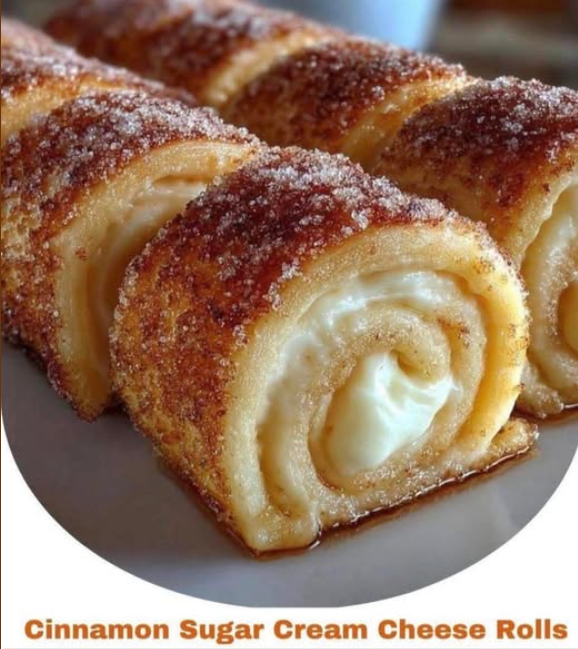
Cream Cheese Rolls: A Study in Phase Transitions and Aromatic Diffusion
Introduction: The Physics of the “Melting Core”
This preparation represents a triumph of Thermal Gradients. The goal is to apply external dry heat (baking or frying) to create a crisp, golden exterior through the Maillard Reaction, while the internal cream cheese remains in a Plastic State—soft enough to be creamy but viscous enough not to leak. The sugar inside undergoes Dissolution into the dairy fats, creating a self-saucing interior.
Ingredients: The Molecular Building Blocks
The Filling Matrix (The Viscous Center)
- 8 oz Cream Cheese (Softened): The Primary Lipid Base. Its high fat and protein content provides the structure for the filling.
- 1/4 cup Granulated Sugar: The Solute. It provides sweetness and lowers the Freezing Point of the dairy, keeping it soft even when cooled.
- 1 tsp Vanilla Extract: The Aromatic Volatile. Contains vanillin, which becomes more potent as the temperature rises.
The Exterior Scaffold (Typically Crescent Dough or Bread)
- Pastry/Dough Layer: The Cellulose/Gluten Barrier. It protects the filling and provides the crunch.
- Cinnamon & Sugar Topping: The Crystalline Coating. Cinnamon contains cinnamaldehyde, which stimulates thermal receptors in the mouth, enhancing the sensation of “warmth.”
