ADVERTISEMENT
II. The Thickeners and Finishers (Assumed):
- **2 tbsp** butter (Assumed, for the roux)
- **2 tbsp** all-purpose flour (Assumed, for the roux)
- **1 tsp** dried thyme or parsley (Assumed, key seasoning)
- **Salt and Black Pepper** (Assumed, necessary seasoning)
- **1 cup** heavy cream (For richness and stability)
- **1 cup** shredded cheddar cheese (Off-heat addition)
Instructions: Sear, Simmer, and Stabilize
Phase 1: Searing and Flavor Building
- **Sear Beef:** In a large stockpot or Dutch oven, brown the **1 lb ground beef** over medium-high heat until deeply caramelized. Drain off all but **2 tablespoons of the rendered fat**.
- **Sauté Aromatics:** Add the **diced onion** to the pot. Cook in the retained fat for 3 minutes until softened, scraping up the brown bits (fond) from the bottom. Add the **minced garlic** and cook for 1 minute more.
- **Create Roux (Stabilization):** Sprinkle **2 tbsp flour** (assumed) over the meat/onion mixture and stir well. Cook for 1–2 minutes, stirring constantly. This eliminates the raw flour taste and creates the stable thickening base.
Phase 2: Simmering the Potatoes
- **Add Liquid and Seasoning:** Slowly whisk in the **3 cups beef broth** until the mixture is smooth and free of lumps. Add **1 tsp dried thyme**, salt, and pepper (assumed).
- **Add Potatoes:** Add the **5 medium diced potatoes**. Bring the soup to a boil, then reduce the heat to a gentle simmer.
- **Cook Potatoes:** Simmer, covered, for **15–20 minutes**, or until the potatoes are fork-tender. Do not overcook, or they will break down too much.
Phase 3: The Temperate Dairy Finish
- **Remove from Heat (CRITICAL STEP):** Turn the heat completely **OFF** (or remove the pot from the burner).
- **Add Dairy:** Stir in the **1 cup heavy cream**.
- **Add Cheese (Temperate Finish):** Gradually add the **1 cup shredded cheddar cheese** to the soup, stirring constantly until the cheese is completely melted and the soup is smooth. The residual heat will melt the cheese without causing the dairy to separate or clump.
- **Serve:** Taste and adjust salt and pepper. Serve immediately, garnished with additional cheese or chopped fresh parsley.
Serving and Storage: The Dairy Factor
Dairy-based soups require specific handling to maintain their texture when stored and reheated.
- **Serving:** Best served immediately when the cheese is perfectly melted and the texture is uniform.
- **Storage:** Cool completely, then store in an airtight container in the refrigerator for up to **3–4 days**.
- **Reheating (Low and Slow):** Reheat gently on the stovetop over **low heat**, stirring frequently. **Do not boil** the soup, as boiling will cause the dairy and cheese proteins to separate and become grainy. If it seems too thick, add a splash of milk or broth while reheating.
- **Freezing:** **Not recommended.** Soups thickened with a roux and containing high-fat dairy/cheese often separate and develop a grainy texture upon thawing.
Tips: Essential Techniques for Smoothness
Browning is Flavor: Do not just cook the beef until it’s gray (Step 1). Achieve a genuine brown **sear** on the meat chunks to build the deepest flavor base for the soup.
The Cheddar Quality: Use a **block of cheddar cheese** and shred it yourself (Step 9). Pre-shredded cheese contains anti-caking starches (cellulose) that inhibit smooth melting and are the primary cause of a grainy soup texture.
Roux Cook Time: Ensure you cook the flour/fat mixture (roux) for the full 1–2 minutes (Step 3). Raw flour makes a smooth soup impossible and leaves a distinct, undesirable flavor.
Starch Type: Use **starchy potatoes** (Russet) for maximum thickness (Step 5). As they cook, they release starches that naturally help thicken the soup, making the final result richer than waxy potatoes (like red potatoes).
Dairy Temperature: For the smoothest result, allow the **heavy cream** (Step 8) to come to room temperature before adding it to the soup, reducing the temperature shock.
Variations: Customizing Veggies and Spice
This soup is easily customized with other vegetables and flavor profiles:
- **Added Veggies:** Sauté **$\frac{1}{2}$ cup each of diced celery and carrots** (known as mirepoix) along with the onion (Step 2) for a classic depth of flavor and texture.
- **Spicy Kick:** Add **$\frac{1}{2}$ teaspoon of red pepper flakes** and a dash of cayenne pepper (Step 4) along with the other seasonings for a gentle, warming heat.
- **Smoked Paprika:** Stir in **1 teaspoon of smoked paprika** (Step 4) for a deep, smoky flavor that pairs excellently with the beef and cheese.
- **Different Cheese:** Substitute the cheddar with **Monterey Jack or Colby Jack** for an even smoother melt. Avoid hard cheeses like Parmesan, which are prone to clumping in soups.
- **Sausage Swap:** Substitute the **ground beef** (Step 1) with **ground Italian sausage** (mild or hot), omitting the thyme and adjusting the salt content.
**Lump-Free Broth:** When adding the broth to the roux (Step 4), pour it in **slowly, whisking vigorously** at the beginning. This creates a uniform slurry before the mixture heats up, guaranteeing a smooth base.
**Using Cornstarch:** If you prefer to avoid flour, substitute the roux with a **cornstarch slurry** (2 tbsp cornstarch whisked into 2 tbsp cold water). Add this slurry to the simmering soup (Step 6) and simmer for 1 minute until thickened before removing from heat.
**Low-Fat Dairy Warning:** Do not substitute the **heavy cream** (Step 8) with low-fat milk or half-and-half. The low-fat content increases the risk of curdling when exposed to residual heat.
**Hand Mashing (Optional):** If you prefer a thicker, slightly creamier soup without using a blender, remove $\frac{1}{4}$ of the cooked potatoes (Step 6), mash them, and stir them back into the soup before adding the dairy.
Conclusion: A Study in Texture
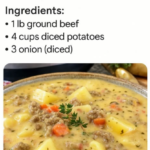
The **Cheesy Hamburger Potato Soup** is a perfect example of how foundational culinary techniques dictate the final quality of comfort food. By mastering the **Maillard reaction sear** for the beef, employing a stable **roux** for thickening, and strictly adhering to the **Temperate Dairy Finish** by adding cream and cheese off the heat, you can effortlessly create a soup that is rich, deeply flavorful, and achieves the flawless, velvety texture promised by its name.
Frequently Asked Questions (FAQ)
Q: Why is my soup grainy or curdled?
A: The most common reason is adding the **cheese or cream while the soup was boiling or simmering** (Step 7). Dairy proteins separate under high heat. Ensure the heat is off before adding the dairy/cheese.
Q: My soup is too thin. How can I thicken it?
A: Remove $\frac{1}{2}$ cup of the soup’s liquid. Whisk in **1 tablespoon of cornstarch** until smooth, then stir the slurry back into the simmering soup (Step 6) and stir for 1 minute to thicken.
Q: Can I use pre-cooked frozen potatoes?
A: **Not recommended.** Frozen potatoes often become mushy when simmered in soup. Stick to fresh, diced potatoes for the best texture (Step 5).
Q: What is “fond”?
A: Fond refers to the **browned bits of caramelized protein and sugar** that stick to the bottom of the pot after searing the beef (Step 2). These bits are scraped up and dissolved into the soup base, adding immense depth of flavor.
ADVERTISEMENT