Step 1: The Maillard Searing Phase
Sear the beef for 2-3 minutes per side. The “Surface Pyrolysis” Science: High-intensity dry heat triggers the Maillard Reaction. This creates a crust of complex flavor compounds that cannot be replicated by the wet-heat environment of the crockpot.
Step 2: The Hydration Cycle
Add broth, soup, and seasonings. The “Osmotic Diffusion” Secret: As the beef cooks in this liquid environment, the high concentration of salts in the seasonings moves into the meat via osmosis, seasoning the beef to its core while the broth prevents Evaporative Drying.
Step 3: Collagen Hydrolysis (The Slow Cook)
Cook on Low for 6-8 hours. The “Gelatin Transition” Physics: Between 70°C and 80°C (160°F–180°F), collagen begins to melt into gelatin.
By keeping the temperature low, we ensure the muscle fibers don’t contract too violently, which would result in dry, stringy meat.
Step 4: Final Lipid Integration
Stir in heavy cream 15 minutes before serving. The “Phase Stabilization” Rule: Adding the cream at the end prevents it from curdling. The high heat of a 6-hour cook can cause dairy proteins to flocculate; the final addition ensures a silky, stable emulsion.
Service and Storage Tips
Service: Serve over mashed potatoes or rice. The “Surface Area” Secret: The starch granules in potatoes or rice act as adsorption sites for the heavy, gelatinous sauce, ensuring every bite is saturated with flavor.
Storage: Store for up to 4 days. The “Flavor Maturation” Effect: Like many stews, this dish often tastes better the next day as the Aromatic Volatiles have more time to distribute evenly through the meat fibers.
Variants: Flavor Iterations
| Variation | The Adjustment | The Result |
|---|---|---|
| Stroganoff Style | Swap heavy cream for sour cream and add 2 tbsp Dijon mustard. | Tangy, acidic, and traditionally European. |
| Red Wine Infusion | Replace 1/2 cup of beef broth with a dry Red Wine (Cabernet). | Deep, tannic, and sophisticated. |
| Vegetable-Rich Bowl | Add frozen peas and carrots during the last hour of cooking. | Higher fiber content and visual color contrast. |
Tips: Pro-Level “Crockpot” Nuances
- The “Deglazing” Mandate: After searing the beef, use a splash of the beef broth to scrape the brown bits (the fond) off the skillet and pour that liquid into the crockpot. Those bits are flavor gold.
- Skimming the Lipids: If your stew meat was particularly fatty, you may see a layer of oil on top. Use a slice of bread or a spoon to skim the excess Surface Fat before adding the cream for a cleaner finish.
- Fresh Garlic vs. Minced: For a more intense Allicin punch, use freshly smashed garlic cloves instead of jarred minced garlic.
Conclusion: A Triumph of Time
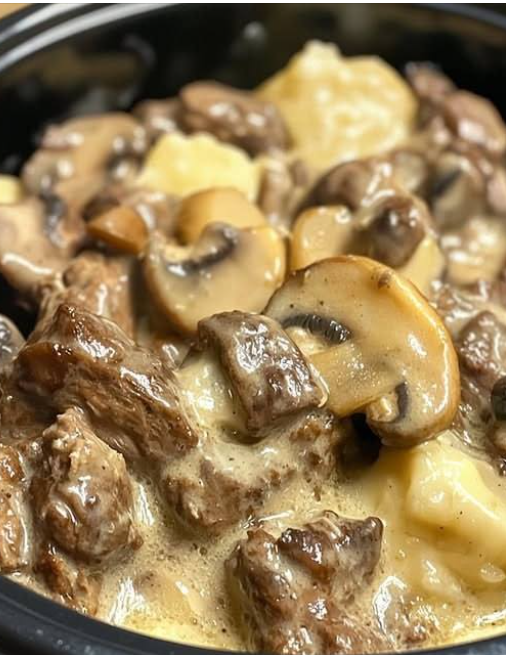
Creamy Crockpot Beef Tips and Mushrooms is a masterpiece of Molecular Transformation. By respecting the time required for protein breakdown and the delicate nature of dairy emulsions, you create a dish that is both functionally consistent and emotionally comforting. On this December 26, 2025, enjoy the perfectly executed results of slow-cooker engineering. Happy dining!
Frequently Asked Questions
- Can I use a different cut of beef?
- Yes! Chuck Roast (cut into cubes) is an excellent substitute as it has high Intermuscular Fat and collagen, ensuring even more tenderness.
- Why is my sauce too thin?
- This is usually due to Excessive Condensation from the crockpot lid. To thicken, whisk 1 tbsp of cornstarch with 1 tbsp of cold water (a slurry) and stir it in 30 minutes before serving.
- Can I cook this on High?
- Yes (3-4 hours), but Low is superior for collagen-rich cuts. The faster the protein denatures, the more likely the fibers are to squeeze out their internal moisture.
Would you like me to suggest a “Garlic Mashed Potato” recipe to pair with this, or perhaps show you how to turn this into a “Beef and Mushroom Pot Pie” using puff pastry?