
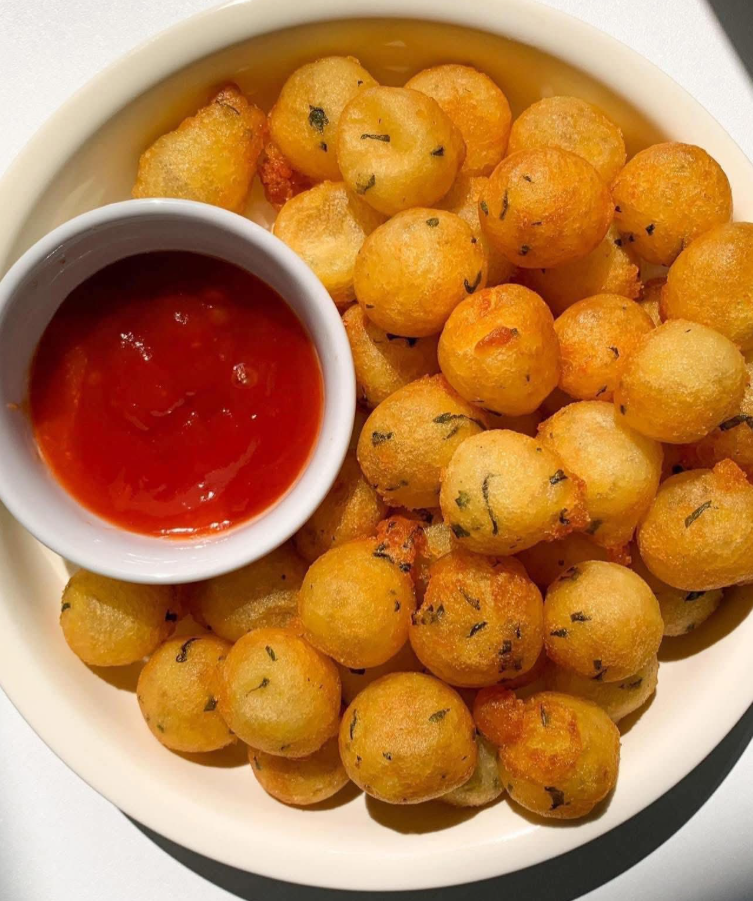
Crispy Potato Balls: A Study in Texture
Achieving the ultimate balance between a pillowy-soft core and a shatteringly crisp exterior.
Introduction: The Cornstarch Catalyst
The **Crispy Potato Ball** is a staple of global snack culture, from the *croquettes* of Europe to the *korokke* of Japan. However, this specific version relies on a “starch-reinforcement” method. By adding a high volume of **Cornstarch** to the mashed potatoes, you are creating a stable dough that can withstand deep-frying without absorbing excessive oil.
Technically, when cornstarch is heated in the presence of the moisture from the potatoes, it undergoes Gelatinization. Once it hits the 350°F (175°C) oil, that gelled exterior rapidly loses moisture, creating a rigid, airy lattice that remains crisp much longer than a standard potato fry. It is a minimalist masterpiece that proves that with the right ratios, four ingredients are all you need for a world-class appetizer.
Success with this recipe relies on two critical factors: The Potato Dryness (ensuring the potatoes are steamed or well-drained so the dough isn’t gummy) and The Oil Temperature (too low and they will be greasy; too high and they will burst). This guide provides the professional blueprint for these golden delights.
Ingredients: The Minimalist Infrastructure
This recipe yields approximately 15–20 bite-sized potato balls.
The Structural Core
- 2 Large Potatoes: Starchy varieties like Russet or Yukon Gold are essential. Pro Tip: Avoid “waxy” red potatoes, as they will make the dough too sticky.
- 1/2 Cup Cornstarch: This acts as the binder and the primary “crisping” agent.
The Flavor Balance
- 1/2 tsp Salt & 1/2 tsp Black Pepper: Fine-ground is best to ensure even seasoning throughout the dough.
The Cooking Medium
- Neutral Frying Oil: Vegetable, Canola, or Sunflower oil. You need an oil with a high smoke point (above 400°F).
