
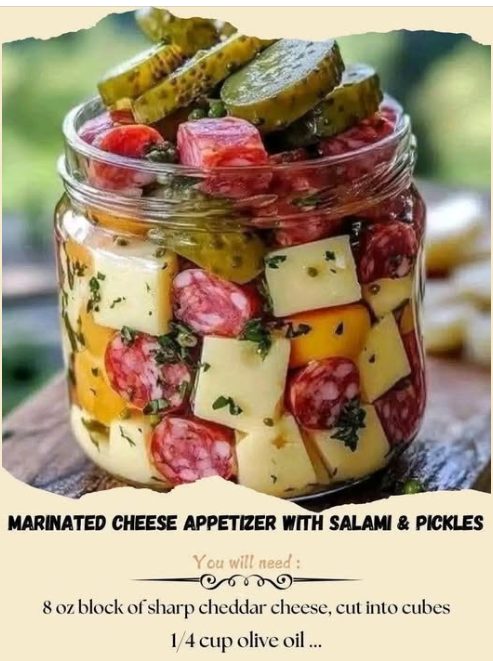
Easy Marinated Cheese Appetizer: A Masterclass in Cold Infusion
Introduction: The Physics of Flavor Migration
In the realm of cold hors d’oeuvres, the Marinated Cheese Appetizer is a triumph of Surface-Area-to-Volume Optimization. On this Thursday, December 25, 2025—Christmas Day—this dish provides a sophisticated, low-labor solution for holiday hosting. The secret lies in the Osmotic Exchange between the marinade and the solid proteins. As the cubed cheese sits in a lipid-based dressing, the fat-soluble flavor compounds from spices and salami migrate into the outer layers of the cheese, while the vinegar from the pickles provides a sharp, acidic contrast that “cleans” the palate after each rich bite.
This guide explores the Casein Density of cheddar vs. mozzarella, the Lipid Rendering of salami, and the pH Regulation provided by the pickling brine. We will examine why cubing the cheese into specific dimensions is the critical mathematical constant for ensuring flavor penetration without compromising structural integrity.
Ingredients: The Molecular Building Blocks
- 8 oz Cheddar Cheese (Cubed): The Structural Anchor. Cheddar has a lower moisture content and a denser Casein Matrix. It provides a sharp, salty base that holds its shape even when submerged in oil.
- 8 oz Mozzarella Cheese (Cubed): The Absorption Medium. Unlike low-moisture “block” mozzarella, slightly fresher versions have a more porous structure, allowing the marinade to penetrate deeper into the core than it would with cheddar.
- 4 oz Salami (Quarters): The Savory Lipid Source. Salami is rich in cured fats and spices (like peppercorns and garlic). When quartered, the increased surface area allows the oleic acids to mingle with the marinade, flavoring the cheese.
- 1/2 Cup Pickles: The Acidic Regulator. Pickles bring acetic acid (vinegar) and Lactobacillus-derived flavors to the mix, which serve to balance the heavy fat content of the dairy and meat.
