
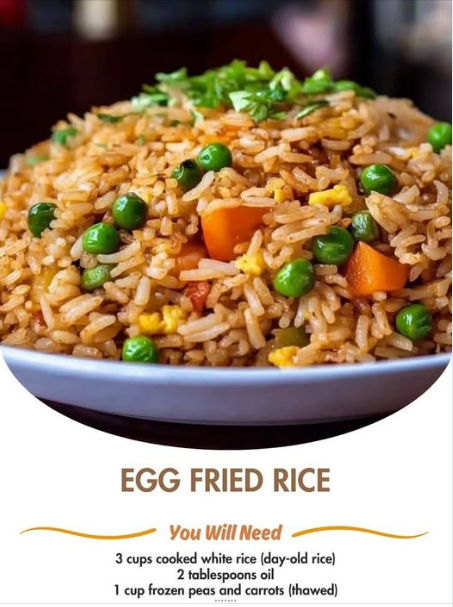
The secret to great fried rice lies in pace and heat. Work quickly and never overcrowd the pan.
- Heat the Wok: In a large skillet or wok (preferably), heat the oil over medium-high heat. Wait until the oil is **just smoking** before adding the first ingredient.
- Cook Aromatics: Add the chopped onion and sauté until soft and translucent, about 2–3 minutes. Add the minced garlic and cook for **30 seconds more** until fragrant. Do not allow the garlic to brown.
- Add Vegetables: Stir in the thawed peas and carrots, cooking for 2–3 minutes until heated through. Remove the aromatic/vegetable mixture from the wok and set aside. **This is a key step** to ensure the eggs and rice cook evenly at high heat without being slowed down by the other ingredients.
- Scramble the Eggs (Classic Method): Add a small amount of oil (if needed) to the wok. Pour in the beaten eggs and scramble them until fully cooked but not dry. Break the eggs into small pieces.
- Add Rice: Increase the heat to high. Add the cold rice. Use a spatula to break up any clumps. Stir-fry everything together with the eggs for 3–5 minutes. This is the **Wok Hei cooking time**: the rice should “dance” and dry out, developing a slightly toasted, non-sticky texture.
Technical Note: The key is to eliminate the surface moisture from the rice so it can absorb the fat and heat, developing the Wok Hei flavor.
- Season and Finish: Return the vegetables and aromatics to the pan. Pour the soy sauce over the rice and sprinkle with black pepper. Mix well to coat all ingredients evenly. Taste and adjust seasoning.
- Final Serve: Turn off the heat. Immediately stir in the 1 tsp sesame oil (optional). Serve hot.
Serving, Storage, and Texture Tips
Serving and Crispness
Fried rice should be served immediately to maintain its heat and crisp texture. It pairs perfectly with a garnish of fresh, chopped green onions or cilantro for a burst of herbaceousness.
Storage and Reheating
- **Storage:** Fried rice keeps well in the refrigerator in an airtight container for up to 3 days. It is an excellent meal prep dish.
- **Reheating:** For best results, reheat the fried rice in a dry pan over high heat. Avoid the microwave, as it will release moisture, making the rice mushy. By reheating in a pan, you can revive some of its original texture.
Tips for Preventing Mushy Rice
Variations: Proteins and Global Flavors
Fried rice is a blank canvas that accepts almost any protein and flavor combination. Here are ideas to elevate your dish:
- Proteins: Add 1 cup of cooked shrimp, diced cooked chicken, shredded pork, or fried firm tofu. **Ensure the protein is fully cooked before adding it to the rice**, and add it at the very end just to warm through.
- Vegetables: Substitute or add vegetables like snap peas, bean sprouts (add at the very end for crunch), sliced mushrooms, or bell peppers.
- Brown Rice/Sauce: For a healthier option, use cold, cooked brown rice. For a richer profile, substitute 1 tablespoon of soy sauce with oyster sauce or a low-sugar teriyaki sauce.
- Spicy Fried Rice: Add $1/2$ teaspoon of chili flakes or 1 teaspoon of Sriracha sauce to the soy sauce before pouring it over the rice.
Advanced Tips: Wok Hei in Action
To replicate Wok Hei in a home kitchen, where burner heat is often less intense than in restaurants, a few adjustments are necessary.
Heat and Cooking Techniques:
Conclusion
Egg Fried Rice is a classic that rewards technique with extraordinary flavor. By understanding and applying the principles of high-heat cooking—starting with cold rice, ensuring constant high heat, and cooking in distinct stages—you can easily recreate the light texture and smoky flavor of Wok Hei in your own kitchen. This is the perfect dish for repurposing leftovers while serving a satisfying, flavor-packed meal that the whole family will love. Mastering fried rice is a fundamental cooking skill, but making it perfect is an art. Enjoy this simple yet sophisticated delight.
Frequently Asked Questions
Q: Can I use freshly cooked rice if I cool it down fast?
A: Ideally, no. Even rapid 30-minute chilling doesn’t achieve the same firmness. If you must use same-day rice, cook it with less water than usual to make it drier, then spread it on a baking sheet and place it in the freezer for at least 30 minutes before using.
Q: Why does garlic burn so easily in the wok?
A: Minced garlic has a very low water content and fine particles, so it burns much faster than onion. It is important to add it only 30 seconds before moving to the next step, just long enough for it to become fragrant.
Q: Is it better to use a wok or a skillet?
A: A wok is preferable because its shape allows you to move food up the sides (where it’s less hot) while keeping the center extremely hot. If using a skillet, ensure it is wide and flat-bottomed, like a cast iron or stainless steel pan, to maximize the contact surface with the heat.
Note: This dish is highly customizable and is an excellent source of complex carbohydrates and lean protein.
Related posts:
 Wok Excellence: Mastering the Sizzling Garlic Chicken Stir-Fry
 The Ultimate Sizzler: Mastering Chinese Pepper Steak with Onions
 Engineering the Perfect Beef and Broccoli Stir-Fry
 The Gilded Wok: Mongolian Ground Beef Noodles
 The Garlic Lovers’ Wok: Master the Art of Savory Chicken Lo Mein
 The Ultimate Onion Beef Fried Rice: A Savory One-Pan Wonder
