
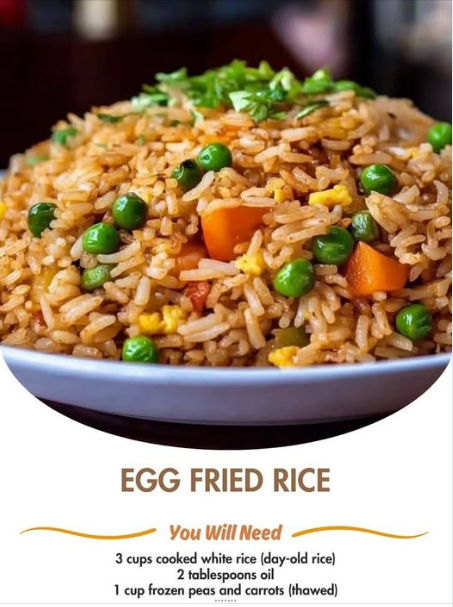
🍚 Egg Fried Rice: The Ultimate Guide to Wok Hei
Mastering the perfect fried rice—quick, non-mushy, and infused with the characteristic smoky flavor of high-heat wok cooking (Wok Hei).
Introduction: History and the Art of Fried Rice
Egg Fried Rice is one of the most iconic and widespread dishes in Chinese cuisine, with roots tracing back to the Sui Dynasty (589–618 AD) in the city of Yangzhou. The dish originated from a practical necessity: using up leftover rice from the previous day. Its evolution has transformed it into a culinary staple, valued not just for its delicious taste but also for its economic efficiency and speed of execution. The true magic of great fried rice lies in the concept of **Wok Hei** (鑊氣), often translated as the “breath of the wok.” This is a complex, smoky, and caramelized flavor achieved by extremely fast cooking over high heat, where ingredients are exposed to intense thermal radiation and a small amount of vapor that condenses on the sides of the wok before re-evaporating. The goal of this recipe is not just to mix ingredients, but to cook each grain of rice individually, ensuring a light, non-mushy texture.
For restaurant-quality fried rice, three technical elements are non-negotiable: using **cold, day-old rice**, **extremely high heat**, and **sequential addition** of ingredients to prevent overcrowding the wok. This approach guarantees the umami flavor and perfect texture we seek, making this simple dish a surprisingly sophisticated culinary experience.
Ingredients: The Role of Each Component
The Foundation:
- 3 cups **Cooked white rice**: **Must be cold and day-old.** Fresh rice is too moist and releases starch during frying, leading to a mushy texture. Cold rice is firm and the grains separate easily.
- 2 tablespoons **Vegetable or canola oil**: Requires a high smoke point (like canola, peanut, or sunflower) to withstand the intense wok heat without burning or smoking.
- 1 cup **Frozen peas and carrots**, thawed: Provides color, sweetness, and texture contrast. Thawing them beforehand is essential to avoid cooling down the wok.
- 1 **Onion**, chopped: The primary aromatic; it must be finely chopped to cook quickly without becoming overpowering.
- 1 tablespoon **Minced garlic** (about 3 cloves): Use sparingly and cook very quickly, as garlic burns easily at high temperatures.
- 2 **Eggs**, slightly beaten: The protein and binding element, which should be scrambled separately to avoid cooling down the other ingredients.
Seasoning and Finish:
- 3 tablespoons **Soy sauce**: The base umami seasoning. Use low-sodium soy sauce to better control the overall salt level.
- **Ground black pepper**, to taste: Adds a pungent, aromatic note.
- Optional: 1 teaspoon **Sesame oil**: Added at the very end, it provides an intense nutty aroma, but should never be used for frying due to its low smoke point.
- Optional: Chopped **green onions** for garnish.
