
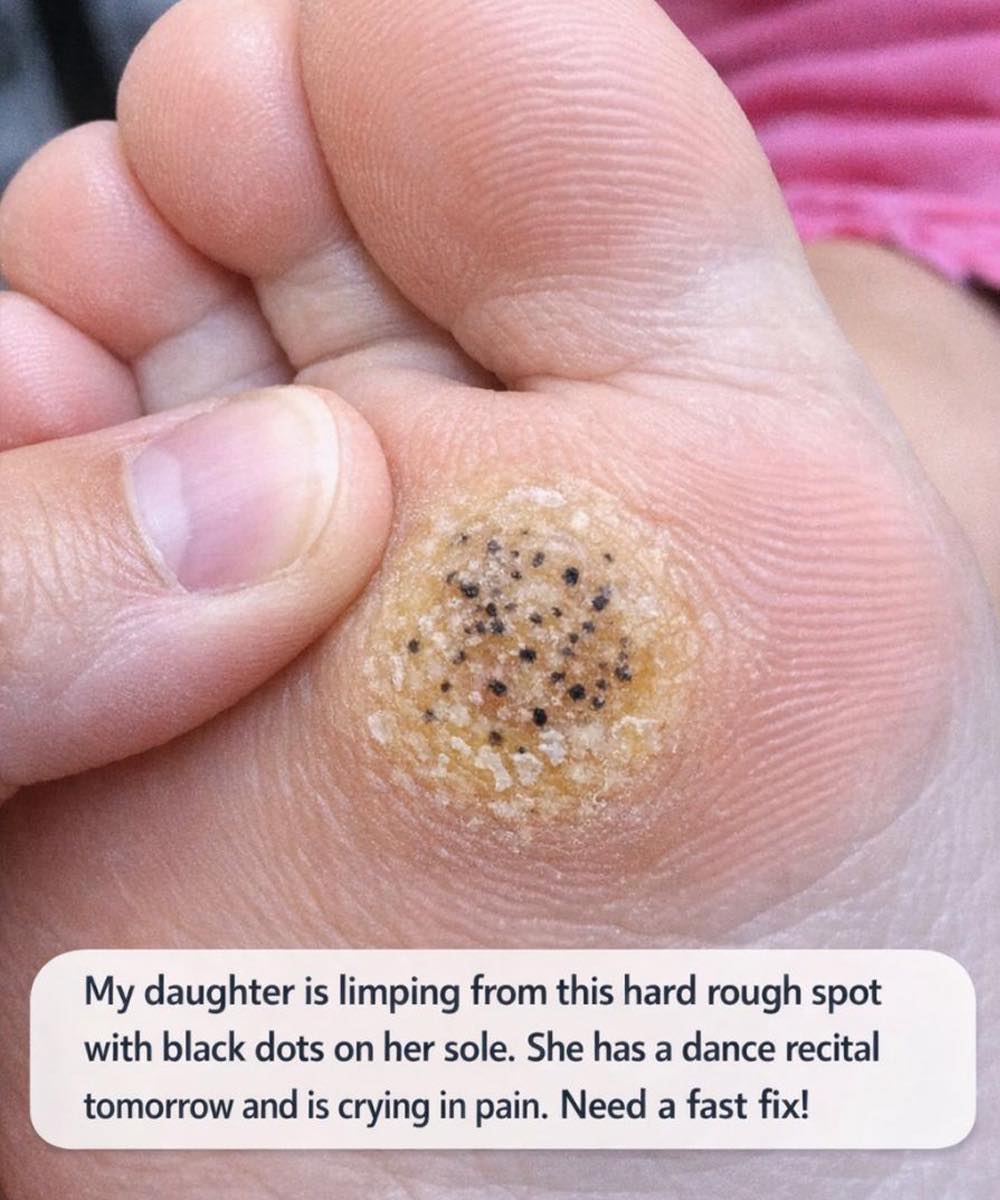
As a parent, witnessing your child in pain can be incredibly distressing, especially when it threatens to overshadow a significant event like a dance recital. If your daughter is limping and you notice a hard, rough patch with tiny black dots on the bottom of her foot, it’s natural to feel worried. This guide will help you identify the cause of her discomfort, provide immediate relief strategies, and outline when to seek medical attention, ensuring she can shine on stage despite her foot issues.
Understanding the Hard, Rough Spot With Black Dots on Your Child’s Foot
A tough, rough patch with small black dots on the sole often indicates a plantar wart. These warts are caused by the human papillomavirus (HPV) and typically appear on weight-bearing areas of the foot, such as the heel or the ball. The black dots are actually tiny blood vessels that have clotted, which is a key sign of this condition.
Plantar warts can vary in size from a few millimeters to about a centimeter across. Because they grow on pressure points of the foot, they may cause pain when standing or walking. The rough surface develops from thickened skin covering the wart, sometimes resembling a callus.
How to Distinguish a Plantar Wart From a Splinter, Blister, or Callus
To determine whether the spot is a plantar wart or another foot issue, examine the area closely. Plantar warts are typically round, rough, and contain tiny black specks from clotted blood vessels. Unlike a splinter, they do not have a clear entry point or a visible object embedded in the skin.
Blisters generally contain fluid and form due to friction or burns, and they do not display black dots. Calluses may also feel rough but usually lack the dark center spots and tend to cover a larger area due to repeated pressure. Pressing on a plantar wart often triggers pain, while calluses usually feel less sensitive.
When Limping and Tears Mean You Should Call a Doctor or Go to the ER
If your daughter is experiencing severe pain, or if you notice swelling, redness, pus, or warmth around the area, seek medical attention immediately. These signs could indicate an infection or another medical issue requiring urgent treatment.
Additionally, contact a healthcare provider if she cannot put weight on her foot or if the pain persists despite basic home care. Prompt medical advice can help prevent complications and ensure she receives the proper treatment.
