Step 1: The Aromatic Sauté (Base Development)
Melt butter and sauté mushrooms, onions, and thyme. The “Maillard” Rule: Cook until the mushrooms release their moisture and brown. This concentrates the Soluble Solids and builds the flavor foundation.
Step 2: Liquid Phase Integration
Add the cream of chicken soup, bouillon, and chicken stock. The “Emulsification” Secret: Slowly whisking the stock into the cream soup prevents the formation of “clumps” (micelles), ensuring a Homogeneous Suspension.
Step 3: The Gnocchi Infusion (Starch Loading)
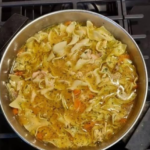
Bring to a simmer and stir in the gnocchi, chicken, and vegetables. The “Gelatinization” Physics: As the gnocchi reach 150°F-160°F, their starch granules swell and burst. This releases Amylose into the sauce, acting as a natural thickening agent that bonds the liquid molecules together.
Step 4: Thermal Equilibrium
Simmer for 5-8 minutes until the gnocchi are tender and float. The “Buoyancy” Indicator: When gnocchi float, it indicates that the air trapped inside has expanded and the density has decreased, signaling that the Thermal Penetration to the core is complete.
Service and Storage Tips
Service: Serve in deep bowls. The “Thermal Retention” Benefit: Because of the high density of the gnocchi and the thick sauce, this dish retains heat much longer than a standard chicken noodle soup.
Storage: Store in an airtight container for up to 3 days. The “Retrogradation” Warning: Upon cooling, the starches in the gnocchi will “set” and the sauce will thicken further. When reheating, add 1/4 cup of milk or stock to restore the Fluidity.
Variants: Structural Iterations
| Variation | The Adjustment | The Result |
|---|---|---|
| Baked Gnocchi Pie | Transfer to a dish, top with puff pastry, and bake at 400°F. | Dual Starch Contrast (soft gnocchi + crisp crust). |
| Truffle Infusion | Replace butter with truffle butter or add truffle oil at the end. | Enhanced Aromatic Complexity. |
| Vegetarian “Pot Pie” | Swap chicken for chickpeas and use vegetable stock. | Higher Fiber Content with a similar protein profile. |
Tips: Pro-Level “Gnocchi Pie” Nuances
- Gnocchi Texture: Do not overcook. Gnocchi have a low Structural Threshold; if boiled too long, the starch matrix collapses, turning them into a paste rather than distinct dumplings.
- The Bouillon Balance: Taste before adding the 1/2 tsp of salt. Rotisserie chicken and canned soups often have high Sodium Concentrations; you may not need additional salt to reach ionic equilibrium.
- Pea Preservation: Add the frozen peas and carrots in the last 3 minutes of cooking. This prevents Chlorophyll Degradation, keeping the peas a vibrant green.
Conclusion: A Triumph of Texture
Gnocchi Chicken Pot Pie is a masterpiece of One-Pot Engineering. By leveraging the natural starches of the potato gnocchi to thicken a savory chicken emulsion, you create a dish that is texturally superior to a standard stew. On this December 27, 2025, enjoy the perfectly executed results of starch-based viscosity. Happy eating!
Frequently Asked Questions
- Can I use shelf-stable gnocchi?
- Yes! Shelf-stable and refrigerated gnocchi work perfectly. Avoid frozen gnocchi unless you thaw them first, as they can drop the Ambient Temperature of the soup too rapidly, preventing the sauce from thickening.
- Is the sauce too thick?
- This is a Viscosity Preference. If the sauce is too dense, add chicken stock 1/4 cup at a time. If it is too thin, allow it to simmer uncovered for an extra 5 minutes to facilitate Evaporative Concentration.
- Can I use raw chicken breast?
- Yes, but you must sauté the diced raw chicken with the mushrooms and onions at the start to ensure Total Thermal Processing before adding the liquids.
Would you like me to suggest a “Garlic Herb Biscuit” recipe to serve on the side, or perhaps show you how to turn this into a “Slow Cooker” version?