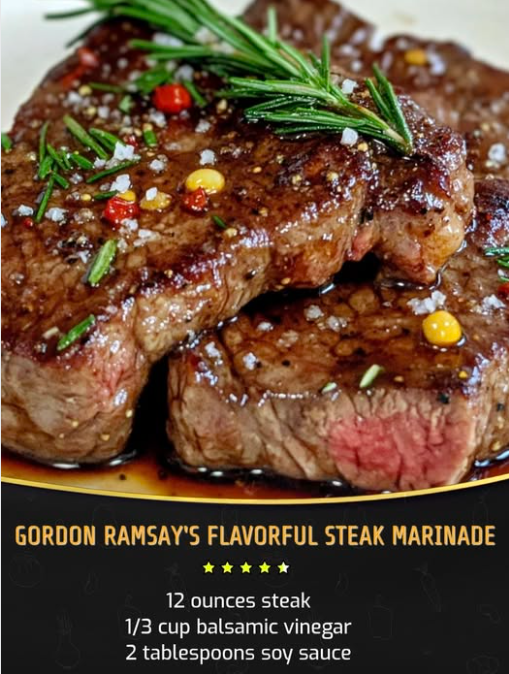
- Whisk the Marinade: In a medium-sized glass bowl or a heavy-duty resealable plastic bag, combine the balsamic vinegar, soy sauce, olive oil, minced garlic, minced rosemary, and black pepper. Whisk until the oil and vinegar are temporarily emulsified.
- Prep the Meat: Pat your steak dry with a paper towel. This allows the marinade to coat the meat rather than sliding off.
- The Soak: Place the steak into the marinade. Ensure all sides are submerged. If using a bag, squeeze out as much air as possible to force the liquid against the meat.
- Time it Right: Marinate in the refrigerator for at least 30 minutes, but ideally 2 to 4 hours. Avoid marinating longer than 12 hours, as the vinegar can start to turn the texture of the beef “mushy.”
- The Chill Factor: Remove the steak from the fridge 20 minutes before cooking. A room-temperature steak cooks more evenly than a cold one.
- The Sear: Heat a cast-iron skillet over high heat. Remove the steak from the marinade, shaking off excess liquid. Sear for 3-4 minutes per side, depending on thickness, for a perfect medium-rare.
- Rest: Let the steak rest for 5-10 minutes before slicing to keep the juices inside the meat.
Serving and Storage
Serving Suggestions
Since the marinade features balsamic and rosemary, this steak pairs beautifully with roasted root vegetables, a garlic mash, or a simple wilted spinach. You can take the leftover marinade, boil it in a small saucepan for 5 minutes (to ensure it is safe), and drizzle it over the sliced steak as a concentrated glaze.
Storage
If you have extra marinade that has not touched raw meat, it will stay fresh in a sealed jar in the fridge for up to 2 weeks. Once the meat is cooked, leftovers should be stored in an airtight container for up to 3 days. Sliced leftover steak is incredible on a cold sandwich with horseradish mayo.
Tips for a “Michelin” Finish
- Fresh vs. Dried: For this recipe, fresh rosemary is non-negotiable. Dried rosemary can be “woody” and doesn’t offer the same essential oils that infuse the meat.
- Pat Dry: Before the steak hits the pan, make sure it isn’t dripping wet. If there is too much liquid, the steak will steam instead of searing, and you won’t get that iconic brown crust.
- Use Quality Vinegar: Use a decent aged balsamic. If it’s too thin and watery, the flavor won’t be as rich.
Variations
Tailor the marinade to your specific taste or the cut of meat you are using:
- The Spicy Ramsay: Add a teaspoon of red chili flakes or a dollop of Dijon mustard for an extra kick.
- Honey Balsamic: Add 1 tablespoon of honey to the mix for a sweeter profile that works exceptionally well on pork chops.
- Lemon-Thyme: Swap the rosemary for thyme and add the zest of one lemon for a brighter, more Mediterranean feel.
Pro Chef Secret: The Basting Method
Gordon Ramsay is famous for “basting” his steaks. Once you flip the steak in the pan, add a knob of cold butter and a whole smashed garlic clove. As the butter melts and foams, use a spoon to repeatedly pour the hot butter over the steak. This works in tandem with the marinade to create an incredible flavor profile and a glossy finish.
Conclusion
Mastering a steak marinade like this is an essential skill for any home cook looking to elevate their kitchen game. By combining the sharpness of balsamic with the savory power of soy and the aromatics of rosemary, you transform an ordinary piece of beef into a culinary event. It’s simple, effective, and carries the hallmark of Gordon Ramsay’s high-impact cooking style.
If you tried this marinade and loved it, please comment “Yummy” if you’d like to see more chef-inspired recipes!
Frequently Asked Questions
- Can I use this on chicken or pork?
- Absolutely. This marinade is incredibly versatile. It works particularly well with pork tenderloin or bone-in chicken thighs.
- Should I poke holes in the steak with a fork?
- Generally, no. Poking holes allows juices to escape during cooking. A good marinade will penetrate the surface sufficiently without the need for puncturing.
- What is the best way to cook the steak after marinating?
- A cast-iron skillet is the best for indoor cooking to get a great crust, but this marinade also performs exceptionally well on an outdoor charcoal grill.