
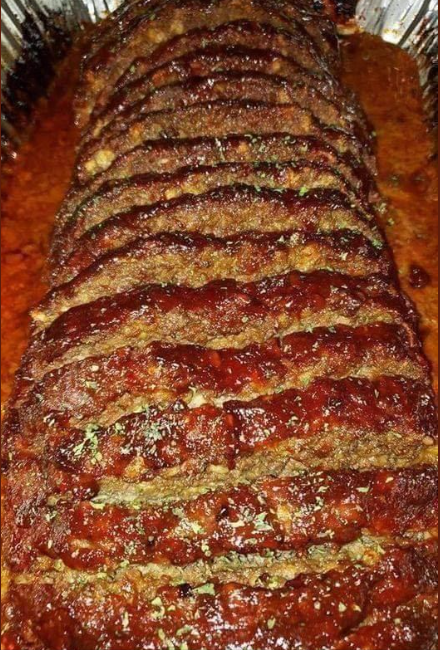
Grandma’s Juicy Meatloaf: A Masterclass in Moisture Retention and Flavor Layering
Introduction: The Science of the “Juicy” Meatloaf
The technical challenge of a meatloaf is preventing Protein Contraction. As ground beef cooks, the muscle fibers (myosin and actin) tighten and squeeze out internal fluids. This recipe solves the problem using a Panade-Adjacent Method: breadcrumbs and eggs create a structural net, while the sautéed celery and onions provide “moisture pockets.” The result is a loaf that maintains its Structural Integrity while remaining tender on the palate.
Ingredients: The Molecular Building Blocks
The Meat Matrix (The Scaffold)
- 2 lbs Lean Ground Beef: The Primary Protein Substrate. Using lean beef ensures the loaf doesn’t collapse under excess rendered fat, while the added ingredients compensate for moisture.
- 1/2 cup Italian-Seasoned Breadcrumbs & 2 Eggs: The Composite Binders. The eggs act as a heat-activated “glue” (coagulation), while the breadcrumbs act as Hygroscopic Sponges to trap meat juices.
The Aromatic Phase
- Celery & Onion (Sautéed in Butter): The Texture Modifiers. Sautéing these first initiates Cellular Breakdown, ensuring they integrate into the meat rather than remaining crunchy.
- Worcestershire Sauce & Creole/Greek Seasonings: The Ionic Flavor Enhancers. These provide a high concentration of glutamates and salts that trigger Protein Solubilization, making the meat more tender.
The Glaze (The Protective Seal)
- Tomato Sauce, Paste, and Ketchup: The Laminar Glaze. The high sugar content in the tomato products allows for Caramelization, creating a protective barrier that reduces evaporative cooling and moisture loss.
