

Step 1: The Onion Maceration
Slice the **red onions** into paper-thin rings. The Sulfur Hack: If you find raw onions too “sharp,” soak them in ice water for 10 minutes. This leaches out the propanethial-S-oxide (the gas that makes you cry), leaving a sweet, crisp crunch.
Step 2: Structural Preparation
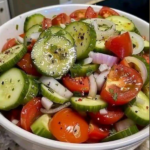
Slice the **English cucumbers** and **bell peppers**. English cucumbers are preferred over standard field cucumbers because their skin is thinner and their seeds are less watery, which prevents the salad from becoming “soupy.”
Step 3: The Assembly & The “Greek Toss”
In a wide, shallow bowl, combine the cucumbers, halving **cherry tomatoes**, peppers, and olives. The Dressing Ratio: Drizzle with the olive oil and a splash of red wine vinegar if desired. Toss gently to coat the vegetable surfaces with a thin lipid film before adding the cheese.
Step 4: The Feta Capping
Instead of crumbling the **feta**, place a large slice or a few thick blocks on top of the salad. Sprinkle the **dried oregano** over the cheese and vegetables. In traditional Greek service, the diner breaks the feta with their fork, ensuring a fresh, creamy bite every time.
Serving and Storage
Serving: Serve immediately with crusty bread to soak up the “Ladolemono” (oil-lemon-tomato juice) at the bottom of the bowl. Storage: While best fresh, this salad can be refrigerated for 24 hours. The flavors will actually deepen as the onions marinate in the oil.
Tips: The Professional Edge
The Maintenance Phase (Health Tip): Congratulations on your **59lb loss**! This salad is a “Powerhouse” of nutrition. It is high in healthy monounsaturated fats (from the oil and olives) which help your body absorb the fat-soluble vitamins (A, D, E, K) in the vegetables. It’s the perfect high-volume, low-calorie meal that supports metabolic health!
Variations: Culinary Twists
- The Island Style: Add 1 tbsp of drained capers for an extra punch of acidity.
- The Protein Boost: Add grilled octopus or chickpeas to transform this into a substantial main course.
- The Citrus Variant: Use fresh lemon juice instead of vinegar for a brighter, more “summery” profile.
Conclusion: Simplicity as Sophistication
The Greek Salad is a reminder that when ingredients are handled with respect to their cellular structure and osmotic properties, a simple assembly can rival the most complex cooked dishes. By focusing on the quality of your oil and the crispness of your cucumbers, you’ve created a dish that is the literal taste of the Mediterranean. Enjoy your fresh, colorful masterpiece!
Frequently Asked Questions
| Question | Answer |
|---|---|
| Can I use Roma tomatoes? | Yes, but remove the seeds. Cherry tomatoes are preferred because their high skin-to-flesh ratio provides more structural “pop.” |
| Why no lettuce? | Authentic Horiatiki is a “village salad” meant to showcase harvest vegetables. Lettuce dilutes the intensity of the feta and olive flavors. |
| Which olive oil is best? | Look for “First Cold Pressed” Extra Virgin Olive Oil with a harvest date within the last year for the highest antioxidant count. |
This is such a refreshing choice! Would you like me to suggest a “Greek Lemon Chicken” recipe to serve alongside this, or perhaps help you calculate the specific macronutrients for your meal tracking?
Related posts:
 Mastering the Mediterranean Greek Chicken Wrap
 A Masterclass in the Fresh Cucumber & Tomato Salad
 Mastering Cottage Cheese Salad
 The Earth & Vine Medley: Gourmet Cucumber and Beet Salad
 Dorito Taco Salad: The Perfect Fusion of Crunch and Freshness
 January Fresh Start Cottage Cheese Chicken Lettuce Boats
