
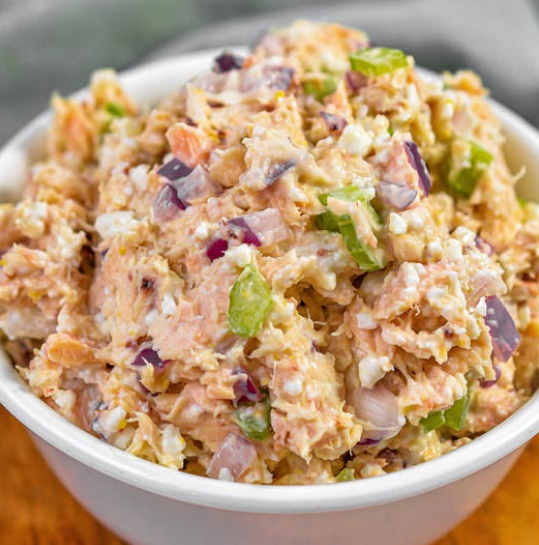
High-Protein Power: Mastering Cottage Cheese Salad
Introduction: The Cottage Cheese Transformation
This **Healthy High-Protein Cottage Cheese Salad** successfully substitutes traditional mayonnaise or chicken with the rich, protein-packed curds of cottage cheese. The technical goal is to maintain the integrity of the cottage cheese curds while ensuring the high-moisture vegetables do not release excessive liquid, which would dilute the flavor and create a watery base.
The **cottage cheese** (Ingredient I) acts as both the protein source and the creamy dressing base. The structure of cottage cheese, which consists of milk curds suspended in a liquid whey (the “creaming mixture”), means it is inherently moisture-rich. The addition of high-water-content vegetables, such as **cucumber** and **cherry tomatoes**, necessitates meticulous liquid control.
Success requires adherence to three core regulations: **The Moisture Management Mandate, The Flavor Stabilization Principle, and The Chill and Integrate Protocol.**
The first regulation, **The Moisture Management Mandate** (Instruction 1), is critical. Vegetables like **cucumber** (96% water) and **tomato** (95% water) release moisture when diced and seasoned, a process known as *osmosis*. To combat this, the vegetables must be pre-treated to release some of their initial liquid, or the salad must be consumed immediately. The best strategy is minimizing the overall liquid introduced.
The second regulation, **The Flavor Stabilization Principle** (Ingredient I & II), ensures depth. The combination of the tangy **lemon juice** and optional **olive oil** provides a quick, bright dressing that binds to the cottage cheese and coats the vegetables. This dressing must be added just before serving, or if prepared ahead, the vegetables should be dressed separately to prevent the moisture from leeching out too quickly.
The third regulation, **The Chill and Integrate Protocol** (Instruction 3 & 4), manages the texture. Allowing the salad to chill for at least $30\text{ minutes}$ lets the acidic **lemon juice** and **salt** slightly firm up the cottage cheese curds and marry the flavors of the **red onion** and **bell pepper**. However, chilling for *too long* (over 4 hours) can cause the salt to draw too much water out of the vegetables, resulting in a soggy texture and a watery base.
Ingredients: Defining Protein, Moisture, and Acidity
The full components for about 4 servings of salad:
I. The Base & Dressing:
- **$1\frac{1}{2}\text{ cups}$** cottage cheese (Protein base)
- **$1\text{ tbsp}$** fresh lemon juice (Acidity for tang)
- **$1\text{–}2\text{ tbsp}$** olive oil (optional for healthy fats) (Richness and coating)
- **$1\text{ tsp}$** dried dill (Herbaceous flavor)
- **Salt and pepper** to taste (Seasoning and moisture control)
II. The Vegetables & Aromatics:
- **$1\text{ medium}$** cucumber, diced (Bulk and crunch)
- **$1\text{ small}$** red bell pepper, diced (Sweetness and color)
- **$1\text{ small}$** red onion, finely chopped (Pungent aromatic)
- **$1\text{ cup}$** cherry tomatoes, halved (Moisture and sweetness)
- **$1\text{ tbsp}$** fresh parsley or cilantro, chopped (Freshness/Garnish)
