
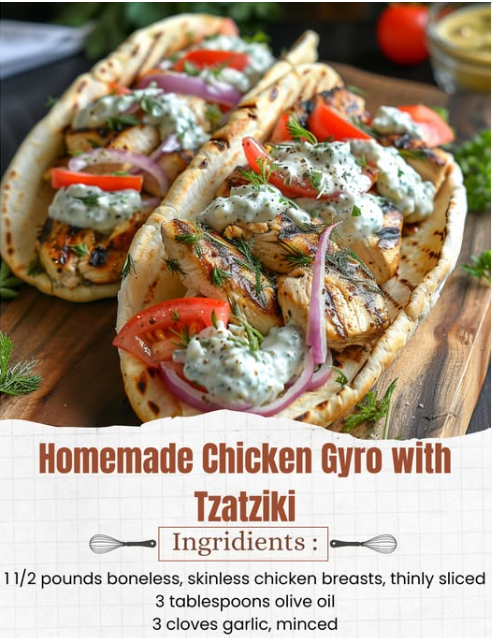
Homemade Chicken Gyro with Tzatziki: A Masterclass in Acid-Base Flavor Balancing
Introduction: The Science of Succulent Souvlaki
In the culinary world of Mediterranean street food, the Chicken Gyro is a triumph of Proteolytic Tenderization and Aromatic Infusion. The technical challenge lies in preventing the lean chicken breast from drying out during high-heat cooking. By utilizing a lipid-based marinade enriched with volatile herbs, we create a thermal barrier that locks in moisture. Furthermore, the accompanying Tzatziki serves as a Cooling Colloid, providing a pH contrast to the savory, charred protein. On this Friday, December 26, 2025, this recipe offers a refreshing, high-protein alternative to traditional holiday heavy-fats.
Ingredients: The Molecular Building Blocks
The Chicken Gyro (The Protein Substrate)
- 1 1/2 lbs Chicken Breasts: The Structural Scaffold. Slicing thinly increases the Surface Area-to-Volume Ratio, allowing for faster heat transfer and deeper marinade penetration.
- 3 tbsp Olive Oil: The Lipid Carrier. It dissolves the fat-soluble compounds in the herbs, delivering flavor deep into the muscle fibers.
- Garlic, Oregano, Thyme, Rosemary: The Aromatic Volatiles. These herbs contain phenols like carvacrol and thymol, which provide antimicrobial properties and deep savory notes.
The Tzatziki Sauce (The Stabilized Emulsion)
- 1 cup Greek Yogurt: The Continuous Phase. Its high protein content (casein) creates a thick, creamy matrix.
- 1/2 English Cucumber: The Hydration Element. Grating and squeezing it dry is critical to prevent Syneresis (the leaking of water), which would break the sauce’s viscosity.
- Lemon Juice: The Acidic Catalyst. It brightens the flavor profile and acts as a natural preservative.
