Step 1: The Flour Dredge
Pat your beef cubes completely dry with paper towels. This is crucial for a good sear. Toss the beef in a bowl with the flour, salt, and pepper until lightly coated. This flour will toast in the oil, providing a nutty flavor and thickening the stew as it simmers.
Step 2: The Sear (Building the Fond)
In a heavy Dutch oven, heat olive oil over medium-high heat. Brown the beef in batches. Do not overcrowd the pan, or the meat will steam rather than sear. Remove the browned cubes and set them aside. Look at the brown bits at the bottom of your pot—that is concentrated flavor!
Step 3: Sauté and Deglaze
Add the onions and garlic to the pot, cooking until softened. Stir in the tomato paste, cooking for 1 minute until it turns a deep rust color. Pour in the red wine, using a wooden spoon to scrape up every bit of the “fond” from the bottom of the pot. This is the moment the gravy’s character is born.
Step 4: The Long Braise
Return the beef to the pot. Add the beef broth, Worcestershire sauce, thyme, rosemary, and bay leaves. Bring to a boil, then reduce to a very low simmer. Cover and let it cook for 1 to 1.5 hours. This slow heat is what breaks down the connective tissues in the beef.
Step 5: The Vegetable Medley
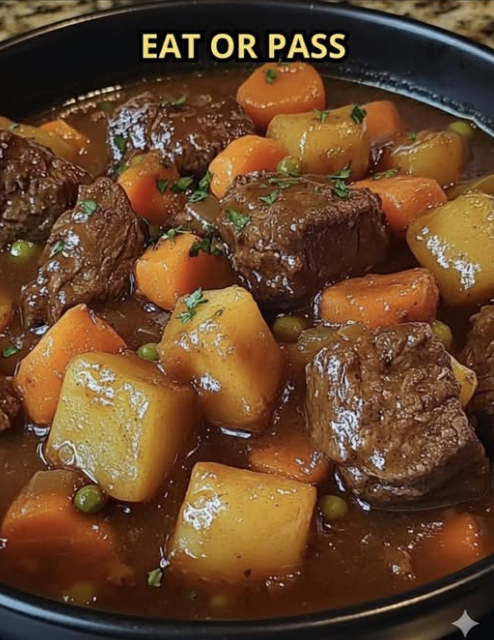
Add the carrots, potatoes, and celery. Simmer for another 30–40 minutes. You want the vegetables to be tender but not mushy. In the final 5 minutes, stir in the frozen peas—they only need enough time to heat through to retain their bright green color.
Serving and Storage
Serving: Ladle the thick stew into wide bowls. It is traditionally served with a side of crusty baguette or over a bed of fluffy white rice. A sprinkle of fresh parsley on top can add a nice herbal finish.
Storage: Stew is one of the rare dishes that actually improves with age. As it sits in the refrigerator, the starches from the potatoes continue to thicken the sauce and the herbs permeate the meat. It will stay fresh for up to 4 days in the fridge or 3 months in the freezer.
Tips: Controlling the Consistency
- Thickness Trick: If your stew is too thin at the end, mash a few of the cooked potato chunks against the side of the pot. The released starch will instantly thicken the broth.
- The Acid Balance: If the stew tastes “flat,” add a teaspoon of balsamic vinegar or lemon juice right before serving. The acid brightens all the heavy, savory flavors.
- Patience with the Sear: Don’t move the beef too early. Let it sit in the oil until it releases naturally from the pan—that’s how you know you’ve achieved a perfect crust.
Variations: Customizing the Pot
- Guinness Beef Stew: Replace the red wine with a bottle of Guinness stout for a deep, slightly bitter, and chocolatey Irish twist.
- The Root Cellar Special: Add parsnips or turnips along with the potatoes for a more earthy, peppery vegetable profile.
- Herb-Crusted Topping: Instead of rice, serve the stew with “dumplings” or a layer of puff pastry on top for a pot-pie experience.
Tips: Choosing the Right Meat
- Chuck is King: While “stew meat” packages are convenient, they are often a mix of different cuts. Buying a whole chuck roast and cubing it yourself ensures every piece has the right amount of marbling to stay juicy.
- Avoid Lean Cuts: Do not use sirloin or round for this long simmer; they lack the fat and connective tissue needed for a long braise and will end up dry and stringy.
Conclusion: A Timeless Kitchen Ritual
The Homestyle Beef and Vegetable Stew is a reminder that some of the greatest joys in life are the ones we wait for. By honoring the process—the searing of the meat, the deglazing of the pan, and the slow, quiet simmer—you create more than just a meal; you create a memory. This stew is the ultimate culinary hug, a reliable friend on a dark evening, and a testament to the magic of simple, fresh ingredients. Once you master the fundamentals of this recipe, you have the blueprint for countless variations, but you will likely find yourself returning to this homestyle classic time and time again. Gather your bowls and enjoy the richness!
Frequently Asked Questions
- Do I have to use wine?
- Not at all. You can replace the wine with an equal amount of beef broth plus a tablespoon of red wine vinegar to provide that necessary acidic lift.
- Why is my beef still tough?
- Beef stew meat needs time. If it’s tough, it simply hasn’t simmered long enough. Put the lid back on and give it another 20–30 minutes.
- Can I use an Instant Pot?
- Yes! Sear the meat on the ‘Sauté’ setting, then cook on ‘High Pressure’ for 35 minutes with the liquids. Add the vegetables and cook for another 5 minutes on high pressure to finish.
Would you like me to show you the Slow Cooker version of this recipe for a truly “set-and-forget” experience, or perhaps suggest a “Herbed Dumpling” recipe to cook right on top?