
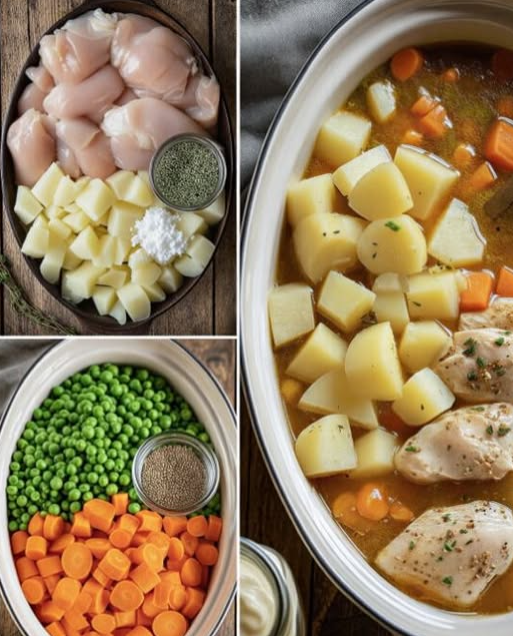
Deep Comfort: Mastering Hearty Chicken and Vegetable Stew
Introduction: The Foundation of a Great Stew
A hearty stew is defined by its tender meats, fully cooked vegetables, and rich, thickened broth, all achieved through low and slow simmering.
The **Hearty Chicken and Vegetable Stew** is a classic comfort dish, characterized by its robust flavor profile and its ability to turn simple ingredients into a complex meal. Unlike soup, a stew is generally thicker, thanks to the cooking of starches (potatoes) and often a specific thickening agent added at the end. This recipe relies on the inherent richness of **boneless, skinless chicken thighs**—which maintain moisture better than breasts—and a blend of aromatic vegetables.
Success in this stew requires adherence to three core regulations: **The Uniform Cut Rule, The Browning and Thickening Protocol, and The Layered Herb Addition.**
The first regulation, **The Uniform Cut Rule** (Instruction 1 Prep), ensures every component cooks evenly. The key vegetables—**carrots, potatoes, and celery**—must be cut into roughly the same size (approximately 1-inch pieces). If the potatoes are cut larger than the carrots, for example, the carrots will turn to mush before the potatoes are tender. Proper knife work is crucial here.
The second regulation, **The Browning and Thickening Protocol** (Instructions 2, 3, & 6), builds flavor depth and controls texture. First, the chicken is seared (browned) to create rich fond on the bottom of the pot. Then, the **tomato paste** (Instruction 3) is cooked briefly with the vegetables to caramelize its sugars and deepen its color before the **chicken broth** is added. This step contributes richness, not just acidity. Finally, stew thickness can be controlled through natural potato starch or adding a slurry near the end of the cook time.
The third regulation, **The Layered Herb Addition** (Instruction 3 & 5), ensures maximum aromatic impact. Hearty herbs like **thyme and rosemary** should be added early to the stew to infuse the liquid thoroughly during the long cooking time. Delicate herbs (like parsley or chives, if used) should only be added right before serving to preserve their fresh, bright flavor.
Ingredients: Defining the Stew Matrix
The essential components for texture and flavor:
I. Protein, Aromatics, and Base:
- Boneless, skinless chicken thighs (Rich, moist protein)
- Carrots (Sweetness and structure)
- Potatoes (Starch for thickening and substance)
- Celery (Aromatic base)
- Onion (Aromatic base)
- Garlic (Flavor depth)
- Olive oil (Fat for searing and sautéing)
II. Liquid, Flavor, and Seasoning:
- Chicken broth (The primary cooking liquid)
- Tomato paste (Umami and color depth)
- Herbs and spices (such as thyme, rosemary, salt, and pepper) (Flavor profile)
