
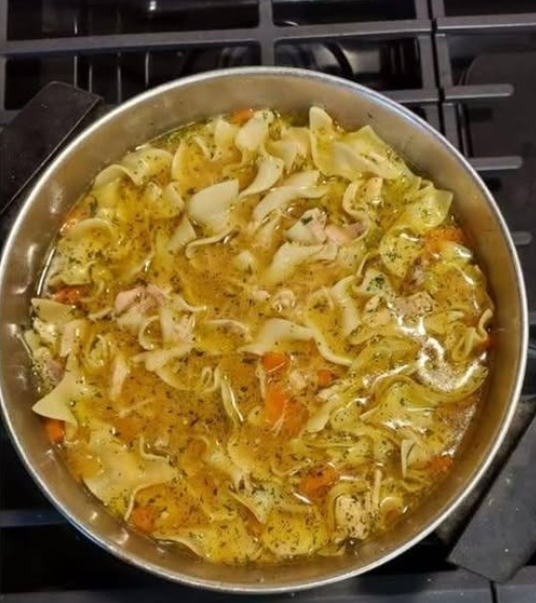
The ingredients focus on the classic “holy trinity” of soup aromatics, protein, and starch:
I. The Aromatics and Fat Base:
- **1 tablespoon** olive oil or butter (Assumed)
- **1 large** onion, diced
- **2** carrots, peeled and diced
- **2 stalks** celery, diced (Assumed, completes the *mirepoix*)
- **3 cloves** garlic, minced (Assumed, for aromatic depth)
II. Protein and Liquid:
- **1 lb** boneless, skinless chicken breasts or thighs, cut into bite-sized pieces
- **6 cups** low-sodium chicken broth/stock
- **2 cups** water (Assumed, for necessary volume and regulation of saltiness)
- **1 tablespoon** concentrated chicken base (Assumed, for depth)
III. Starch, Seasoning, and Finish:
- **1 cup** egg noodles (Dry, medium size, assumed)
- **1 teaspoon** dried thyme or oregano (Assumed, for savory depth)
- **1** bay leaf (Assumed, for complexity)
- **1/2 teaspoon** salt and **1/4 teaspoon** black pepper
- **1/4 cup** fresh parsley, chopped (Assumed, for bright garnish)
Instructions: Blooming the Broth and Perfecting the Noodle
Phase 1: Blooming the Aromatics and Cooking the Chicken
- **Sauté Aromatics:** In a large Dutch oven or soup pot, melt the **butter or heat the olive oil** over medium heat. Add the **diced onion, carrots, and celery**. Sauté for **8–10 minutes**, stirring occasionally, until the vegetables are softened and translucent but not browned.
- **Add Garlic:** Stir in the **minced garlic** and cook for 1 minute until fragrant.
- **Sear Chicken:** Add the **bite-sized chicken pieces** to the pot. Sauté for 3–5 minutes until the chicken pieces are lightly seared on the exterior but still slightly raw in the center.
Phase 2: Building Broth Depth and Simmering
- **Deglaze and Add Liquid:** Pour in a splash of the chicken broth and scrape up any browned bits from the bottom of the pot (deglazing). Add the remaining **chicken broth, water, concentrated chicken base, dried thyme, and bay leaf**.
- **Simmer (CRITICAL):** Bring the soup to a boil, then immediately reduce the heat to a gentle simmer. Cover the pot and let it simmer for **20 minutes**. This step finishes cooking the chicken, softens the carrots and celery, and allows the dried herbs to fully infuse the broth.
- **Remove Chicken and Bay Leaf:** Use tongs or a slotted spoon to remove the cooked chicken pieces and the bay leaf. Set the chicken aside. Removing the chicken prevents it from overcooking and becoming dry and stringy.
Phase 3: Noodle Timing and Final Finish
- **Add Noodles (TIMING REGULATION):** Increase the heat slightly and add the **egg noodles** to the simmering broth. Cook the noodles according to package directions, typically **8–12 minutes**, or until they are just *al dente*—slightly firm.
- **Return Chicken and Season:** Just before serving (in the last 2 minutes of cooking the noodles), return the cooked chicken pieces to the pot to reheat. Stir in the **salt and black pepper**. Taste the broth and adjust the seasoning (salt is usually needed).
- **Final Garnish:** Turn off the heat. Stir in the **fresh chopped parsley**. Serve immediately.
Serving and Storage: The Noodle Deterioration Factor
The integrity of chicken noodle soup is highly dependent on the storage of the noodles, which absorb liquid constantly.
- **Serving:** Serve immediately while the noodles are perfectly cooked.
- **Storage (Refrigerated):** Store leftovers in an airtight container in the refrigerator for up to 3 days. The noodles will continue to absorb broth, causing them to swell significantly and the broth to disappear.
- **Reheating:** When reheating, stir in an **extra splash of chicken broth or water** to restore the desired soup consistency. Reheat gently to prevent the chicken from drying out.
- **Optimal Storage (Tip):** For the best leftovers, **cook the noodles separately** and add them to each bowl of soup just before serving. Store the plain broth and chicken mixture separately. This prevents the primary batch from becoming excessively thick and preserves the noodle texture.
Tips: Essential Techniques for Broth Richness
The Chicken Base Trick: Always incorporate the **concentrated chicken base** (Step 4). It is the primary shortcut for achieving a rich, long-simmered flavor and a satisfying mouthfeel (due to the gelatin content) without hours of simmering bones.
Don’t Skip the Sear: Lightly searing the chicken pieces (Step 3) adds a desirable **Maillard reaction** flavor to the exterior, deepening the savory notes that transfer into the broth.
Use Bone-In (Optional): For maximum flavor infusion (if time allows), use bone-in, skin-on chicken pieces for the simmer (Step 5). Remove the chicken, shred the meat, and discard the skin and bones before returning the meat to the pot.
The Butter vs. Oil Decision: Starting the *mirepoix* (Step 1) in a blend of **butter and olive oil** (e.g., 1/2 tablespoon of each) imparts a richer, nutty flavor from the butter while using the oil to raise the smoke point and prevent scorching.
Salt Control: Use **low-sodium broth** (Step 4). Since concentrated chicken base and table salt are added later, starting with low-sodium liquid gives you absolute control over the final salt level. Taste and adjust only at the end.
Variations: Customizing the Homestyle Flavor
The chicken noodle soup base is a highly flexible canvas for variation:
- **Lemon Dill:** Add **1 tablespoon of lemon juice** and **1/4 cup of fresh dill** (in place of parsley) at the very end (Step 9) for a bright, Mediterranean-inspired flavor.
- **Spice Boost:** Add **1/2 teaspoon of smoked paprika** and a **pinch of cayenne pepper** along with the dried thyme (Step 4) for a subtle warmth and smoky depth.
- **Vegetable Bulk:** Add other quick-cooking vegetables like sliced **mushrooms, diced zucchini, or peas** (frozen peas should be added in the last 2 minutes of cooking the noodles).
- **Rice or Gnocchi:** Substitute the egg noodles with **long-grain white rice** (which takes longer to cook, about 20-30 minutes) or small potato **gnocchi** (which cook in 3-5 minutes, add at the very end).
- **Herb Bouquet Garni:** Instead of dried thyme, tie a **bouquet garni** of fresh thyme sprigs and parsley stems together with a bay leaf and remove it after the 20-minute simmer (Step 5).
Uniform Dicing: Ensuring the onions, carrots, and celery are diced to a **similar size** (about 1/2 inch cubes) (Step 1) guarantees they all become perfectly tender at the same time, avoiding crunchy carrots or mushy onions.
The Skimmer’s Role: During the initial boil and subsequent simmer (Step 5), a thin layer of foam or scum may rise to the surface. Use a large spoon or a fine-mesh skimmer to **skim this foam off**. This clarification step results in a cleaner, clearer broth.
Egg Noodle Substitution: If using pasta other than egg noodles (like small elbow macaroni), check the packaging. If the pasta has a longer cooking time, add it before or simultaneously with the chicken pieces during the simmer phase (Step 5) to ensure it cooks through.
Finishing the Broth: After adding the chicken back and seasoning (Step 8), let the soup stand off the heat for **5 minutes** before serving. This brief rest allows the final seasonings to fully integrate and the flavors to “marry.”
Conclusion: Comfort in Every Bowl
Mastering Homestyle Chicken Noodle Soup is about precision in flavor building and timing. By carefully blooming the *mirepoix* for depth, utilizing concentrated chicken base for richness, and strictly timing the noodle and chicken additions, the cook can bypass the long simmer and achieve the elusive “all-day” flavor profile quickly. The result is a soothing, deeply savory broth brimming with tender chicken, perfectly cooked vegetables, and intact, soft noodles—the ideal dish for instant comfort.
Frequently Asked Questions (FAQ)
Q: Why is my broth cloudy?
A: The broth becomes cloudy if the soup is **boiled too vigorously** (not gently simmered, Step 5) or if **scum/foam** was not skimmed from the surface (Tip: The Skimmer’s Role). Boiling emulsifies fats and proteins into the liquid, permanently clouding it.
Q: My noodles absorbed all the broth overnight. How can I prevent this?
A: The noodles continue absorbing liquid upon storage. The solution is to **cook the noodles separately** and add them to individual bowls of soup just before serving (Optimal Storage Tip). Alternatively, add extra liquid when reheating.
Q: My chicken turned out dry and tough. What happened?
A: The chicken was likely **overcooked** (simmered for too long) or was not removed from the broth after the initial cooking phase (Step 6). Chicken breast is particularly susceptible to drying out.
Q: Can I use fresh herbs during the long simmer?
A: Fresh soft herbs (like parsley and dill) should only be added at the end, as prolonged heat destroys their flavor and color. Only woody, tough herbs (like thyme and rosemary) or a **bouquet garni** can withstand the long simmer (Step 5).
Related posts:
 The Engineering of Slow-Cooked Chicken and Noodles
 From Bake to Broth: Mastering the Creamy White Lasagna Soup
 The Ultimate Italian Drunken Noodles: A Hearty & Flavorful One-Pan Meal
 Chicken Noodle Soup is a classic comfort food at my house
 Slow Cooker Comfort: Mastering Creamy Potato & Hamburger Soup
 Creamy Comfort: Mastering Cheesy Hamburger Potato Soup
