
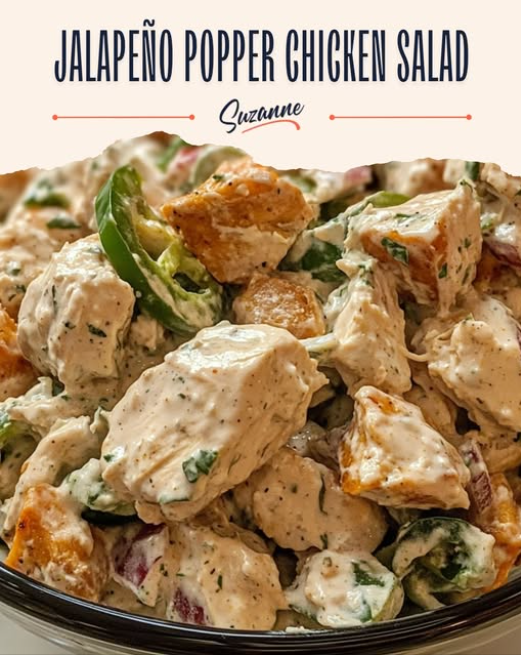
Jalapeño Popper Chicken Salad: A Study in Lipid Buffering and Flavor Diffusion
Introduction: The Physics of the “Creamy Burn”
This recipe represents a triumph of Capsaicin Solubility. Capsaicin, the compound responsible for the heat in jalapeños, is hydrophobic—meaning it does not dissolve in water but dissolves readily in fats. By suspending chopped jalapeños in a matrix of cream cheese and mayonnaise, the fats bind to the capsaicin molecules, preventing them from overwhelming the pain receptors on the tongue. This results in a “slow-burn” profile that highlights the fruitiness of the pepper rather than just its heat.
Ingredients: The Molecular Building Blocks
The Emulsion Base (The Continuous Phase)
- 4 oz Cream Cheese & 3/4 cup Mayonnaise: The Stabilized Lipid Matrix. The cream cheese provides structural density (plasticity), while the mayonnaise acts as an oil-in-water emulsion that carries the garlic and salt.
- 1/2 cup Shredded Cheddar: The Solid Fat Inclusion. Provides a salty, aged contrast to the fresh dairy.
The Aromatic and Piquant Inclusions
- 3 cups Shredded Chicken: The Fibrous Scaffold. Shredded chicken has a high surface area, allowing the creamy dressing to coat every individual muscle fiber through capillary action.
- Pickled & Fresh Jalapeños: The Biphasic Heat Source. The pickled peppers provide acetic acid and soft heat, while the fresh jalapeño provides Volatile Allicins and a crisp textural snap.
- 1 tbsp Jalapeño Juice: The Acidic Brightener. This lowers the pH of the salad, cutting through the heavy lipids for a cleaner finish.
