
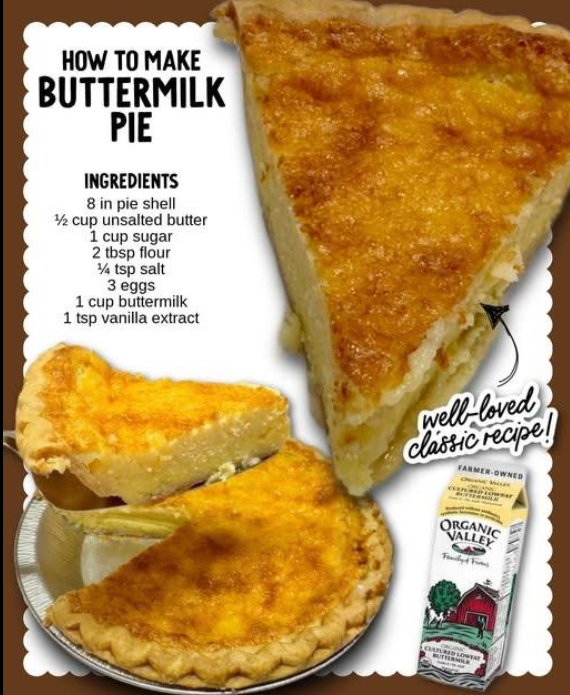
The secret to a smooth Buttermilk Pie is the order in which you combine the ingredients.
- The Prep: Preheat your oven to 175°C (350°F). Place your unbaked pie crust into a 9-inch pie plate.
- The Creaming: In a large bowl, cream together the softened butter and sugar until the mixture is pale and fluffy.
- The Bind: Add the eggs one at a time, beating well after each addition. Whisk in the flour until no lumps remain.
- The Liquid: Gradually stir in the buttermilk and vanilla extract (and lemon juice if using). The batter will be quite thin—this is normal!
- The Bake: Pour the mixture into the pie crust. Bake for 45–50 minutes. The pie is done when the edges are set and the center has a slight, “Jello-like” jiggle.
- The Set: This is the hard part! Let the pie cool completely on a wire rack to allow the custard to fully set before slicing.
Serving and Storage: The Perfect Slice
How to Serve
This pie has a “classy look” all on its own, but a dusting of powdered sugar or a handful of fresh berries on the side makes it a **chef’s kiss** experience. It is equally delicious at room temperature or chilled from the fridge.
Storage Tips
Because it is a custard-based pie, it must be refrigerated. Keep it covered in the fridge for up to 4 days. It does not freeze well, as the delicate custard texture can break down and become watery upon thawing.
Tips: Pro-Level Pie Secrets
- The “Jiggle” Test: Don’t overbake! If the center doesn’t jiggle at all, the eggs may overcook, leading to a “rubbery” texture. It will continue to firm up as it cools.
- Real Buttermilk: For the best flavor, use full-fat buttermilk. If you have to make a substitute (milk + vinegar), the pie will still be good, but it won’t have the same “soooo good” richness as the real thing.
Variations: Flipping the Flavor
This simple base is perfect for small adjustments:
- The Nutmeg Classic: Sprinkle a little freshly grated nutmeg over the top before baking for a traditional warm spice flavor.
- The Citrus Twist: Add a tablespoon of orange zest to the batter for a brighter, summery version.
- The Berry Bottom: Drop a handful of fresh blueberries into the bottom of the crust before pouring in the filling.
Tips: Why the Flour?
You might wonder why such a small amount of flour is used.
“In a buttermilk pie, the flour acts as a ‘stabilizer.’ It binds with the proteins in the eggs and the fat in the butter to create a structure that prevents the buttermilk from curdling during the long bake, ensuring a silk-smooth finish every time.”
Conclusion: A Timeless Treasure
Buttermilk Pie is proof that the simplest ingredients often make the most memorable meals. It’s a “soooo good” dessert that relies on technique rather than expensive toppings. Once you master the silky texture and golden crust, it will become your go-to “weeknight rescue” for guests. Enjoy every buttery, tangy bite!
Frequently Asked Questions
What is the difference between Buttermilk Pie and Chess Pie?
They are very similar! However, Chess Pie usually contains cornmeal and is much sweeter, whereas Buttermilk Pie relies on buttermilk for a tart, creamy profile.
My pie is watery at the bottom, what happened?
This usually happens if the pie wasn’t allowed to cool completely before slicing. The “set” happens during the cooling process!
Can I use a graham cracker crust?
It’s not traditional, but it works! It will result in a much sweeter pie, so you may want to reduce the sugar in the filling slightly.
Related posts:
 The Best Banana Pudding Ever: A Classic Dessert with a Creamy Twist
 Traditional Old Fashioned Egg Custard Pie
 The Definitive Guide to Texas Chocolate Pecan Pie
 Milktart Cookie Cups—Irresistibly Creamy and Homemade Delights
 Savory Perfection: The Keto Beef, Cheese, and Tomato Pie
 Keto Beef, Cheese, and Tomato Pie: A Savory Classic Without Compromise
