
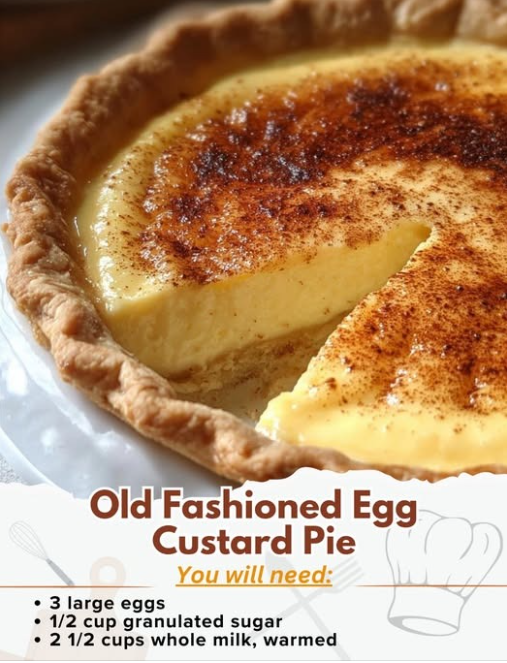
The Golden Hour: Traditional Old Fashioned Egg Custard Pie
Introduction
In the quiet history of dessert making, the Old Fashioned Egg Custard Pie stands as a masterpiece of subtlety. Unlike the flashy, fruit-filled pies of summer or the heavy spiced tarts of autumn, the custard pie is a year-round comfort—a delicate balance of simple farmhouse ingredients. It is a dish characterized by its “quiver,” that perfect point where the eggs and milk set into a silky, translucent solid that yields to the edge of a fork like velvet.
This is a nostalgic recipe, often associated with grandmothers who knew the exact temperature of a wood-burning stove just by hovering a hand. It relies on the pure flavors of vanilla and whole milk, finished with a signature dusting of nutmeg that toasts as the pie bakes. To master this pie is to master the art of the custard: a gentle, slow bake that transforms liquid into a dream-like state of creamy indulgence. It is light, elegant, and quietly delightful.
Ingredients
Because this recipe has so few components, the quality of each is paramount. Use the freshest eggs and the richest milk you can find.
- The Shell: 1 unbaked 9-inch pie crust. (If using store-bought, ensure it is fully thawed; if homemade, keep it chilled until the last second).
- The Foundation: 3 large eggs, room temperature.
- The Sweetener: 1/2 cup granulated sugar.
- The Liquid: 2 1/2 cups whole milk, warmed slightly (but not hot).
- The Flavorings: 1/2 teaspoon pure vanilla extract and 1/4 teaspoon salt.
- The Crowning Glory: 1/4 teaspoon ground nutmeg. Freshly grated nutmeg is preferred for its potent aromatic oils.
Instructions
The secret to a smooth, hole-free custard is low and slow heat. Follow these steps to prevent the eggs from scrambling.
- Preparation: Preheat your oven to 400°F (200°C) to start, but be prepared to lower it. Place your unbaked pie crust into a deep-dish 9-inch pie plate.
- The Egg Base: In a large mixing bowl, beat the 3 eggs with the sugar, salt, and vanilla extract. Whisk gently; you want to combine them without creating too many air bubbles, which can cause the top of the pie to look foamy.
- The Tempering: Gradually pour the warmed milk into the egg mixture, whisking constantly. Warming the milk helps the sugar dissolve and ensures the custard begins setting evenly in the oven.
- The Strain (Pro Tip): For a truly professional, “silky” texture, pour the liquid mixture through a fine-mesh sieve into the pie crust. This removes any stray bits of egg white that didn’t fully incorporate.
- The Garnish: Sprinkle the nutmeg evenly over the top of the liquid.
- The Bake: Bake at 400°F for 10 minutes to set the bottom crust. Then, reduce the oven temperature to 325°F (160°C) and continue baking for 30–35 minutes.
- The Jiggle Test: The pie is done when the edges are set but the center still has a slight “jiggle” (like gelatin) when moved. It will finish firming up as it cools.
Serving and Storage
Timing is everything when it comes to the texture of a custard pie.
- The Cooling: Place the pie on a wire rack and let it cool completely at room temperature. This prevents the crust from becoming soggy.
- Chilling: Once cooled, refrigerate the pie for at least 2–4 hours. A chilled custard pie slices much more cleanly and has a more refreshing mouthfeel.
- Storage: Cover loosely with plastic wrap and store in the refrigerator for up to 3 days. This pie does not freeze well, as the custard will weep and separate upon thawing.
Tips
“A custard pie is a conversation between the oven and the egg; don’t let it get too heated.”
- Warm, Not Hot: If your milk is too hot when you add it to the eggs, you will cook the eggs instantly, resulting in a lumpy, “scrambled egg” texture. It should feel like warm bathwater.
- Avoid Bubbles: If you see a lot of foam on top of your mixture before baking, skim it off with a spoon. Those bubbles will turn into a brown, crusty layer that detracts from the smooth surface.
- Shelf Placement: Bake your pie on the lowest rack of the oven. This ensures the bottom crust gets crisp before the delicate custard overcooks.
Variations
While nutmeg is the traditional choice, you can modernize this heirloom recipe with a few simple swaps:
| Variation | The Adjustment | The Result |
|---|---|---|
| The Coconut Custard | Add 1/2 cup sweetened shredded coconut | Textured and tropical |
| The Honey Custard | Sub sugar for 1/3 cup honey | Floral and deep amber |
| The Bourbon Custard | Add 1 tbsp Kentucky Bourbon | Rich, smoky, and adult |
Tips (For a Non-Soggy Crust)
If you struggle with a “soggy bottom,” try blind baking the crust first. Line the raw crust with parchment paper and pie weights (or dried beans) and bake at 375°F for 10 minutes. Remove the weights, brush the bottom with a thin layer of beaten egg white to “seal” it, and bake for 2 more minutes before pouring in your custard filling.
Conclusion
The Old Fashioned Egg Custard Pie is a humble reminder that the most profound culinary experiences often come from the simplest ingredients. It doesn’t need chocolate, fruit, or complex glazes to stand out; it relies on the honesty of milk, eggs, and time. When you pull a perfectly set pie from the oven, with its golden-flecked nutmeg top and pale ivory center, you are carrying on a tradition of home baking that spans centuries. Enjoy it slowly, preferably with a quiet cup of tea and a bit of nostalgia.
Frequently Asked Questions
Why did my pie “weep” or get watery?
This usually means the pie was overbaked. When eggs are cooked too long or at too high a temperature, the protein structure tightens and squeezes out the liquid. Always pull the pie out when the center is still slightly wobbly.
Can I use skim or 2% milk?
You can, but the pie will not be as rich or creamy. Whole milk provides the fat content necessary for that iconic, luxurious custard mouthfeel. For an even more decadent version, you can substitute 1/2 cup of the milk with heavy cream.
How do I know if the custard is set?
Insert a thin knife blade about one inch from the center. If it comes out clean, the pie is ready. The very center will set perfectly as the pie rests on the counter.
Would you like me to provide a recipe for a flaky, all-butter homemade pie crust, or perhaps a guide on how to make a brûlée-style torched sugar topping for this pie?
Related posts:
 Mastering Cinnamon-Vanilla Custard Pie
 The Best Banana Pudding Ever: A Classic Dessert with a Creamy Twist
 Mastering the Old Fashioned Custard Pie
 The Definitive Guide to Texas Chocolate Pecan Pie
 Milktart Cookie Cups—Irresistibly Creamy and Homemade Delights
 Savory Perfection: The Keto Beef, Cheese, and Tomato Pie
