
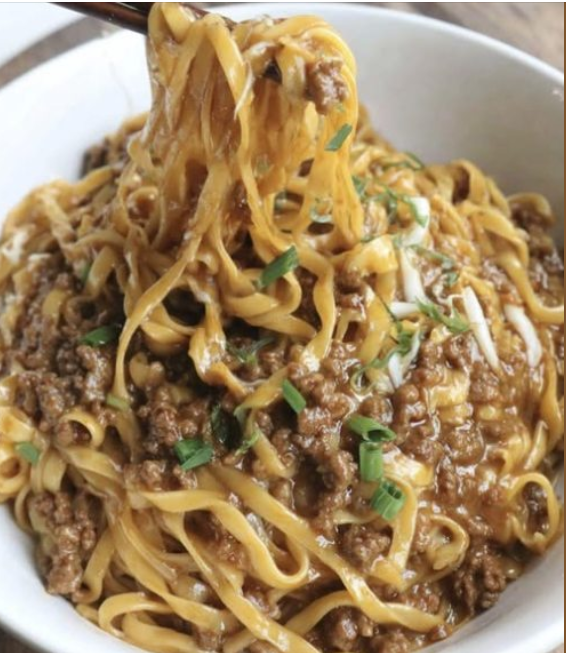
Molecular Caramelization and Lipid-Aromatic Infusion in Mongolian Cuisine
1. Introduction: The Architecture of Sweet and Salty
In the culinary landscape of 2026, “Mongolian” sauce is defined by its high Brix level (sugar content) balanced against a strong Glutamate base (soy sauce). This dish relies on the principle of viscous adhesion. Unlike a thin soup, the Mongolian glaze must have enough density to cling to the high surface area of egg noodles or ramen. This is achieved through the reduction of water and the melting of sucrose into a complex syrup that encapsulates the ground beef.
The ground beef itself undergoes the Maillard Reaction—a chemical reaction between amino acids and reducing sugars that gives browned food its distinctive flavor. By using lean ground beef, we ensure that the glaze isn’t diluted by excess rendered fat, allowing the ginger and garlic aromatics to remain at the forefront of the sensory experience.
2. Ingredients: The Pharmacological Matrix
Success in this dish depends on the quality of the “Aromatic Base” and the ratio of lipids to sugars.
- 1 lb Ground Beef: Use 90/10 or 93/7 lean-to-fat ratio. Higher fat content will “break” the sugar glaze.
- 8 oz Egg Noodles: The porous nature of egg noodles allows for maximum absorption of the soy-based sauce.
- Garlic & Ginger: The “Aromatic Duo.” Ginger contains zingibain, which can act as a subtle meat tenderizer.
- Soy Sauce & Brown Sugar: The primary flavor drivers. The molasses in the brown sugar provides a deeper, more earthy sweetness than white sugar.
- Sesame Oil: A finishing oil. Its smoke point is low, so it is added at the end to preserve its volatile aromatic compounds.
