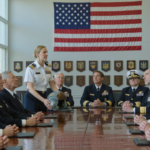
The funeral was full of sailors, Marines, and local veterans. They came in their best uniforms, medals shining under the afternoon sun. When the bugler played taps, I swear the whole cemetery stood still. My father, his only son, stood stiffly beside me, not a tear in his eyes. Afterward, as I helped fold the flag, he muttered, “You always were his favorite.” Maybe he meant it as a joke, but something in his tone told me it wasn’t. I didn’t respond. I just kept folding—corner to corner, tight and perfect—exactly the way Grandpa taught me.
After the funeral, I kept the car exactly as Grandpa left it. Every weekend, I’d wash it, wax it, and start the engine just to hear it purr. It was more than a car. It was his heartbeat, still echoing.
I enlisted in the Navy the following year. The first time I put on my uniform, I stood in front of the car and saluted it, whispering, “This one’s for you, Grandpa.” Whenever I came home on leave, I’d drive it to the coast, park near the lighthouse, and watch the horizon like he used to. I’d talk to him—tell him about the missions, the crew, the nights when the sea was so dark you couldn’t tell where the sky ended.
That car was the only thing that never changed—until that one day years later when everything did.
It was spring when I came back from deployment. My boots still smelled of salt and oil. My hair was tied back tight, uniform pressed to perfection. I drove through my hometown expecting comfort, but found strangers instead. My parents had remodeled the house—new siding, new patio, even a new garage door. But when I opened that door, expecting the shine of the Navy car waiting inside, all I saw was an empty space and the outline of tire marks on the concrete.
The air left my lungs. I ran my hand across the dust where the bumper had once been, whispering, “No. No, no, no.” Then I heard my father’s voice behind me.
“Oh, that old thing. I sold it.”
I turned around slowly. He was holding a cup of coffee, calm, as if he’d said he’d just mowed the lawn.
“What?” I could barely get the word out.
He shrugged. “Your brother needed $150,000 for his wedding. He’s finally marrying into that investment family. It’s a good move for us.”
I stared at him, frozen. “You sold Grandpa’s car—his Navy car?”
He sipped his coffee. “It was just sitting here. You’re never home. It’s time to let go of the past.”
I felt something inside me break. The years of service, the medals, the respect—it all meant nothing compared to his pride and greed. Mom came to the doorway, eyes downcast.
“Honey, don’t start a fight. Your father thought—”
“What,” I snapped, “that honor has a price tag?”
My brother appeared next—tuxedo measurements in hand, looking smug. “Relax, sis. It’s just a car.”
I left without saying another word. That night, I sat in the parking lot of the naval base, staring at the brass key on my keychain. Grandpa’s initials caught the light under the dashboard. I whispered into the quiet, “You were right, Grandpa. It is supposed to protect me—but from who?”
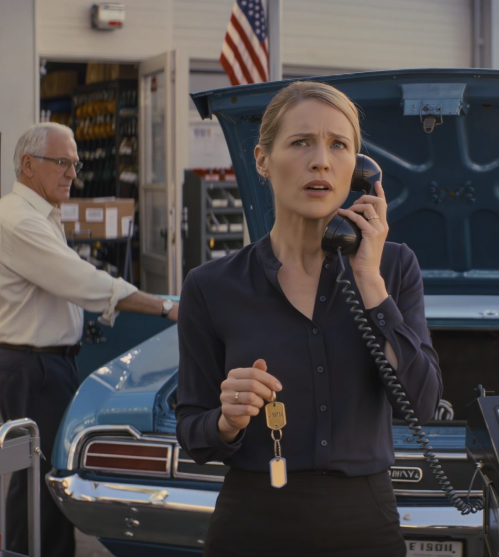
Three days later, the phone rang.
“Ma’am,” said a man’s voice, hesitant but urgent. “This is Officer Daniels from Harborview Auto. You need to come down here. We found something inside your grandfather’s car.”
My hand tightened around the receiver. “What did you say?”
He repeated, slower this time. “Your grandfather left something inside the car. You need to come now.”
I felt my heart stop. Whatever he’d left—whatever secret my father didn’t bother to see—was waiting for me. And for the first time since Grandpa’s death, I felt him again, guiding me forward.
The Secret Compartment
The dealership was twenty minutes from the base if you took the causeway. I drove there with the windows cracked, the February air cool and a little salty—the kind of day Grandpa would have called good driving weather. I kept one hand on the wheel and the other on that brass key on my keychain. The edges had worn smooth over the years. I thought about how many times his hands had turned it, how many mornings he’d sat in the driver’s seat and watched the sun come up over water.
Officer Daniels, a man with a firm, respectful grip, led me to the storage bay. There it was: the steel-blue 1968 staff car. He pointed to the trunk. “When we lifted the mat to check for water damage, we found a secondary panel. Aftermarket, professional work.”
My heart pounded. I reached into my pocket. Grandpa’s brass key had a second tooth—thinner, almost ornamental. I lined it up with a tiny slot next to one of the screws holding the panel down. It fit perfectly.
The panel lifted up like the cover of a photo album. Beneath it, wrapped in oilcloth, was a narrow rectangular wooden box—old but heavy. Burned into the lid were three letters: JWH. And beneath them, the single word he lived by: HONOR.
Inside the box lay a folded letter with my name, medals, and a stack of individual envelopes containing handwritten thank-yous from families.
“He never told anyone,” Daniels said softly. “That kind never does. They just get it done.”
I lifted the letter. On the outside, in that same steady hand: Open only if the car is taken or if you forget what I taught you.
The Truth of the Legacy
I stared at the letter, feeling the familiar weight of betrayal, but also the rising tide of Grandpa’s enduring faith in me. I quickly read the first part of his final instructions: Kiddo, if you’re reading this, someone forgot what matters. Don’t get angry, kiddo… Honor doesn’t shout—it endures.
Then came the instructions: If this car ever leaves your hands without your say-so, check under the driver’s seat. What you find there will show you why I trusted you with it.
I found the tin box taped to the floorboard. Inside were three items: a flash drive sealed in plastic; a faded photograph of Grandpa and a younger man—my father—beside a hospital ship; and a yellowed card in Grandpa’s handwriting: Property of the Naval Relief Fund, Command Oversight Unit, retired.
The dealership confirmed the unauthorized transfer, and I realized my father hadn’t just sold an heirloom; he had stolen a working piece of a quiet, ongoing mission.
I drove straight to the naval base. Lieutenant Grace Miller, the legal liaison, listened intently as I explained the situation and handed her the flash drive.
“Your grandfather was running a relief channel,” she concluded after reviewing the initial files. “Unofficial, but organized. It wasn’t about money for himself. It was all service.”
I pressed the letter to my chest. If your father ever forgets what honor is, remind him—not with anger, but with truth.
The next morning, I put on my uniform. The letter and the envelope marked DEPARTMENT OF THE NAVY—RESTRICTED sat on the kitchen table. The sun coming through the window made the gold trim on my rank insignia gleam. I took a deep breath and opened the envelope.
Inside was a typed document: This confirms Command Master Chief John W. Hayes has been authorized to maintain custody of the Navy Relief Car Project, a confidential civilian assistance operation, supporting retired personnel and families affected by service-related hardship.
My hands trembled. The car wasn’t an antique. It was a rolling mission. Grandpa had used that car for decades to deliver checks, care packages, and confidential correspondence for the families of those lost or struggling after service. It was his way of staying in service even after retirement. The document ended with a handwritten note: For continued use under moral discretion and personal accountability.
I called Lieutenant Miller immediately. “I found something,” I told her.
The Final Route and the Public Reckoning
Lieutenant Miller was stunned. “This is legitimate, Commander. Your grandfather was part of a quiet relief chain—a kind of moral lifeline. The Navy has reason to reclaim and preserve this car.”
I realized I couldn’t just turn the car over. I owed Grandpa one last mission. I went through the files on the flash drive and found a final, handwritten folder: FINAL ROUTE. Inside was a single address: Deliver the enclosed metal to LTR Thompson, retired. If unable, trust to my granddaughter. She’ll know what to do.
I drove to the address, less than twenty miles away. Lieutenant Robert Thompson, a dignified older man, answered the door. I handed him the small, heavy piece of metal I’d found in the wooden box, shaped like a propeller blade mounted on teak wood.
Thompson ran a trembling thumb over the metal. “The USS Delaware,” he whispered. “When my daughter was diagnosed, Johnny showed up in that old staff car with a box of food, a check, and paperwork. He said, ‘The crew doesn’t abandon the ship.’ I thought he’d forgotten.”
“He never forgot,” I said. “And now I’m finishing his final route.”
When I returned home, I called a final family meeting. I laid the documents on the table—the records, the thank-you letters, and the official Navy confirmation of the Relief Car Project. My father’s face went white.
“We thought it was just sentimental junk,” my father muttered, utterly defeated.
“Sentimental junk was paying overdue rent for widows and driving disabled veterans to doctor appointments,” I countered, my voice low and firm. “You sold his integrity for a price tag. And because the car was an official asset under the command of the Navy Relief Fund, the sale was invalid.”
I informed them the car would be transferred to the Naval Museum’s Heritage Annex, complete with a plaque detailing my grandfather’s secret mission.
“I don’t want restitution,” I told my father. “I want honor. You and my brother will spend the next year volunteering for the Naval Relief Fund—no pay, just service. You will clean their records, you will drive their delivery vans, and you will learn what it means to show up when no one is watching.”
My father looked at the documents, at the faces of my mother and brother, and finally at me, standing tall in my uniform. He nodded, tears finally in his eyes.
“You were right, Kiddo,” he choked out. “I forgot.”
The following month, the steel-blue 1968 Navy staff car was unveiled at the Naval Museum. It sat under a spotlight, gleaming, a testament to silent service. I stood beside it, wearing the brass key on a simple chain beneath my collar. I had lost the car, but I had gained my grandfather’s mission, and in doing so, I had redeemed my family’s forgotten honor.