
My Dad Sold My Grandpa’s Military Heirloom to Fund My Brother’s Wedding — Then the Dealer Called Me
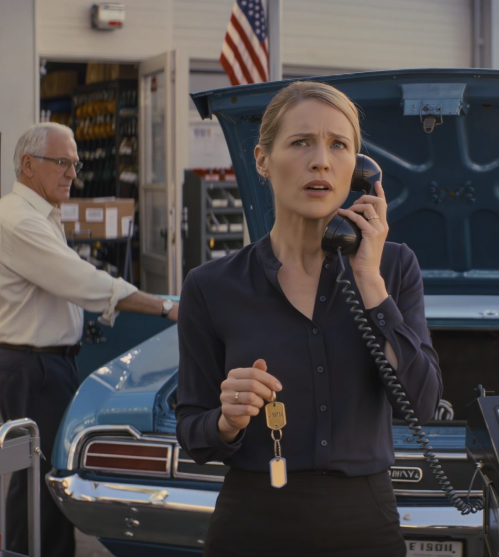
When I came home from duty, my grandfather’s Navy staff car—the one he’d called his pride and legacy—was gone. My father had sold it to fund my brother’s lavish wedding. I was heartbroken… until the dealership called.
What I found inside that car revealed who my grandfather truly was—and what my father had forgotten about honor, service, and family.
I still remember the call that changed everything. “Ma’am,” the man said on the phone, his voice grave but respectful. “We found something inside your grandfather’s car. You need to come now.” For a second, I couldn’t breathe. That car, my grandfather’s Navy car, had been gone for weeks. My father had sold it without asking me—just like that—as if thirty-five years of military honor and family history were nothing more than scrap metal. Now, someone from the dealership was saying there was something inside it, something left behind by Grandpa himself. I didn’t know it then, but that phone call would uncover everything—the betrayal, the truth, and the meaning of honor that my family had long forgotten.
When I was little, that car was my whole world: a steel-blue 1968 Navy staff car polished so bright you could see your face in it. Grandpa used to drive it every Sunday after church—slow and proud—with the U.S. Navy bumper tag glinting in the sun.
“Hop in, sailor,” he’d say, winking as he opened the passenger door for me. I wasn’t even ten years old, but he’d let me sit in the front seat like a fellow officer. We’d cruise along the coast road while he told stories—not about medals or battles, but about men, the ones who stood watch through storms, who fixed engines at midnight, who never left anyone behind. “Honor,” he’d say, his hand steady on the wheel, “isn’t about being saluted. It’s about showing up when no one’s watching.”
That line stayed with me all my life. He served thirty-five years in the Navy, starting as a mechanic’s assistant and retiring as a command master chief. He wasn’t wealthy, but he carried himself like the richest man alive. When he talked about his ship, the USS Delaware, you could see the pride in his eyes.
When he passed, the house was quiet, except for the ticking of the old wall clock, and the flag folded on his coffin. Before the burial, he called me to his bedside. His voice was weak, but his eyes were clear.
“Kiddo,” he whispered. “I don’t have much to leave behind, but that car—it’s yours. Keep it close. One day, it’ll protect you.”
I laughed through my tears. “Protect me, Grandpa? It’s just a car.”
He smiled faintly. “You’ll see.” He handed me a small brass key with his initials carved on it: JWH. That was the last thing he ever gave me.
