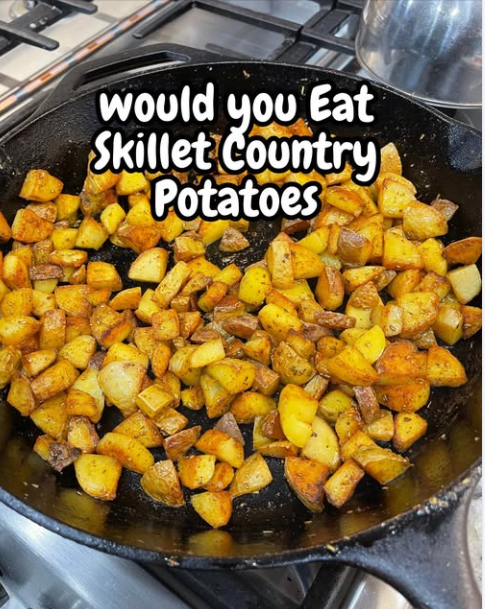
Achieving a restaurant-quality potato requires a specific order of operations to prevent the onions from burning while ensuring the potatoes reach total tenderness.
Step 1: The Moisture Purge
Rinse your diced potatoes in cold water to remove excess surface starch, then pat them completely dry with a clean towel. Removing moisture is the “no-fail” regulation for achieving a crispy exterior; steam is the enemy of the crunch.
Step 2: The High-Heat Initiation
Heat your butter (or bacon grease) and olive oil in a large skillet over medium-high heat until shimmering. Add the potatoes in a single, even layer. Crucial Tip: Do not stir for the first 4–5 minutes. This allows the potatoes to form a deep, caramelized sear that provides the dish’s signature texture.
Step 3: The Aromatic Infusion
Add the diced onion and bell pepper to the pan. Sprinkle with the garlic powder, paprika, onion powder, salt, and pepper. By adding the aromatics now, we ensure they soften and sweeten without charring into bitterness during the long cook time.
Step 4: The Low-and-Slow Finish
Stir the mixture, then continue cooking for 15–20 minutes. Stir only occasionally—enough to prevent burning, but sparingly enough to allow the golden crust to continue building. The potatoes are ready when they are fork-tender on the inside and shatteringly crisp on the outside.
Serving and Storage: Protecting the Crunch
Country potatoes are best served immediately while the temperature contrast between the hot fat and soft interior is at its peak. Garnish with fresh parsley or sliced green onions for a bright, herbal lift that cuts through the richness of the bacon grease.
Storage: While these are a reliable legend for leftovers, they can lose their crispness in the fridge. To revive them, skip the microwave—reheat them in a dry skillet over medium heat for 5 minutes to restore that “million-dollar” texture.
Tips: The Cast-Iron Secrets
- The Single Layer Rule: Do not overcrowd the pan. If the potatoes are piled on top of each other, they will steam rather than fry. Use two skillets if necessary for a large crowd.
- The Par-Boil Shortcut: If you are in a rush, boil the diced potatoes for 3 minutes before hitting the skillet. This ensures the centers are cooked, allowing you to focus entirely on the exterior sear.
- Seasoning Timing: Salt draws out moisture. For the absolute crispiest results, salt the potatoes toward the end of the cooking process rather than at the beginning.
Variations: Customizing the Comfort
While the basic skillet potato is a masterpiece of simplicity, you can adapt the seasonings for a high-impact twist:
- The Spicy Tex-Mex: Add 1/2 tsp of cumin and a dash of cayenne pepper. Top with fresh cilantro and a squeeze of lime before serving.
- The Herb-Loaded Orchard: Replace the paprika with fresh rosemary and thyme for a woody, sophisticated aromatic profile.
- The Cheesy Skillet: In the last 2 minutes of cooking, sprinkle a handful of sharp cheddar or Monterey Jack over the top and cover with a lid until molten.
Tips: Success and Speed
For the most efficient morning prep, dice your potatoes the night before and store them in a bowl of cold water in the fridge. This not only saves time but further removes starch, leading to an even better crunch. Just remember the gold-standard rule: Dry them thoroughly before they touch the hot oil.
Conclusion: A Heritage Masterpiece
The Skillet Country Potato is a testament to the fact that the most enduring flavors are often the simplest. By respecting the regulations of heat and moisture, you transform a humble root vegetable into a “million-dollar” breakfast highlight. Whether paired with farm-fresh eggs, savory sausage, or buttery biscuits, these potatoes are a reliable legend that brings the cozy familiarity of a Southern morning to any table. Enjoy the sizzle!
Frequently Asked Questions:
Q: Should I peel the potatoes?
A: This is entirely up to preference! Peels offer extra nutrients and a rustic texture, while peeling them results in a cleaner, more uniform “diner-style” appearance.
Q: Why are my potatoes sticking to the pan?
A: Your pan likely wasn’t hot enough when you added the potatoes, or you tried to stir them too soon. Let the sear form naturally; the potatoes will “release” from the pan once a crust has developed.
Q: Can I use sweet potatoes?
A: Yes! However, sweet potatoes have a higher sugar content and will brown much faster. Lower the heat slightly and stir more frequently to prevent burning.