
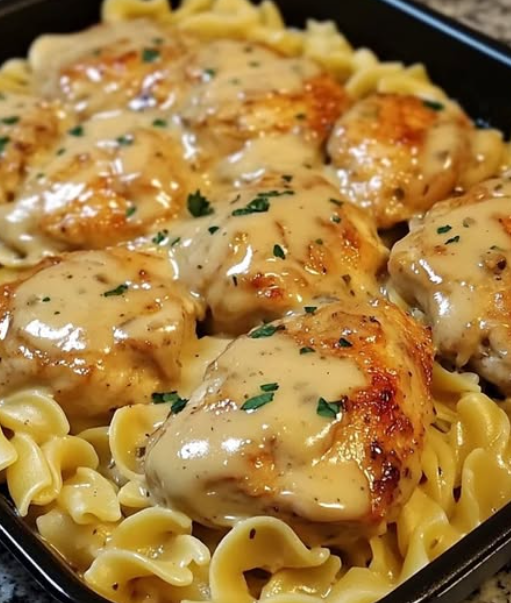
One-Pan Chicken & Noodles: A Study in Starch-Rich Emulsions
Introduction: The Physics of “Single-Pot” Hydration
This recipe represents a triumph of Interfacial Bonding. In a traditional pasta dish, starch is washed away in boiling water. In this one-pan method, the Gelatinized Starch molecules from the egg noodles remain in the skillet, acting as a bridge between the water-based chicken broth and the fat-rich heavy cream. This results in a sauce with superior Viscosity and structural stability.
Ingredients: The Molecular Building Blocks
The Protein Foundation
- 4 Chicken Breasts: The Primary Protein Scaffold. Searing these first creates a layer of fond (caramelized proteins) on the pan, which provides the base for the sauce.
- 2 tbsp Olive Oil: The Thermal Conductor. It facilitates the Maillard reaction by ensuring even heat transfer across the chicken’s surface.
The Starch and Liquid Matrix
- 8 oz Egg Noodles: The Structural Starch. Egg noodles are chosen for their high protein-to-starch ratio, which allows them to remain tender without becoming “mushy” during the braising process.
- 2 cups Chicken Broth & 1 cup Heavy Cream: The Solvent and Emulsion Base. The cream provides lipids that stabilize the sauce against the acidity of any residual garlic or seasonings.
- 3 tbsp Butter & 1/4 cup Parmesan: The Texture Modifiers. These provide Casein and Fats that finish the emulsion, giving the sauce its signature glossy “silk” finish.
