
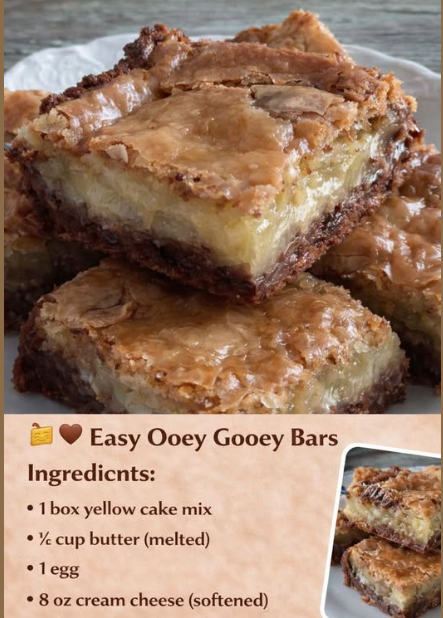
Step 1: The Crust Synthesis
Mix the cake mix, melted butter, and one egg until a stiff dough forms. Press into the pan. The “Compaction” Science: Pressing the dough eliminates air pockets, creating a High-Density Foundation that prevents the liquid topping from seeping through to the bottom.
Step 2: The Cream Phase Homogenization
Whisk the softened cream cheese with the remaining eggs and powdered sugar. The “Shear Force” Rule: The cream cheese must be at 21°C (70°F) to achieve a smooth Colloidal Suspension. If the cheese is too cold, the topping will be lumpy, leading to uneven Heat Distribution.
Step 3: Thermal Processing (Baking)
Bake at 350°F (175°C) for 30–35 minutes. The “Differential Set” Physics: The base undergoes Starch Gelatinization and becomes solid. The topping, however, remains soft because the high sugar-to-flour ratio prevents the proteins from forming a rigid network.
Step 4: The Stabilization Period (Cooling)
Allow the bars to cool completely before slicing. The “Viscosity Equilibrium” Secret: The “gooey” center is a liquid when hot. Cooling allows the Lipid Lattice to firm up just enough to be sliced while remaining soft to the palate.
Service and Storage Tips
Service: Dust with extra powdered sugar. The “Visual Texture” Benefit: The white powder highlights the Surface Fissures created during the cooling phase.
Storage: Store in the refrigerator. The “Lipid Recrystallization” Warning: Cold temperatures will make the bars firmer. For the “ooey-gooey” experience, allow them to return to room temperature for 20 minutes before consumption.
Variants: Structural and Flavor Iterations
| Variation | The Adjustment | The Result |
|---|---|---|
| Chocolate “Goo” | Use a Chocolate Cake mix for the base. | Higher Alkalized Cocoa content and richer flavor. |
| Pumpkin Gooey Bars | Add pumpkin purée and spices to the cream cheese layer. | Increased Polysaccharide content and festive aromatics. |
| Red Velvet | Use Red Velvet mix and top with white chocolate chips. | Striking Color Contrast and increased lipid density. |
Tips: Pro-Level “Gooey Bar” Nuances
- Don’t Overbake: The center should still have a slight Jiggle (low shear modulus) when removed from the oven. If it’s firm to the touch, it will be a “cake bar” rather than a “gooey bar.”
- The “Glossy” Top: Do not over-mix the eggs into the cream cheese. Over-mixing introduces too much air, which causes the top to Soufflé and then collapse, losing its smooth sheen.
- Knife Cleanup: Use a warm, wet knife to slice. The water acts as a Lubricant against the sticky sugar matrix, ensuring clean edges.
Conclusion: A Triumph of Texture
Easy Ooey Gooey Bars are a masterpiece of Phase-State Management. By controlling the moisture and fat ratios between two layers, you create a dessert that is both structurally sound and decadently fluid. On this December 27, 2025, enjoy the perfectly executed results of layered-state engineering. Happy baking!
Frequently Asked Questions
- Can I use a different type of cake mix?
- Absolutely! Lemon, strawberry, or spice cake mixes all follow the same Structural Rules and provide excellent flavor variations.
- Why did my bars turn out greasy?
- This is Lipid Separation. It often occurs if the butter was too hot when mixed with the cake mix, or if the cream cheese was “over-softened” in the microwave, causing the fat to leach out.
- Can I freeze these?
- Yes. They freeze exceptionally well. The High Sugar Concentration acts as a natural antifreeze, keeping the texture pleasant even after thawing.
Would you like me to suggest a “Salted Caramel Drizzle” recipe to cut through the sweetness, or perhaps show you how to turn these into “Gooey Cookie Sandwiches”?
Related posts:
 The Holiday Magic Bar: Santa’s Simplified No-Bake Cookie Bars
 Christmas Ooey Gooey Butter Cookies: The Ultimate Holiday Indulgence
 No-Bake Nirvana: Mastering Buckeye Bars
 The Biomechanics of the Roulade
 The Art and Science of Christmas Snowflake Blueberry Cheesecake Bars
 Decadence Defined: Mastering the Ultimate Caramel Turtle Poke Cake
