
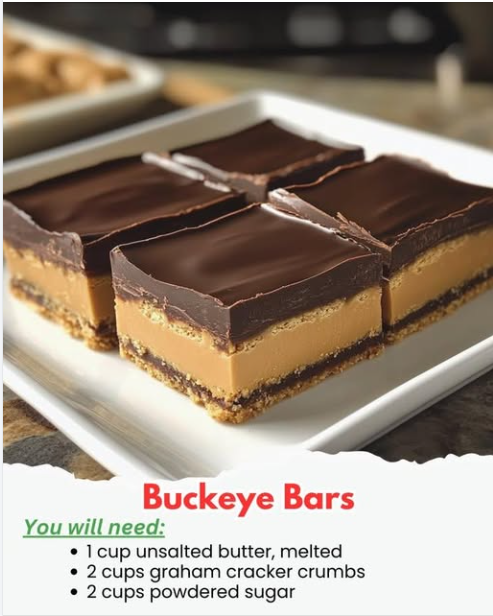
No-Bake Nirvana: Mastering Buckeye Bars
Introduction: Structural Integrity in Confectionery
The **Buckeye Bar** is a delightful example of confectionery engineering. As a no-bake dessert, it bypasses the chemical reactions of baking and relies entirely on the solidification of fats and sugars to achieve structural integrity. The key is controlling the ratios of the primary binder (**peanut butter and butter**) and the dry structure (**powdered sugar and graham cracker crumbs**).
This recipe is governed by three strict regulations: **The Binder-to-Powder Ratio, The Compression Protocol, and The Thermal Stabilization Cycle.**
The first regulation, **The Binder-to-Powder Ratio**, is crucial for the texture. The base uses a combination of **1 cup unsalted butter (melted)** and **$1 \frac{1}{2}$ cups creamy peanut butter** as the primary liquid binders. These are mixed with the dry components: **2 cups graham cracker crumbs** and **2 cups powdered sugar**. The high volume of powdered sugar not only adds sweetness but also acts as a **structural filler**, quickly absorbing the melted butter and oils from the peanut butter. This creates a highly plastic, moldable dough that holds its shape when compressed. If the mixture is too dry (too much sugar/crumbs), the bars will crumble; if too wet (too much butter/peanut butter), they will be sticky and fail to set firmly.
The second regulation is the **Compression Protocol**. Once the peanut butter base is mixed, it must be firmly and evenly pressed into the pan. This compression—which should be done using a flat-bottomed object like the base of a glass—removes air pockets and creates a dense, solid matrix that is ready for the chilling process. This step is non-negotiable for achieving clean, neat slices.
The third and most critical regulation is **The Thermal Stabilization Cycle**. The bars achieve their final set *only* through chilling. The fats (butter and peanut butter oil) must solidify to hold the sugar matrix together. This requires a **mandatory long chill**—typically 2 to 3 hours for the peanut butter layer, followed by a final chill after the chocolate topping is applied. The chocolate topping itself needs a quick-setting fat, which is often achieved by adding a small amount of oil or shortening to the melted chocolate. This prevents the topping from cracking when the bars are cut.
