ADVERTISEMENT
Phase 1: Preparing the Dough and Coating
- **Prep Oven and Dough:** Preheat oven to **$190^\circ\text{C}$ ($375^\circ\text{F}$)**. Unroll the crescent dough and separate it into 8 triangles. In a small bowl, combine the **granulated sugar and ground cinnamon**. Melt the **2 tablespoons of butter**.
- **Butter and Coat (BUTTERED-SURFACE PRINCIPLE):** Brush the top surface of each dough triangle lightly with the **melted butter**. Sprinkle each buttered triangle generously with the **cinnamon-sugar mixture**.
Phase 2: Shaping and Baking
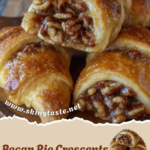
- **Roll and Shape (TIGHT ROLL RULE):** Starting at the wide base of each triangle, **roll the dough up tightly** toward the point. Bend the ends into a crescent shape. Place the crescents on an ungreased baking sheet.
- **Bake (TEMPERATURE AND TIME RULE):** Bake for **9–12 minutes**, or until the crescents are golden brown and puffed. Remove from the oven and transfer immediately to a wire rack.
Phase 3: Glazing (Optional)
- **Prepare Glaze:** While the crescents cool slightly, whisk together the **powdered sugar, milk, and vanilla extract** until smooth.
- **Drizzle and Serve:** Drizzle the glaze over the warm crescents using a spoon or fork. Serve immediately for best texture.
Serving and Storage: The Warmth Advantage
Optimal handling for this quick pastry:
- **Serving:** Best served warm, fresh from the oven, when the layers are at their flakiest.
- **Storage (Room Temperature):** Store leftovers in an airtight container at room temperature for up to **2 days**. They lose flakiness quickly.
- **Reheating:** To revive flakiness, reheat in a toaster oven or standard oven at $175^\circ\text{C}$ ($350^\circ\text{F}$) for 3–5 minutes.
Tips: Essential Techniques for Flakiness and Crunch
Crescent Dough Temperature: Use the **refrigerated dough cold** (Step 1). If the dough gets too warm, the butter layers will soften, inhibiting the expansion and resulting in a flatter, less flaky pastry.
Even Coating: Ensure the **cinnamon-sugar mixture** (Step 2) is spread evenly and generously. This forms the crunchy, caramelized crust that defines the final texture and flavor.
The Glaze Consistency: The glaze (Step 5) should be thick enough to coat the back of a spoon but thin enough to drizzle easily. Adjust the milk or powdered sugar one drop/sprinkle at a time.
Don’t Flatten: Avoid flattening the dough too much when unrolling or rolling (Step 1). The laminated layers must remain intact to ensure maximum puff during baking.
Baking Surface: An **ungreased baking sheet** (Step 3) is usually sufficient, as the butter in the dough prevents sticking. Parchment paper is optional but makes cleanup easier.
Variations: Customizing Fillings and Toppings
Easily adapt the flavor profile of the crescents:
- **Nutty Filling:** Sprinkle a tablespoon of **finely chopped pecans or walnuts** over the cinnamon-sugar mixture before rolling (Step 2).
- **Chocolate Core:** Place a few **chocolate chips** or a small piece of dark chocolate at the wide base of the triangle before rolling (Step 3).
- **Sweet Cream Cheese:** Mix **2 oz of softened cream cheese** with **1 tbsp of sugar** and $\frac{1}{4}\text{ tsp}$ vanilla. Spread this mixture thinly over the dough before applying cinnamon sugar (Step 2).
- **Savory Option:** Omit the sugar and cinnamon. Brush the dough with **garlic butter** and sprinkle with **dried herbs (oregano/basil) and Parmesan cheese**.
**Sealing the Tip:** When rolling (Step 3), ensure the point of the triangle is tucked neatly under the crescent when placed on the baking sheet. This helps prevent it from unraveling during baking.
**Spice Measurement:** Use a measuring spoon for the **cinnamon** (Ingredient II). Too much cinnamon can result in a bitter taste, while too little diminishes the flavor.
**Individual Brushstrokes:** Make sure every part of the dough (Step 2) is brushed with butter, especially the edges. This ensures the cinnamon sugar adheres fully and caramelizes evenly across the entire surface.
**Final Puff:** The initial high heat ($190^\circ\text{C}$ or $375^\circ\text{F}$) is vital. The rapid vaporization of water within the dough layers is what gives crescent rolls their signature airy lift.
Conclusion: Flaky Fast Baking
The **Simple Cinnamon Sugar Crescents** demonstrate how quickly a satisfying, flaky pastry can be created. By adhering to **The Buttered-Surface Principle** for optimal flavor coating, executing **The Tight Roll Rule** for proper shape, and utilizing **The Temperature and Time Rule** for maximum puff, you yield a warm, buttery, and cinnamon-sugar-dusted treat in minutes. It’s the ultimate hassle-free recipe for instant comfort.
Frequently Asked Questions (FAQ)
Q: Why did my crescents flatten out?
A: The dough was likely **too warm** (Tip 6), causing the butter layers to melt before baking. Also, if you didn’t adhere to **The Tight Roll Rule** (Step 3), they will spread out instead of up.
Q: Can I use brown sugar instead of granulated?
A: **Yes**, but it will result in a chewier, softer exterior rather than a crisp one, as brown sugar contains molasses, which adds moisture.
Q: What if I don’t have butter?
A: You can try brushing the dough with a beaten **egg white** instead (The Buttered-Surface Principle, Step 2). The protein will act as a binder, although it won’t add the same rich flavor.
Q: Can I make these ahead of time?
A: **Not recommended** (Tip 6). The dough must be baked immediately after rolling to preserve its cold, laminated structure. Unbaked, rolled crescents will lose their flakiness.
ADVERTISEMENT