
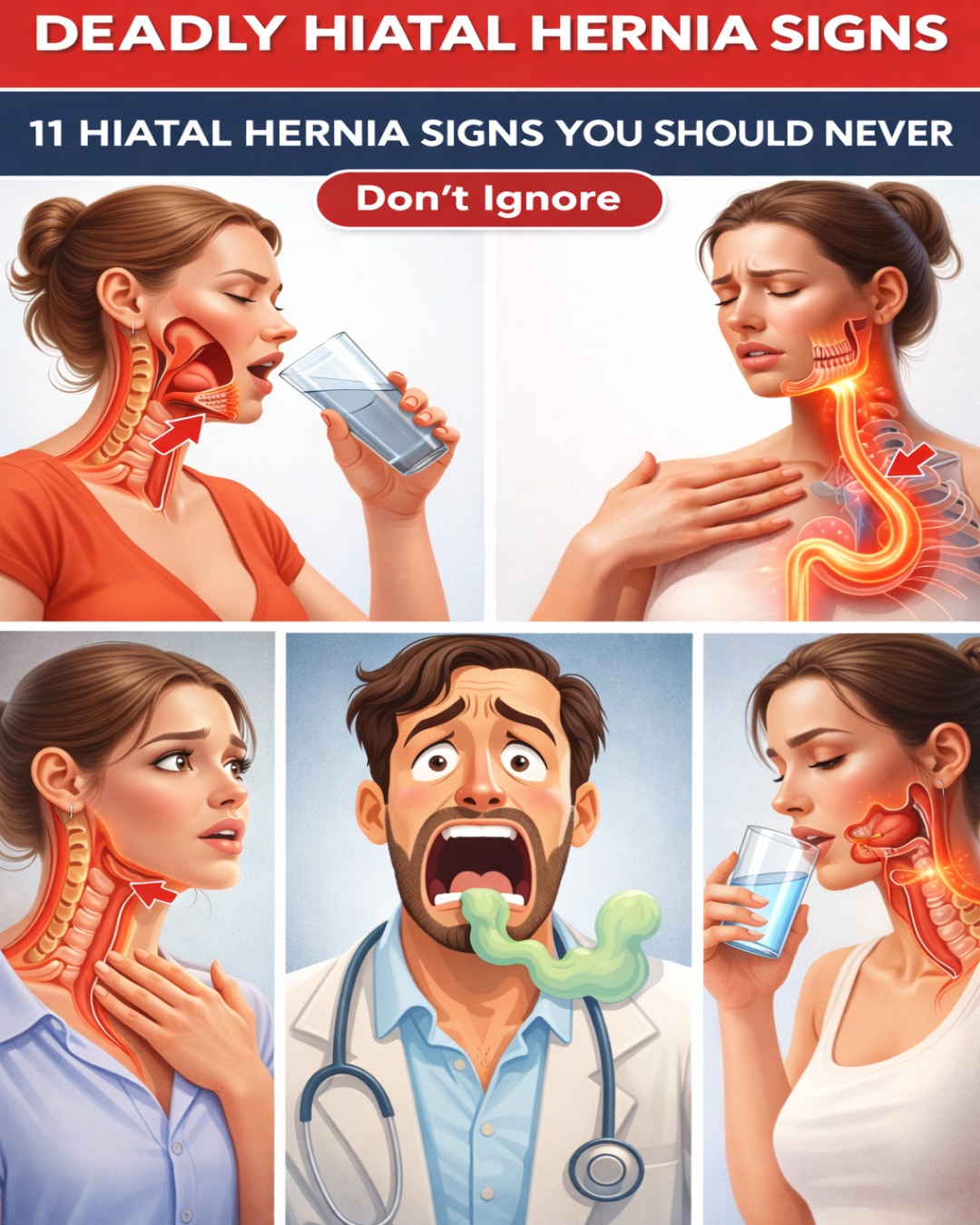
Symptom 2: Fatigue or Anemia (from Chronic Bleeding)
Fatigue or low energy levels can sometimes stem from slow blood loss due to a hiatal hernia, leading to anemia. Although this symptom is rare, it is important to recognize unexplained tiredness as a potential indicator of a more significant issue.
Symptom 1: Multiple Symptoms Together—Your Body’s Clear Signal
Most individuals do not experience isolated symptoms; rather, they may notice a combination of heartburn, regurgitation, swallowing difficulties, and chest pain. Recognizing these overlapping symptoms is crucial, as many who have ignored gradual worsening later required medical intervention. If you identify a pattern of symptoms, it’s essential to seek help.
Taking Action: What to Do If You Recognize These Signs
If you notice any of these symptoms, it’s important to consult a healthcare provider. Many of these signs overlap with other conditions such as GERD, heart issues, or ulcers. Keeping a symptom journal can help track the timing, triggers, and severity of your symptoms, which can be valuable information for your doctor. Diagnostic tests like endoscopy or pH testing may be necessary to confirm a diagnosis.
Lifestyle Adjustments for Relief
Incorporating lifestyle changes, such as eating smaller meals and avoiding lying down after eating, can often alleviate symptoms. Elevating your head while sleeping can also help reduce nighttime discomfort.
In conclusion, don’t dismiss the signals your body is sending. From heartburn and regurgitation to swallowing difficulties and chest pain, these ten signs of hiatal hernia are critical to recognize. Staying vigilant and seeking medical guidance can empower you to take control of your health and find relief from discomfort. Remember, awareness is the first step toward better management of your symptoms.
Related posts:
 Uncovering 14 Undiscussed Symptoms and the Science of Hormonal Transition
 Recognizing the Silent Signs of Heart Disease: 9 Symptoms You Shouldn’t Ignore
 Understanding Liver Health: Signs and Symptoms of Liver Trouble
 Recognizing Early Warning Signs of Heart Disease in Your Arms and Legs
 The Surprising Health Benefits of Sleeping on Your Left Side
 Understanding Gallbladder Health: Risks and Dietary Adjustments After Removal
