
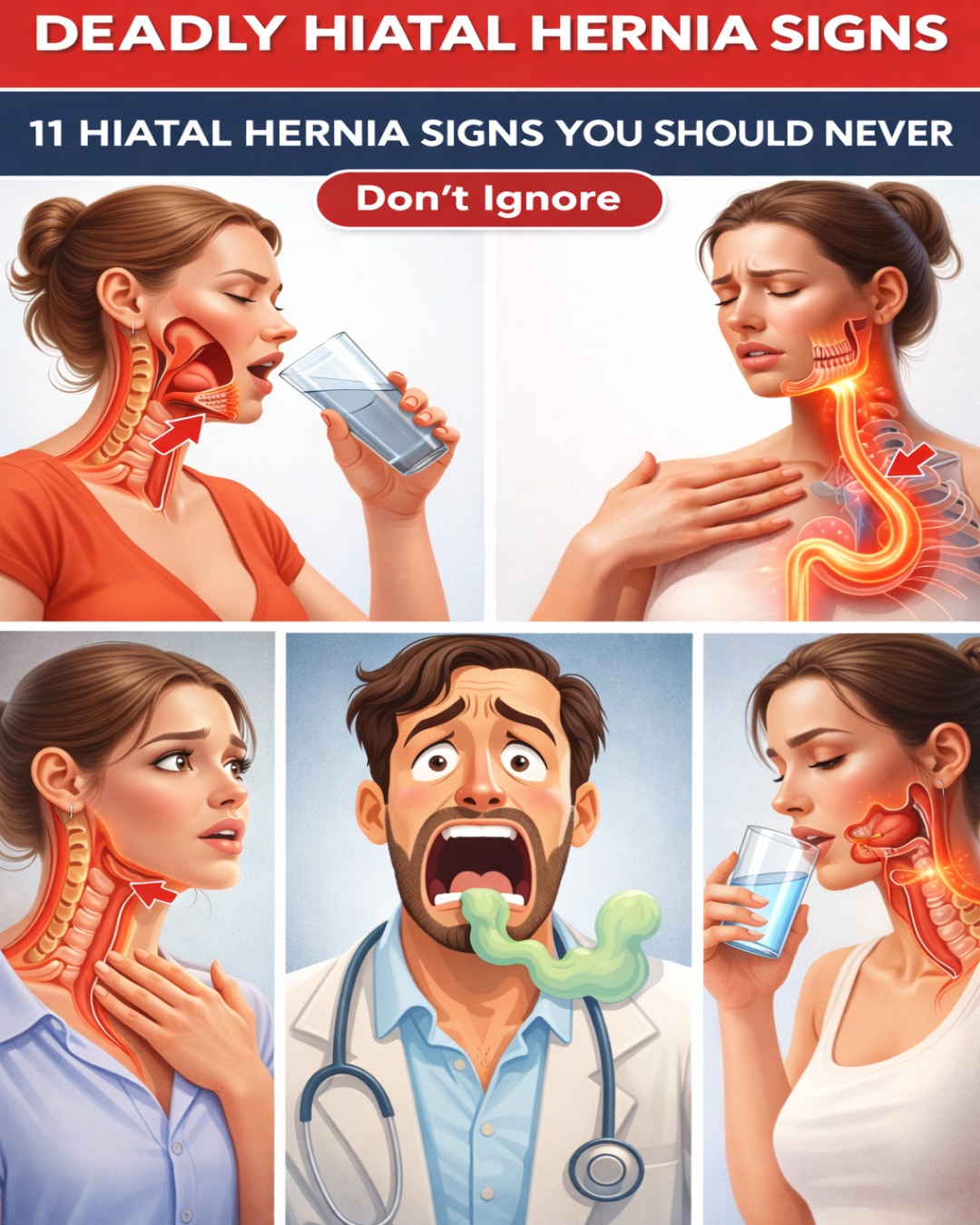
Experiencing a burning sensation in your chest after meals or unexpected regurgitation can be alarming and often dismissed as mere indigestion. However, these could be signs of a hiatal hernia, a condition where part of the stomach pushes through the diaphragm into the chest. While smaller hernias may go unnoticed, larger ones can lead to significant discomfort and complications. Understanding the symptoms early can lead to better management and relief. Let’s delve into ten common signs of hiatal hernia that you should be aware of.
Understanding Hiatal Hernia Symptoms
Many individuals with hiatal hernias remain unaware of their condition, as symptoms often emerge only during tests for unrelated issues. When symptoms do manifest, they are frequently associated with gastroesophageal reflux disease (GERD), where stomach acid backs up into the esophagus. Factors such as age, obesity, smoking, and heavy lifting can increase the risk of developing a hiatal hernia. If you’ve been experiencing persistent heartburn, it may be time to pay closer attention to your body’s signals.
Symptom 10: Heartburn or Burning in the Chest
One of the most common complaints associated with hiatal hernia is heartburn, characterized by a burning sensation in the chest, particularly after eating, bending over, or lying down. According to the Mayo Clinic, this symptom is prevalent among those suffering from acid reflux. If you often feel warmth rising in your chest, especially at night or after consuming spicy foods, it’s a sign that should not be ignored.
Symptom 9: Regurgitation of Food or Sour Liquid
Regurgitation, or the unexpected return of food or bitter-tasting liquid to the mouth, is another key symptom. This occurs when the hernia allows stomach contents to flow back up into the esophagus. If you frequently notice a sour taste lingering in your mouth, it may indicate that your hiatal hernia is affecting your digestion.
Symptom 8: Difficulty or Pain When Swallowing (Dysphagia)
Experiencing difficulty or pain while swallowing, known as dysphagia, can be a troubling symptom of hiatal hernia. This discomfort often arises from inflammation or narrowing of the esophagus due to chronic reflux. The Cleveland Clinic highlights this as a common concern, where individuals may hesitate before swallowing larger bites of food.
