When you spot mold, follow this strict protocol to determine the food’s fate. This “million-dollar” method is used by food safety experts worldwide.
Ask yourself: Is this food hard or soft? If it is soft, porous, or high in moisture, the “roots” have likely reached the center. Action: Toss immediately.
If the food is hard and dense (like a carrot or a block of Parmesan), the mold cannot easily penetrate the interior. Action: Cut away at least one inch around and below the mold spot. Keep the knife out of the mold itself to prevent cross-contamination.
NEVER sniff moldy food. Inhaling spores can trigger allergic reactions or respiratory distress. If you see it, you don’t need to smell it to know it’s there.
Step 4: Clean the Environment.
Mold spreads. If one orange in a bowl is moldy, the spores have likely landed on the others. Clean the refrigerator drawer or the bread box with a mixture of baking soda and water (1 tablespoon to 1 quart) to kill remaining spores.
Serving and Storage: The Safety Chart
| Food Item | Safety Status | Action Required |
|---|---|---|
| Hard Cheese (Cheddar, Swiss) | Safe to Save | Cut off 1 inch around/below mold. |
| Soft Cheese (Brie, Mozzarella) | DANGEROUS | Toss the entire container. |
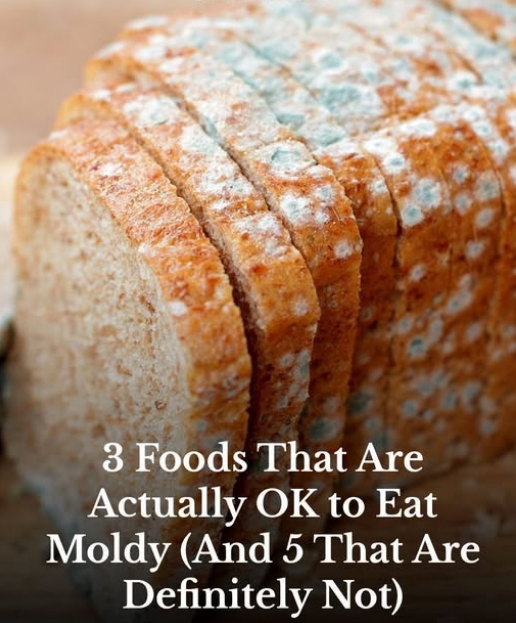
| Bread and Pastries | DANGEROUS | Porous; roots spread instantly. Toss. |
| Hard Salami / Dry Ham | Safe to Save | Scrub surface mold off; it is often intentional. |
| Yogurt and Sour Cream | DANGEROUS | High moisture allows deep contamination. Toss. |
| Hard Veggies (Carrots, Cabbage) | Safe to Save | Use the one-inch rule. |
Tips: Preventing the Fuzz
- The “Dry” Rule: Mold loves moisture. Never wash your berries or greens until right before you eat them. Storing them wet is an invitation for mold growth.
- The Vinegar Rinse: For berries, a quick bath in 1 part vinegar to 3 parts water can kill surface spores and double their shelf life.
- Temperature Control: Ensure your refrigerator is set to 40°F (4°C) or below. Mold thrives in the “Danger Zone” between 40°F and 140°F.
Variations: Intentional Molds
It is important to remember that not all mold is an enemy. In the world of gastronomy, certain molds are the “million-dollar” ingredients that create complex flavors:
- Blue Cheeses: (Roquefort, Gorgonzola, Stilton) These use Penicillium roqueforti to create those iconic blue veins. These are safe to eat. However, if new fuzzy white or green mold appears on them, follow the “cut” rule.
- Brie and Camembert: The white rind is actually a layer of mold (Penicillium camemberti) that helps soften the cheese interior.
- Dry-Cured Meats: Some salamis are coated in a white powdery mold that protects the meat from bad bacteria during the curing process.
Conclusion: Reliable Kitchen Wisdom
Navigating the world of moldy food doesn’t have to be a guessing game. By applying the “one-inch rule” to dense foods and ruthlessly discarding soft, porous items, you protect yourself from the “obsessively delicious” but potentially dangerous microscopic world. Remember, your health is worth more than a $5 loaf of bread. When in doubt, the gold standard of kitchen safety remains: “When in doubt, throw it out.” Use this guide as your reliable partner in reducing waste and keeping your family safe. Now go forth and conquer your pantry with confidence!
Frequently Asked Questions
Q: Can I just toast moldy bread to kill the mold?
A: No. While high heat can kill the mold spores, it does not reliably destroy mycotoxins that may have already formed. Toss the bread.
Q: I accidentally ate a piece of moldy bread. Will I be okay?
A: In most cases, the stomach acid will handle small amounts of common bread mold. However, if you experience nausea, vomiting, or respiratory issues, consult a doctor immediately.
Q: Can I scrape mold off of jam or jelly?
A: No. The USDA recommends discarding moldy jams. The high moisture and sugar content allow mycotoxins to spread easily through the jar.