Step 1: Surface Carbonization (The Sear)
Season and sear the roast in a hot skillet. The “Maillard Reaction” Science: This high-heat interaction between amino acids and reducing sugars creates hundreds of different flavor compounds and a dark brown crust (melanoidins) that adds depth to the final gravy.
Step 2: Hydrothermal Processing (The Slow Cook)
Cook on low for 8 hours with broth and aromatics. The “Kinetic Energy” Secret: Low heat prevents the muscle fibers from contracting too violently and squeezing out all their moisture. The water in the broth acts as a Heat Transfer Fluid, ensuring the roast is cooked uniformly.
Step 3: Starch Modification (The Mash)
Boil and mash potatoes with butter and milk. The “Viscosity” Rule: Boiling causes the starch granules to swell and burst (gelatinization). Mashing breaks these granules down, and the addition of lipids (butter) coats the starch molecules to prevent them from bonding into a “gluey” texture.
Step 4: Gravy Emulsification
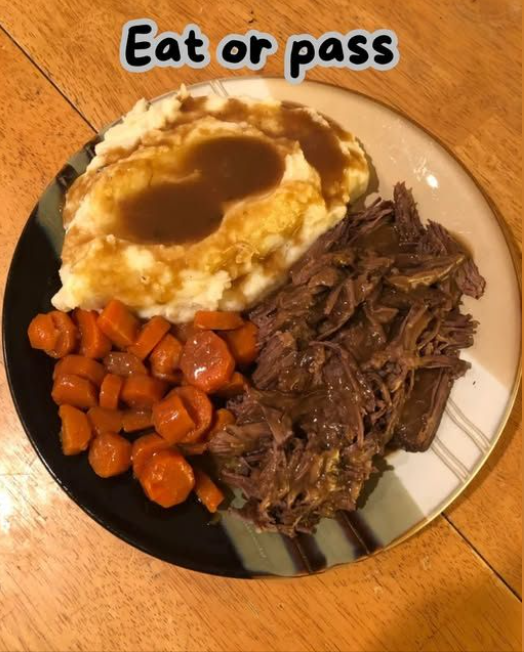
Ladle the cooking juices over the roast. The “Soluble Solid” Principle: The liquid in the slow cooker is now a rich Reduction of rendered beef fat, gelatin, and vegetable essences. This liquid is a natural sauce that binds the meat and potatoes together.
Service and Storage Tips
Service: Serve the roast in thick slices or large shreds over the potatoes. The “Laminar” Presentation: Placing the meat on top of the potatoes allows the Gravy Gravitation to naturally season the mash from the top down.
Storage: Store in the refrigerator for up to 4 days. The “Flavor Maturation” Benefit: As the roast cools and reheats, the flavors continue to meld through Slow Diffusion, often making the dish taste superior on the second day.
Variants: Structural Iterations
| Variation | The Adjustment | The Result |
|---|---|---|
| Red Wine Braise | Replace 1 cup of broth with dry red wine. | Increased Tannin Complexity and acidity. |
| Root Vegetable Medley | Add parsnips and turnips to the slow cooker. | Introduction of Complex Carbohydrates and earthiness. |
| Garlic Herb Mash | Infuse the milk with roasted garlic and chives. | Higher Aromatic Concentration in the starch layer. |
Tips: Pro-Level “Pot Roast” Nuances
- The “Resting” Phase: Even after slow cooking, let the meat rest in the liquid for 20 minutes before slicing. This allows the Intercellular Pressure to stabilize, preventing the meat from drying out instantly upon contact with the air.
- Potato Selection: Use Russet or Yukon Gold potatoes. Russets have high starch content for fluffiness, while Yukon Golds offer a buttery Lipid Profile and smoother texture.
- Deglazing: After searing the meat, pour a splash of broth into the hot skillet to scrape up the browned bits (fond). This is a Concentrated Flavor Extract that should be added to the slow cooker.
Conclusion: A Triumph of Time and Temperature
Slow-Cooked Pot Roast is a masterpiece of Connective Tissue Management. By respecting the long timeframes required for collagen breakdown and the delicate starch balance of mashed potatoes, you create a meal that is both technically sound and deeply comforting. On this December 27, 2025, enjoy the perfectly executed results of hydrothermal physics. Happy eating!
Frequently Asked Questions
- Why is my roast tough even after 8 hours?
- This is likely due to Under-Cooking or a temperature that was too low to initiate Collagen Hydrolysis. Ensure your slow cooker is functioning correctly; the meat must reach an internal temperature of at least 190°F (88°C) to shred easily.
- Can I cook this on “High” for 4 hours instead?
- You can, but the Muscle Fiber Contraction will be more aggressive, potentially resulting in meat that is “shreddable” but slightly drier than the “Low” 8-hour method.
- How do I fix “gluey” mashed potatoes?
- This happens when you Over-Work the Starch (using a food processor or over-mashing). To prevent this, use a potato ricer or hand masher and incorporate the fats (butter) before the liquids.
Would you like me to suggest a “Red Wine Reduction” for a thicker gravy, or perhaps show you how to turn the leftovers into “Pot Roast Shepherd’s Pie”?