
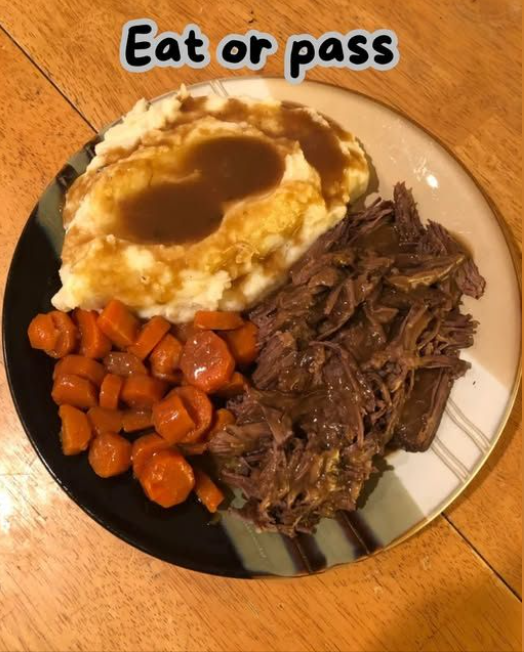
Slow-Cooked Pot Roast: A Study in Connective Tissue Hydrolysis
Introduction: The Physics of “Fall-Apart” Tenderness
The success of a pot roast depends on Thermal Equilibrium. Beef chuck roast is high in Collagen, a structural protein that is tough and elastic at room temperature. By maintaining a constant low temperature over 8 hours, we trigger a phase change where the collagen triple-helix unravels into gelatin. This gelatin then lubricates the muscle fibers, resulting in a dish that is physically soft yet rich in mouthfeel.
Ingredients: The Molecular Building Blocks
The Protein Matrix
- Beef Chuck Roast: The Primary Muscle Scaffolding. Rich in connective tissue and intramuscular fat (marbling), it is the ideal candidate for long-term hydrothermal processing.
The Aromatic and Acidic Catalysts
- Onion, Carrots, Celery, Garlic: Known as Mirepoix, these provide Volatile Organic Compounds that infuse the cooking liquid.
- Tomato Paste: Provides Glutamate Concentration (umami) and acidity, which helps facilitate the breakdown of protein bonds.
- Thyme and Rosemary: Contain Terpenes and essential oils that resist degradation during long cook cycles.
The Starch Scaffold
- Potatoes, Butter, Milk: The Amylose-Lipid Emulsion. The potatoes provide the starch granules, while the milk and butter act as plasticizers to create a smooth, creamy consistency.
