
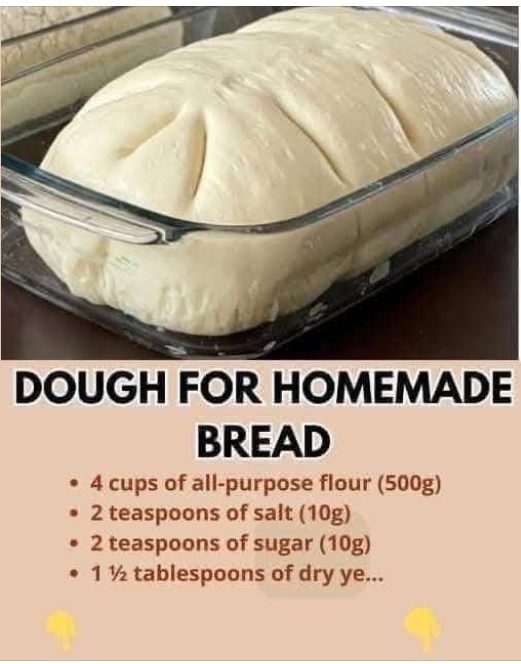
Soft Homemade Bread Dough: Engineering the Cloud-Like Crumb
Introduction: The Physics of High-Hydration Softness
In the world of professional baking, achieving a “fluffy as a cloud” texture is not a matter of luck, but a triumph of Gluten Alignment and Gas Retention. On this Thursday, December 25, 2025—Christmas Day—this recipe serves as a masterclass in Saccharomyces Cerevisiae (yeast) kinetics. The “little secret” to the softness in this specific ratio is the High Hydration Level (approximately 70%). This allows the starch granules to fully gelatinize during the bake, creating a thin-walled cellular structure that feels weightless on the palate.
This guide explores the Viscoelasticity of wheat proteins, the Osmotic Balance of sugar and salt, and the Fermentation Thresholds of warm water. We will examine why the 10-minute knead is the most critical regulation for building a protein scaffold capable of trapping $CO_2$.
Ingredients: The Molecular Building Blocks
- 500g All-Purpose Flour: The Structural Polymer. AP flour typically contains 10-12% protein. This is the “sweet spot” for soft bread; it provides enough Glutenin for shape but not so much that the bread becomes “chewy” like a bagel.
- 15g Dry Yeast: The Biological Leavening Agent. Yeast consumes the sugars to produce Carbon Dioxide and Ethanol. The high yeast-to-flour ratio here ensures a rapid, aggressive rise, which stretches the dough into thinner, softer membranes.
- 350ml Warm Water (37°C): The Kinetic Catalyst. Water at exactly body temperature optimizes enzyme activity without denaturing the yeast proteins. It also serves as the solvent that allows the proteins to bond.
- 10g Salt: The Gluten Regulator. Salt isn’t just for flavor; it strengthens the gluten network by neutralizing electrical charges on the protein strands, allowing them to stick together more effectively.
- 10g Sugar: The Metabolic Fuel. Sugar provides an immediate energy source for the yeast, accelerating the first proofing stage.
