

Phase 1: The Low-Aeration Mix
Unlike a sponge cake where you want to beat air into the batter, a honeybun cake requires Minimal Aeration. Mix just until the streaks of flour disappear. The “Density” Secret: Over-mixing introduces too many air bubbles, which will turn your dense honeybun into a standard, crumbly cake.
Phase 2: The Lipid Emulsification
Slowly stream the oil into the eggs before adding to the dry mix. This creates a Pre-Emulsion that ensures the strawberry flavor compounds (which are often fat-soluble) are distributed evenly throughout the batter, preventing “flavor hot-spots.”
Phase 3: The Stratified Pour
Pour half the batter into a greased pan, sprinkle with your brown sugar/cinnamon mixture, and top with the remaining batter. The “Migration” Physics: During the bake, the sugar will melt and try to sink, creating “pockets” of syrup that hydrate the surrounding crumb.
Phase 4: The Strawberry Cream Icing (The Seal)
A true honeybun glaze must be applied while the cake is still warm. This triggers Capillary Action, where the heat of the cake thins the icing, allowing it to “soak” into the top 1/8th inch of the cake, creating a “fudgy” top layer that is synonymous with honeybuns.
The Science: Managing the Pink Hue
The “Strawberry” profile in cake mixes relies on Artificial Esters and Red 40. To elevate this, many bakers add strawberry puree. However, puree adds significant water content. To keep the “Honeybun” density, it is better to use Freeze-Dried Strawberry Powder in the icing. This provides an intense punch of flavor and natural color without compromising the structural viscosity of the cream icing.
Chef’s Tips for a Professional Finish
- The “Sour Cream” Hack: For an even richer cake, replace 1/4 cup of the oil with 1/2 cup of full-fat sour cream. The Lactic Acid in the sour cream further tenderizes the flour, creating a “melt-in-your-mouth” effect.
- The Icing Gloss: Add 1 teaspoon of corn syrup to your cream icing. This provides a “Professional Mirror Shine” that stays glossy even after the cake has cooled.
- Temperature Control: If you ice the cake when it’s too hot, the icing will run off the sides; if too cold, it will sit on top like a cap. The “Goldilocks Zone” is 110°F (warm to the touch, but not burning).
Holiday Variations
| Variation | The Twist | The Vibe |
|---|---|---|
| Winter Berry | Add a swirl of raspberry jam to the center. | Tart, complex, and sophisticated. |
| White Chocolate Strawberry | Fold in 1/2 cup white chocolate chips. | Decadent, creamy, and ultra-sweet. |
| Champagne Strawberry | Replace the milk in the icing with Rosé Champagne. | A “Grown-Up” Christmas Eve celebration. |
Conclusion: A Christmas Eve Pink Perfection
Strawberry Honeybun Cake is a testament to the power of “Doctored” baking. By understanding how oil and eggs interact with the pre-treated starches of a cake mix, you transform a simple box into a sophisticated, multi-layered dessert. On this Christmas Eve 2025, as the aroma of warm strawberries and cinnamon fills your home, you’re serving a masterclass in texture and flavor. Enjoy the pink, sugary bliss!
Frequently Asked Questions
- Can I use butter instead of oil?
- You can, but the cake will be less “Honeybun-like.” Butter contains water and milk solids that create a more “cakey” and airy crumb. Oil is 100% fat, which is the secret to that dense, donut-like texture.
- My icing is too thin!
- Add powdered sugar 1 tablespoon at a time. If you want that traditional “Honeybun glaze” look, you actually want it to be slightly pourable so it can drape over the sides.
- Why did my sugar swirl sink to the bottom?
- This happens if the batter is too thin or if the sugar mixture is too heavy. Make sure your “swirl” is a 50/50 mix of sugar and cinnamon to keep it light enough to “float” in the middle of the batter.
Would you like me to suggest a “Strawberry Ganache” to pour over the top for a more decadent finish, or perhaps show you how to turn this into “Strawberry Honeybun Cupcakes”?
Related posts:
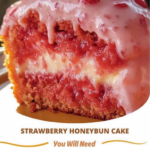 Mastering the Strawberry Honeybun Cake with Strawberry Cream Icing
 Southern Caramel Cake: A Masterclass in Sugar Chemistry
 Cinnamon Roll Honeybun Cheesecake
 A Masterclass in Moisture and Hue
 Strawberry Pineapple Pound Cake: A Study in Tropical Moisture
 The Lone Star Classic: Authentic Texas Sheet Cake
